
Sunrise Senior Living UK
Read More about Sunrise Senior Living UKClinical Waste Collection and Disposal Services
Clinical waste management for businesses
Reconomy works with thousands of businesses in the healthcare, care and leisure sectors to segregate, collect and dispose of clinical waste safely. Delivered through our Recycle Loop specialist brands, our service helps you meet UK clinical waste regulations, keep the right compliance documentation for every collection and raise hygiene standards on site, so you can show you are meeting your duty of care at every stage.
Who needs clinical waste services?
Hospitals, GP surgeries, clinics, dental practices, care homes, pharmacies, laboratories, veterinary practices, and tattoo and piercing studios may all need clinical waste services. Whether you do depends on the waste you produce, not the setting you operate in.
From dental waste disposal and pharmaceutical waste disposal to anatomical waste disposal, our specialist brands cover every clinical waste stream.
Find the right service for your site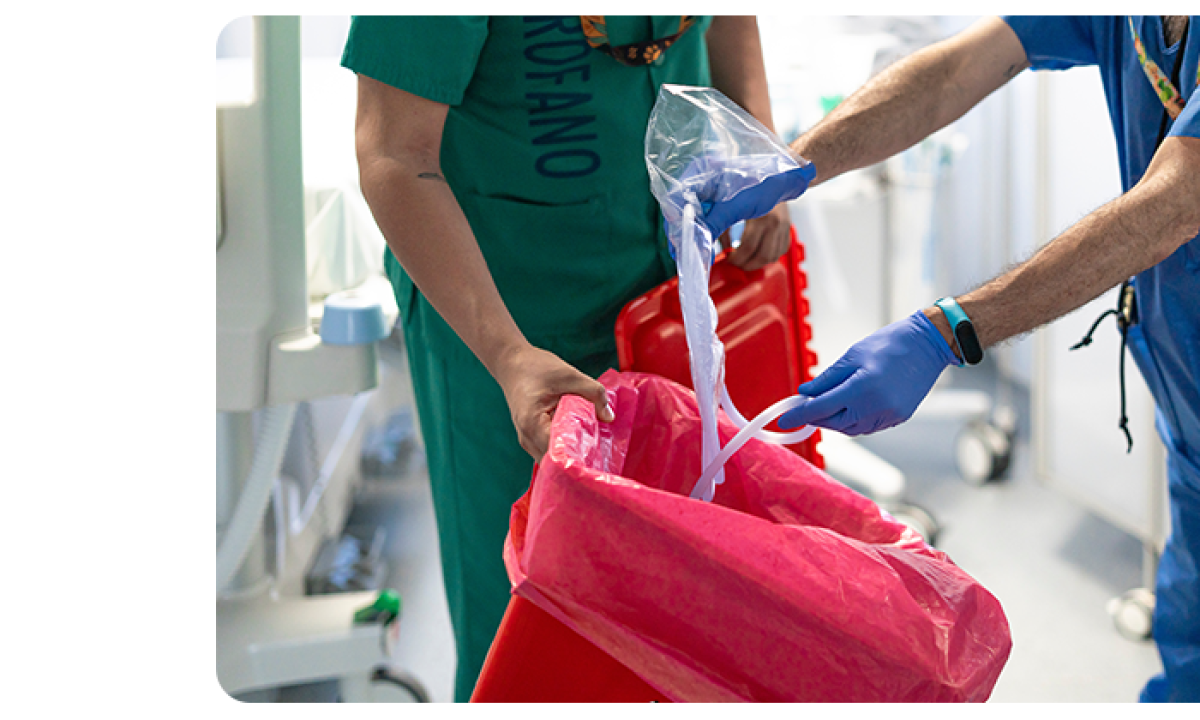
How we support your duty of care
Our experts identify the waste streams your site produces, set up compliant segregation, supply suitable clinical waste bins and carry out regular site audits. Across a national network of care homes, for example, our account managers audit each site and match bin sizes to collection frequency for clinical, sharps and sanitary waste. Read our Sunrise Senior Living UK case study.
Book a site auditOur clinical waste disposal services
Our clinical waste collection and disposal services sit within our wider hazardous waste management services. They cover identifying your waste streams, advising on segregation, supplying containers, arranging collections, issuing compliance documentation and carrying out site audits. Collected waste goes to permitted facilities for the right treatment, whether that is incineration, alternative treatment or recovery.
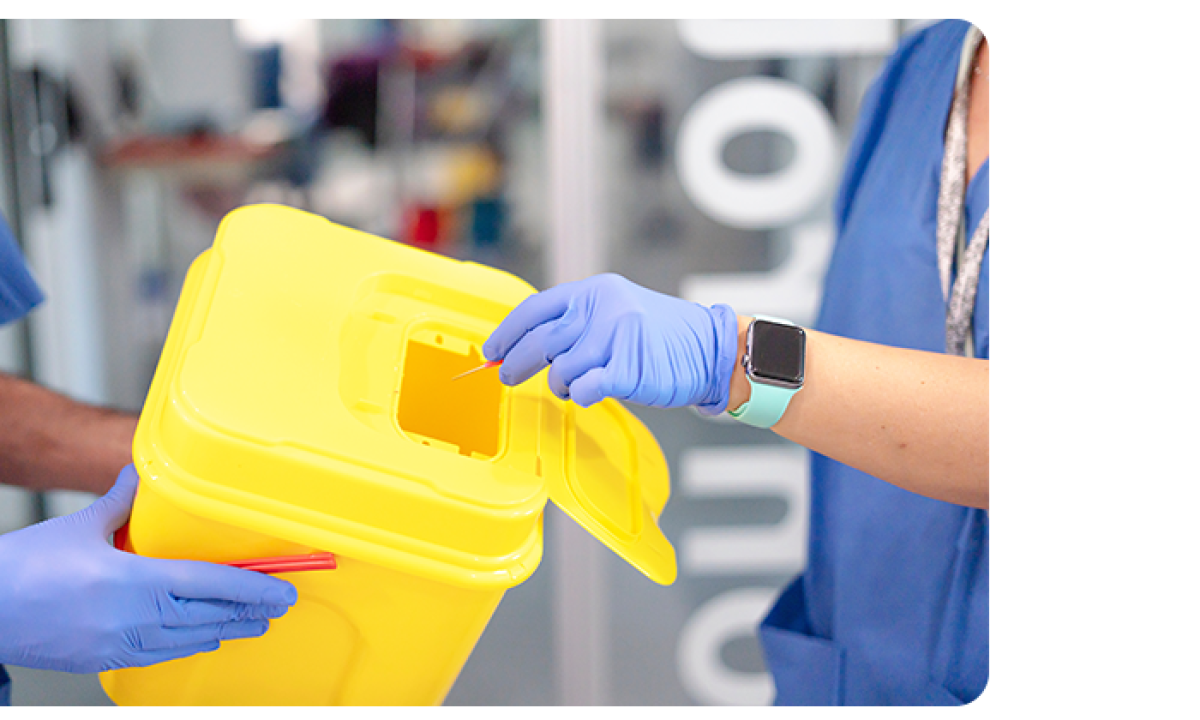
Hand closing the lid of a yellow clinical waste container
Scheduled clinical waste collections
Choose scheduled collections if your site produces a predictable volume and needs regular collections to keep containers within safe storage limits. Frequency is agreed around the waste you produce, the storage space available and your operational needs. Repeat collections of the same non-hazardous waste can be covered by a single season ticket waste transfer note.
Clinician carrying a red biohazard clinical waste bag along a hospital corridor
Ad hoc clinical waste collections
Ad hoc collections suit sites with variable or occasional waste, such as one-off clearances or a temporary rise in volumes, provided waste is stored securely and collected within applicable time limits. Each ad hoc collection is backed by its own transfer or consignment note.
Clinical waste bin icon with biohazard symbol
Clinical waste bins, containers and site audits
We supply sharps containers, rigid pharmaceutical containers, colour-coded bags and lockable wheelie bins sized to your waste and storage space. Regular site audits check that segregation is working and that container capacity matches collection frequency. Ask us to confirm the accepted waste streams, treatment routes and documents supplied for each collection.
Types of clinical waste we collect
Clinical waste comes from medical, nursing, dental, veterinary, pharmaceutical and similar activities, and may pose a risk of infection or contain medicines or other hazardous substances. Not all waste produced in healthcare settings is clinical waste: classification depends on the risk the waste poses.
Infectious waste
Infectious waste includes contaminated materials such as bandages, dressings, swabs and personal protective equipment (PPE) that have come into contact with blood, body fluids or infectious agents. It also covers microbial waste, including cultures, slides, specimens and other microbiological material, and anatomical waste, such as human or animal tissue, blood bags and waste from biopsy procedures.
Sharps waste includes needles, syringes, scalpels and other items that can cut or pierce the skin. Place sharps directly into an approved, clearly labeled sharps container at the point of use, and never put loose sharps in bags or general waste. Close and secure the container at its fill line, then arrange collection through an authorised provider.
Pharmaceutical waste
General pharmaceutical waste covers unused or expired medicines and vaccines that are not cytotoxic or cytostatic, including empty vaccine vials that may contain residues. Liquid medicine waste, such as unused or expired liquid medicinal products and medicines delivered via a sharp, also falls into this category.
Cytotoxic and cytostatic waste includes medicines, and materials contaminated with them, that may be toxic, carcinogenic, mutagenic or harmful to reproduction. Keep it separate from other medicines and clinical waste in suitable, clearly labelled containers. An authorised provider should collect it for treatment at a permitted facility; the appropriate disposal route depends on the waste and the facility’s acceptance requirements.
Other waste streams
Dental practices produce dental amalgam, which is hazardous and must be kept in dedicated amalgam containers, and gypsum models, which are usually non-hazardous and collected separately for recovery where possible. Healthcare sites may also produce chemical waste, such as laboratory reagents and disinfectants, that can present a chemical hazard.
Offensive waste is non-infectious waste that may cause offence, such as incontinence pads and sanitary waste. See our offensive waste disposal service.
Clinical waste segregation and colour coding
Segregate waste where it is produced, using separate, suitable containers for each classified stream. Infectious waste, sharps, anatomical waste, general pharmaceutical waste, cytotoxic or cytostatic medicines, dental amalgam, chemical waste and offensive waste may require different containers and treatment routes, so do not mix them. Not all waste from a healthcare setting is clinical waste: classify it by the risk it poses, then follow the colour coding and segregation guidance in HTM 07-01, the Department of Health guidance on the safe and sustainable management of healthcare waste. Correct segregation helps protect staff and patients and supports safe disposal.
| Colour | Waste type | Typical treatment |
|---|---|---|
| Yellow | Infectious waste needing incineration, including waste contaminated with medicines or chemicals | Incineration |
| Orange | Infectious or potentially infectious waste suitable for alternative treatment | Alternative treatment, such as autoclaving, or incineration |
| Purple | Cytotoxic and cytostatic waste, including contaminated sharps | Incineration |
| Red | Anatomical waste, usually in yellow containers with red lids | Incineration |
| Blue | Non-cytotoxic medicines and medicinally contaminated waste | Incineration |
| White | Dental amalgam and mercury-containing waste | Recovery |
| Yellow and black (tiger) | Offensive waste, such as hygiene and incontinence waste | Energy recovery, alternative treatment or permitted landfill |
| Black | General, non-hazardous waste with no clinical contamination | Recycling, energy recovery or landfill |
Sharps container lid colours depend on contents: orange for sharps not contaminated with medicines, yellow for sharps contaminated with non-cytotoxic medicines and purple for cytotoxic or cytostatic sharps. Colour coding can vary for specific streams, so check your local waste policy and confirm the right container with us.
UK clinical waste regulations
Environmental Protection Act 1990 and the waste duty of care
Section 34 of the Environmental Protection Act 1990 places a duty of care on anyone who produces, keeps, transports or disposes of controlled waste, including clinical waste. The Waste Duty of Care Code of Practice explains how to meet it: store waste safely, describe it accurately, pass it only to authorised carriers and complete the right transfer documentation. See our overview of UK business waste duties and the risks of ineffective waste management.
Hazardous Waste Regulations 2005
The Hazardous Waste (England and Wales) Regulations 2005 set the rules for classifying, consigning and keeping records of hazardous clinical waste. Scotland applies the Special Waste Regulations 1996, and Northern Ireland the Hazardous Waste Regulations (Northern Ireland) 2005, so check which regulator’s rules apply before waste crosses a border.

Carriage of Dangerous Goods Regulations
The Carriage of Dangerous Goods and Use of Transportable Pressure Equipment Regulations 2009, as amended, apply the international ADR rules to road transport of clinical waste in Great Britain. Clinical waste must travel in UN-approved packaging, and drivers must hold ADR training to limit the risk of spills and exposure.

HTM 07-01 and the List of Waste
HTM 07-01 sets out how healthcare waste should be classified, segregated, stored and treated, including colour coding and pre-acceptance audits. The List of Waste, formerly the European Waste Catalogue (EWC), provides the codes used to describe your waste on every transfer and consignment note.
Clinical waste compliance documentation
Every clinical waste collection must be backed by the right paperwork. Your documentation proves you have met your duty of care, tells the receiving site exactly what it is accepting and gives you an audit trail from your premises to final treatment. Our specialist brands issue and manage these records for you, with copies available through your customer portal and digital reporting tools.
Waste transfer notes and cosignment notes
The document you need depends on how the waste is classified and where your business operates. Non-hazardous clinical waste generally requires a proper waste transfer note. Hazardous clinical waste requires a hazardous waste consignment note in England and Wales, or a special waste consignment note in Scotland. Northern Ireland has its own hazardous waste requirements. Check the rules that apply in your jurisdiction and make sure each note accurately describes the waste.
| Document | When it applies | Who completes it | How long to keep it |
|---|---|---|---|
| Waste transfer note | Non-hazardous clinical waste, such as offensive waste and non-hazardous medicines | You and the waste carrier, signed by both before the waste leaves your site | 2 years |
| Hazardous waste consignment note | Hazardous clinical waste in England and Wales, such as infectious, cytotoxic and amalgam waste | You complete your sections before collection; the carrier and receiving site complete theirs | 3 years |
| Special waste consignment note | Hazardous clinical waste in Scotland, regulated by SEPA | You, the carrier and the receiving site | 3 years |
| Hazardous waste consignment note (NI) | Hazardous clinical waste in Northern Ireland, regulated by NIEA | You, the carrier and the receiving site | 3 years |
Pre-acceptance audits
Before a permitted treatment facility can accept your healthcare waste, you are responsible for making sure a pre-acceptance audit of your premises has been carried out. The audit compares your practice with HTM 07-01 and the WM3 waste classification guidance.
In England, how often you repeat the audit depends on how much clinical waste you produce. If you produce 5 tonnes or more a year, you must repeat it every 12 months. Dental practices, veterinary practices and laboratories producing less than 5 tonnes a year must repeat it every two years. Other healthcare producers under 5 tonnes, such as GP surgeries, need a new audit every five years.
A new audit is also needed if your site makes significant changes to its waste practices. Our specialist brands can support you through the audit process.
Book a pre-acceptance auditRecord keeping and digital waste tracking
Keep waste transfer notes for at least two years and hazardous waste consignment notes, with related records, for three years at the premises where the waste was produced.
From 1 October 2026, waste receiving sites in England and Wales must record the waste they accept through the government's digital waste tracking service, with Scotland and Northern Ireland following in January 2027 and collectors expected from spring 2027. For now, transfer and consignment notes are still required alongside it. Find out how digital waste tracking is cleaning up the industry.
Get ready for digital waste trackingEWC codes for clinical waste
Clinical waste from human healthcare uses List of Waste codes in chapter 18 01, and veterinary waste uses 18 02. An asterisk marks a hazardous code. Common codes include:
| EWC code | Description | Status |
|---|---|---|
| 18 01 01 | Sharps (except 18 01 03) | Non-hazardous |
| 18 01 02 | Body parts and organs, including blood bags (except 18 01 03) | Non-hazardous |
| 18 01 03* | Infectious waste | Hazardous |
| 18 01 04 | Offensive waste not subject to special infection-control requirements | Non-hazardous |
| 18 01 06* | Chemicals consisting of or containing hazardous substances | Hazardous |
| 18 01 08* | Cytotoxic and cytostatic medicines | Hazardous |
| 18 01 09 | Medicines other than 18 01 08 | Non-hazardous |
| 18 01 10* | Amalgam waste from dental care | Hazardous |
Clinical waste management FAQs
Clinical waste, also known as medical or healthcare waste, is waste from healthcare and similar activities that may pose a risk of infection or contain medicines or other hazardous substances. It includes used sharps, contaminated dressings, anatomical waste and pharmaceutical waste.
Not always. Clinical waste is hazardous when it is infectious, contaminated with biologically active medicines or contaminated with a dangerous substance. Offensive waste, non-cytotoxic medicines and non-infectious anatomical waste are usually non-hazardous, but still need specialist handling.
Yes, if the waste is hazardous. Infectious, cytotoxic and amalgam waste need a hazardous waste consignment note in England and Wales, or a special waste consignment note in Scotland. Non-hazardous clinical waste needs a waste transfer note. Keep consignment notes for three years and transfer notes for two.
The organisation that produces the waste, such as a hospital, clinic, care home or dental practice, is responsible for it. Your duty of care continues until the waste reaches an authorised facility, so you must use a registered carrier, keep accurate documentation and complete pre-acceptance audits on time.
Check that the provider is authorised by verifying its waste carrier registration with the relevant environmental regulator. Ask for the treatment facility’s permit details and confirm with the regulator that the permit covers your waste streams and the treatment routes offered. Then compare accepted waste types, collection frequency, container supply, documentation, pre-acceptance audit support, emergency collections and pricing. Agree the service scope in writing before signing.
Clinical waste is classed as hazardous if it:
-
contains viable microorganisms, or their toxins, known or reliably believed to cause disease in humans or other living organisms
-
is contaminated with a medicine that contains a biologically active pharmaceutical agent
-
is a sharp, body fluid or other biological material contaminated with a dangerous substance
Some clinical waste is non-hazardous but still needs specialist handling:
-
segregated non-cytotoxic and non-cytostatic medicines
-
clinical waste not directly associated with healthcare, such as needles and swabs from tattoo and piercing studios
-
anatomical waste with no risk of infection
-
non-hazardous sharps, which may still be classed as dangerous goods for transport
Train staff on segregation and handling, provide suitable PPE such as gloves, and keep waste in correctly labelled, closed containers in a secure storage area. Never decant waste between containers or overfill sharps bins. Our guide on how to improve hazardous waste management has more practical steps.
Get in touch with our friendly team today...
Related services
Explore our related services for Clinical Waste management
Asbestos removal
Asbestos removalBattery waste disposal
Battery waste disposalBattery waste disposal
Battery waste disposalFluorescent Tube Disposal
Fluorescent Tube DisposalIonised smoke alarm disposal
Ionised smoke alarm disposalPaint disposal
Paint disposalWEEE Waste Recycling
WEEE Waste Recycling