

A guide to what welfare facilities are required on a construction site
Read MoreWelfare unit hire
Our wide range of welfare units are on hand to assist with all your sites welfare requirements. Whether you need a groundhog for an ‘on-the-go’ project, or a static welfare unit for something longer-term, we’re here to help.
Get a quoteWelfare unit hire for construction sites and outdoor projects
Reconomy provides mobile and static welfare unit hire across the UK, delivered through our specialist brands within the Recycle Loop. Whether you need a towable unit for an on-the-go project or a fixed welfare cabin for a long-running site, we source and manage the right solution for your workforce and your timeline.
What is welfare unit hire?
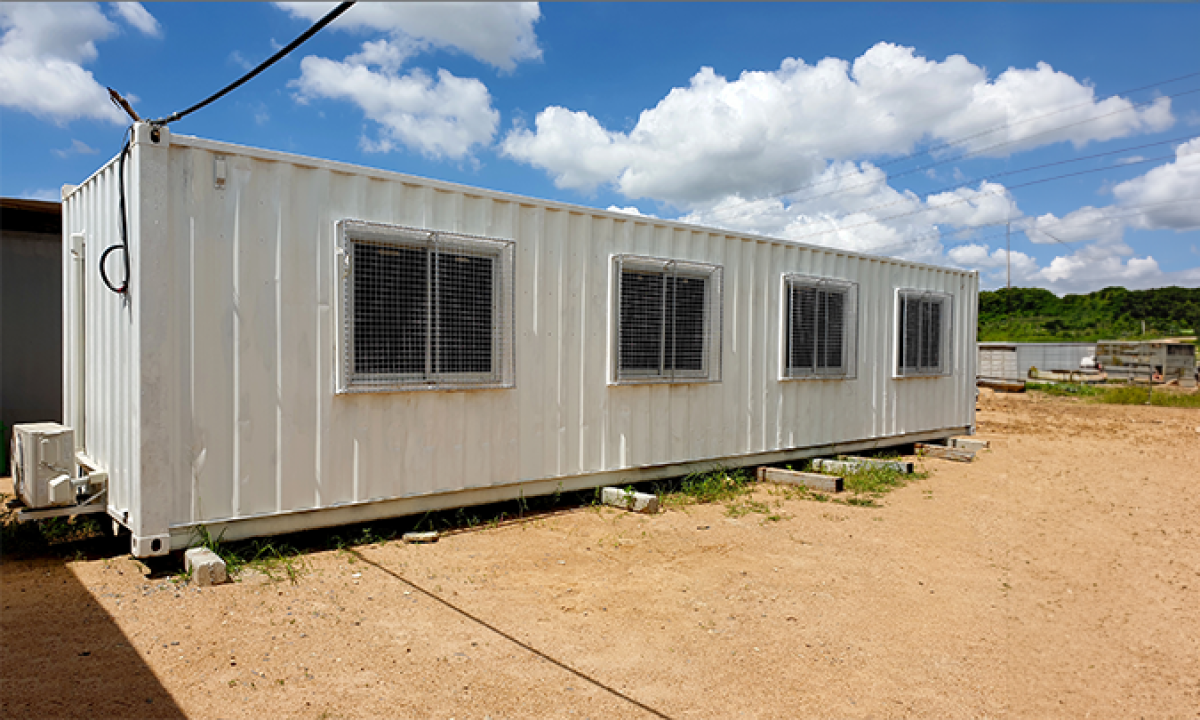
Welfare unit hire gives construction sites, infrastructure projects, and outdoor worksites access to self-contained facilities, including toilets, washing areas, rest space, drying rooms, and canteen facilities, on a short or long-term basis. Reconomy provides mobile and static welfare units across the UK, helping businesses meet their legal duty of care under the Workplace (Health, Safety and Welfare) Regulations 1992.
See our types of welfare unitsTypes of welfare unit available
Reconomy sources welfare units through industry-leading manufacturers and supply partners, with options to suit projects of all sizes, durations, and environments.
Mobile welfare units
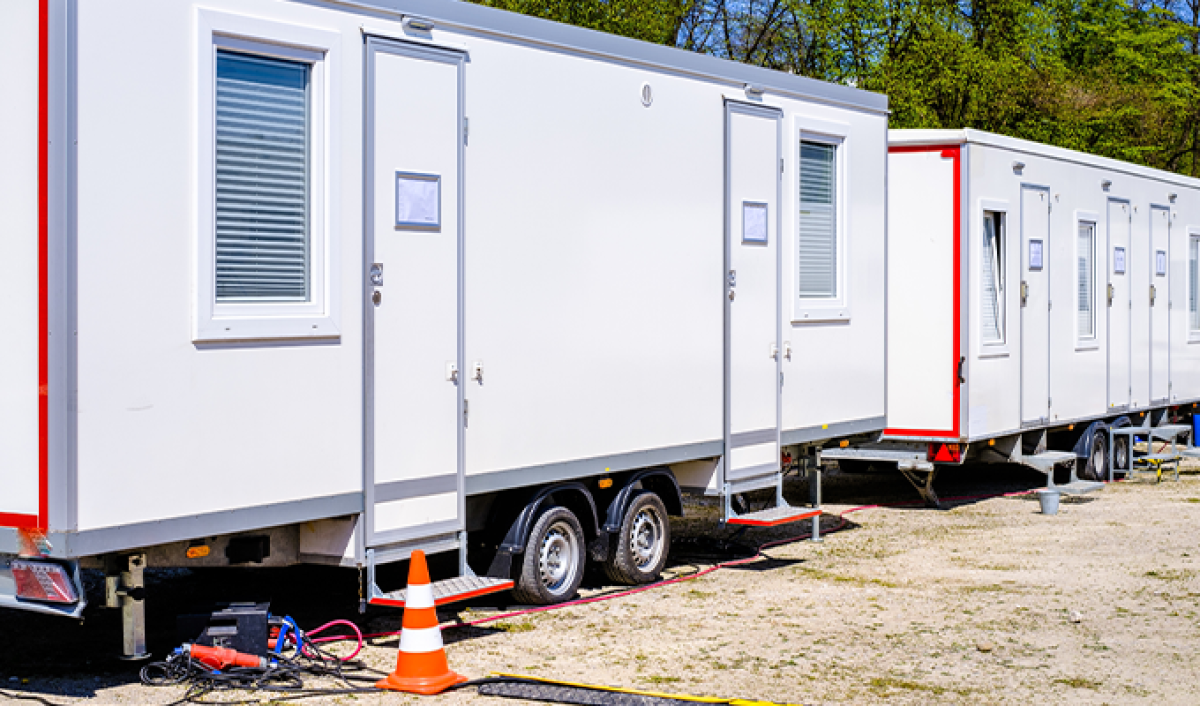
A mobile welfare unit — also known in the industry as an 'armadillo' — is a self-contained unit mounted on a trailer, making it towable between locations. Mobile units are the right choice for projects that operate across multiple sites, or where the work moves progressively along a route such as road or utility infrastructure works.
All mobile welfare units are available in standard and anti-vandal specification. Anti-vandal models are built with reinforced materials and secure locking mechanisms, suitable for high-risk or unsupervised environments.
Discuss mobile welfare unit hireStatic welfare units
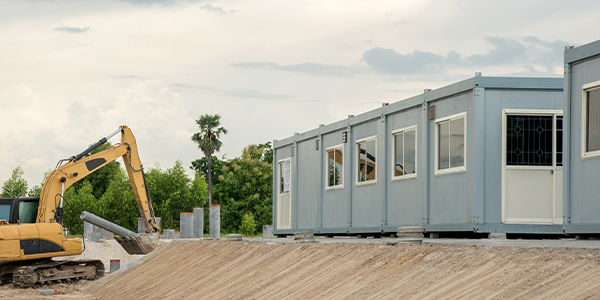
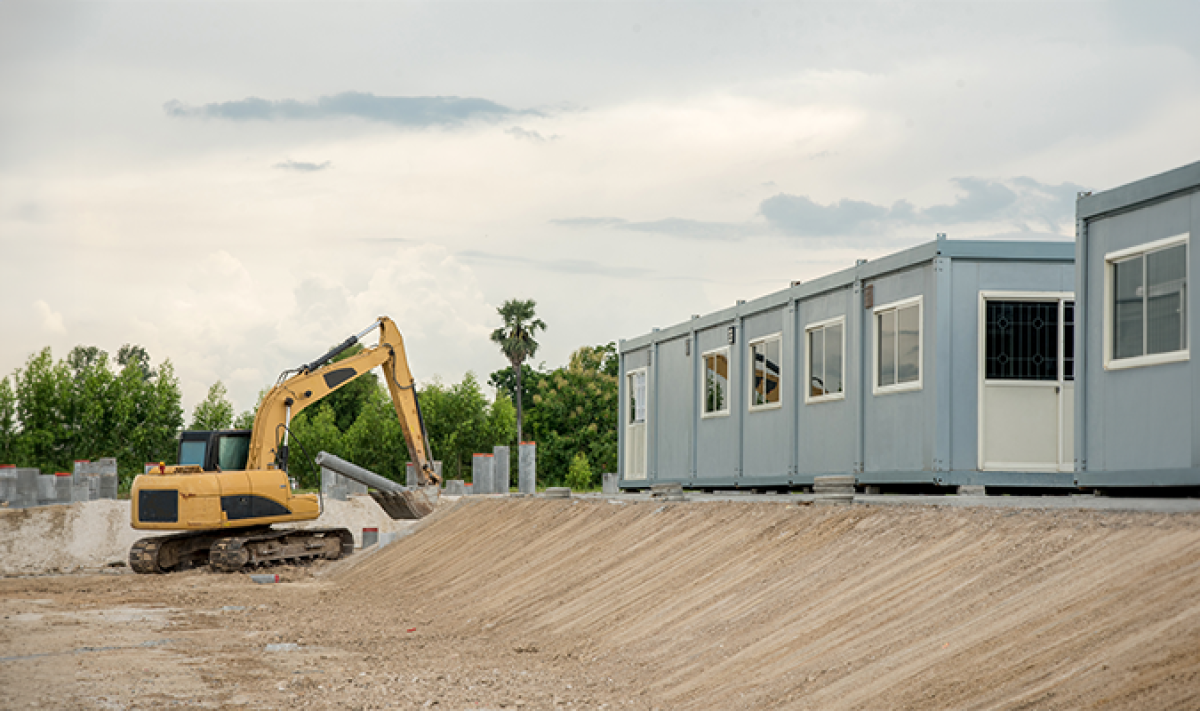
A static welfare unit is a fixed-position cabin designed for sites where the workforce remains in a consistent location over an extended period. Static units offer greater space, more amenities, and a higher level of comfort than mobile alternatives — making them the preferred choice for long-term construction, housebuilding, and infrastructure contracts.
Discuss static welfare unit hireShining a light on circularity
Reconomy’s ‘Think Circular Award’ seeks to showcase the achievements of organisations that are making proactive and innovative strides towards a more sustainable future.
Legal requirements for welfare units on cosntruction sites
Under the Workplace (Health, Safety and Welfare) Regulations 1992 and the Construction (Design and Management) Regulations 2015, employers are legally required to provide adequate welfare facilities for workers on construction sites. This includes toilets, washing facilities, rest areas, and facilities for preparing food and drink. Failure to provide these can result in enforcement action by the Health and Safety Executive (HSE).
Get a welfare unit quoteWhat's included in a welfare unit?
Sanitation
Toilet facilities and handwashing stations with running water, meeting HSE hygiene requirements for the workforce size.
Rest and canteen
Seating, tables, and basic kitchen facilities including microwave and kettle, allowing workers to take proper breaks and eat on-site.
Drying room
A heated space for drying PPE and workwear — a practical necessity on outdoor and all-weather projects.
Office space
Available on larger models, providing a workspace for site managers, admin tasks, and document storage.
Power
An integrated generator provides independent power supply, eliminating reliance on mains electricity connections.
Water
Built-in freshwater tanks and waste storage tanks mean units can be deployed without connection to existing water or sewage infrastructure.
What is a welfare unit?
A welfare unit is a self-contained facility designed to provide workers with essential on-site amenities. Units typically include toilet facilities, handwashing stations, rest areas, drying rooms, and canteen space. They operate independently of mains connections, using built-in water tanks, waste storage, and a generator for power — making them suitable for remote and temporary sites without existing infrastructure.
Welfare units are available in two main configurations:
- Mobile welfare units — trailer-mounted and towable, designed for projects that move between locations
- Static welfare units — fixed-position cabins suited to longer-term, single-site projects
Who needs welfare unit hire?
Welfare unit hire is most commonly required by:
- Construction and housebuilding contractors — meeting CDM welfare obligations on-site from day one
- Infrastructure and civil engineering projects — road, rail, utilities, and energy projects where work moves progressively along a route
- Facilities management companies — supporting planned maintenance and reactive works programmes
- Event organisers — providing staff and crew with compliant welfare facilities at festivals, sporting events, and public gatherings
- Emergency response teams — rapidly deployable welfare facilities during flood, storm, or industrial incidents
FAQs
Standard welfare units
Provide the core amenities required on most sites: toilets, kitchenette, seating, and drying space. Suitable for short to medium-term projects.
Eco-friendly welfare units (eco cabins)
Incorporate sustainable technologies including solar panels, water-saving systems, and energy-efficient insulation — reducing carbon footprint and operational running costs. Increasingly specified by contractors with ESG and sustainability reporting commitments.
Anti-vandal welfare units
Constructed from reinforced materials to provide security in high-risk locations. Features include reinforced doors, secure window locks, and robust external cladding.
- Fully towable — relocate as your project moves
- No mains connections required; self-contained water and power
- Keeps welfare facilities close to the workforce at all times
- Supports compliance with CDM Regulations on multi-location projects
- Improves worker morale and productivity through accessible facilities
Yes. Under the Workplace (Health, Safety and Welfare) Regulations 1992 and the Construction (Design and Management) Regulations 2015, employers must provide adequate welfare facilities for workers. On temporary sites where permanent facilities are unavailable, hiring a welfare unit is the standard way to meet this legal obligation.
A mobile welfare unit is trailer-mounted and towable, designed for projects that move between locations. A static welfare unit is a fixed-position cabin suited to longer-term, single-site projects. Static units typically offer more amenities and greater comfort; mobile units prioritise portability and flexibility.
Reconomy can source mobile welfare units in 12ft, 16ft, and 20ft configurations. A 12ft unit suits small crews and space-restricted sites; 16ft is suited to medium crews working across multiple locations; 20ft is appropriate for larger teams requiring a drying room, office, and full canteen facilities.
No. Welfare units are self-contained. They use built-in freshwater tanks, waste storage tanks, and an integrated generator for power — meaning they can be deployed on any site regardless of access to mains utilities.
Hire periods are flexible. Short-term, long-term, and rolling hire arrangements are all available through Reconomy. Speak to our team to discuss the most suitable arrangement for your project duration and budget.
Yes. Reconomy can source eco-friendly welfare cabins incorporating solar panels, water-saving systems, and energy-efficient insulation — reducing the carbon footprint of your site operations and providing data to support ESG reporting.
Yes. Static welfare units are widely used in event management — including music festivals, sporting events, and large public gatherings — to provide staff, crew, and attendees with compliant welfare facilities.
Typically, Reconomy is responsible for maintaining and cleaning the unit during the hire period. They ensure that the unit remains in good working condition, perform regular servicing, and handle any necessary repairs. However, it’s essential to clarify the maintenance and cleaning responsibilities with us before finalising the agreement, as this will vary depending on the supply partner used.
Choosing the right unit depends on factors such as the number of workers, the duration of the project, required amenities, and available space on the office site. It’s advisable to consult with a reputable hire company that can assess your needs and recommend the most suitable unit for your project
Get in touch