
Froneri
Read More about FroneriSustainability consulting
Practical strategies. Measurable impact. Circular outcomes.
Sustainability can no longer be seen as a standalone; it needs to be a business priority.
At Reconomy, our sustainability consulting services, delivered through our specialist brands, help organisations turn ambition into action. We combine data, technology, and expert insight to help you measure your impact, reduce emissions, and build more circular, resource-efficient operations.
From carbon footprinting and Scope 3 emissions to lifecycle assessments and net zero strategy, we make sustainability practical, measurable, and commercially effective.





Our sustainability consulting services
Sustainability consultants meeting with clients to discuss carbon footprinting and environmental strategy.
Sustainability consultants meeting with clients to discuss carbon footprinting and environmental strategy.
Carbon footprinting services
Understanding your carbon footprint is the foundation of any effective sustainability strategy. We help you measure and analyse greenhouse gas emissions across Scope 1, Scope 2, and Scope 3, using robust methodologies aligned with recognised frameworks such as the GHG Protocol and ISO 14064. Our approach ensures your data is accurate, auditable, and suitable for both internal decision-making and external reporting. We don't just provide numbers, we translate data into insight, helping you identify emissions hotspots, prioritise carbon reduction opportunities, and build a clear pathway forward. This is also the same underlying data that feeds into disclosures under the UK Sustainability Reporting Standards, so the work you do here doesn't need to be repeated when UK SRS reporting becomes part of your obligations.
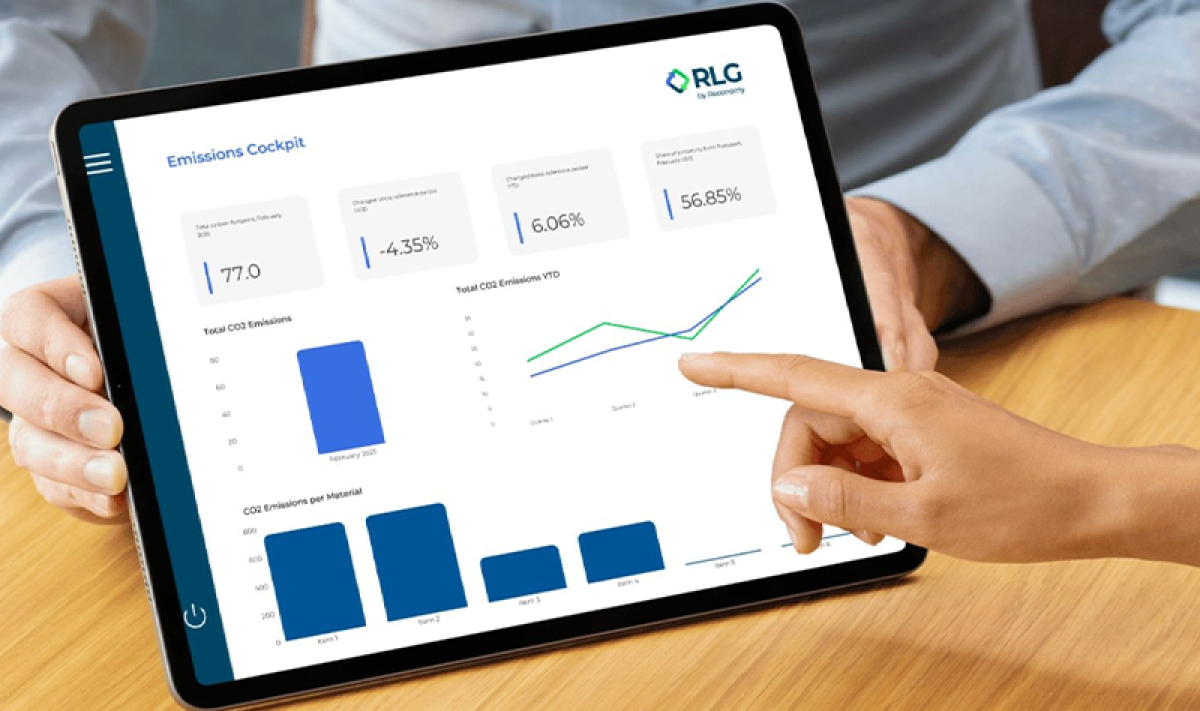
Business professional presenting sustainability and emissions data using a digital tablet during a meeting.
Scope 3 emissions consulting
Scope 3 emissions are often the largest and most complex part of your carbon footprint, but also the most critical to address. We help you identify relevant categories, collect and validate supplier data, and develop accurate emissions calculations across your value chain. Our team works with you to overcome data challenges and build a structured, repeatable approach to Scope 3 reporting. Beyond measurement, we help you take action, identifying practical opportunities for carbon reduction across procurement, logistics, product design, and end-of-life processes. Scope 3 data is also one of the more demanding requirements under UK SRS S2, the UK Sustainability Reporting Standards' climate disclosure standard, so getting this right early puts you ahead of that reporting obligation.
Circular lifecycle assessment diagram showing resource extraction, production, use, recycling, and end-of-life stages.
Lifecycle assessment consulting
Lifecycle assessments provide a complete, end-to-end view of the environmental impact of your products, services, or operations. We assess each stage of the lifecycle, from raw material extraction and production through to distribution, use, and disposal. This enables you to identify where the greatest environmental impacts occur and where targeted improvements can deliver the most value. Our insights support better product design, improved resource efficiency, and stronger sustainability claims backed by credible data and recognised ISO standards, ready to stand up under UK SRS or CSRD disclosure if needed.
Two business professionals discussing sustainability and environmental product declaration data at a workstation.
Environmental product declarations (EPDs) consulting
Environmental Product Declarations are becoming increasingly important for demonstrating transparency, meeting regulatory requirements, and supporting procurement decisions. We support you in developing verified EPDs that communicate the environmental impact of your products in a clear and standardised way. Our process includes data collection, lifecycle assessment alignment, and documentation to meet relevant ISO standards. This helps you build trust with customers, meet market expectations, and differentiate your products in competitive sectors, while giving you data that can also support wider disclosures such as UK SRS where relevant.
Sustainability consultant working on a laptop in a modern office environment.
Net zero strategy consulting
Setting a net-zero target is only the beginning; achieving it requires a clear, structured, and achievable strategy. Through our specialist brands, we help you define science-aligned targets, establish realistic timelines, and develop detailed roadmaps that outline how emissions will be reduced over time. Our approach ensures your strategy is grounded in operational reality while aligned with global frameworks and expectations. We also support governance, disclosures, and ongoing tracking to ensure your progress remains on course, including alignment with UK SRS where your business chooses, or is required, to report against it.
Two colleagues collaborating at a computer workstation in a modern office environment.
Decarbonisation consulting
Decarbonisation is where strategy becomes action. We work with you to identify and prioritise emissions reduction initiatives across your operations and supply chain, focusing on solutions that deliver both environmental impact and commercial value. This may include improvements in energy efficiency, renewable energy adoption, supply chain optimisation, material changes, and process innovation. We aim to help you cut emissions practically, at scale, and in line with your business strategy, with progress tracked in a way that's ready for UK SRS disclosure if and when it applies to you.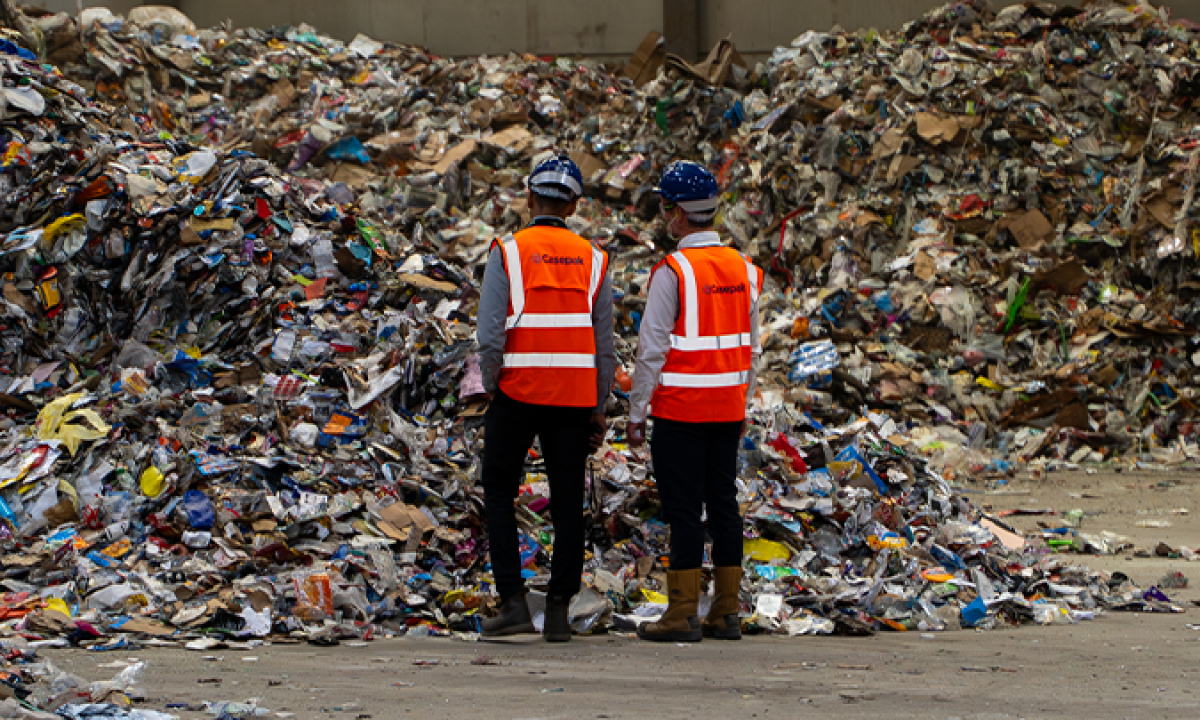
UK waste, water, and resource management services
Sustainability consulting isn’t only about carbon. For most organisations, waste, water, and resource use are just as material to their environmental footprint, and increasingly to their reporting obligations.
- Waste management: assessing current waste streams, identifying opportunities to increase diversion from landfill, and building circular alternatives to single-use materials. This is where our dedicated waste management services do the operational heavy lifting once a strategy is agreed.
- Water: reviewing water consumption and efficiency across sites and processes, identifying where usage can be reduced without disrupting operations.
- Resource management: looking at material use more broadly, including where reuse, recycling, or substitution can reduce reliance on virgin resources.
This work feeds directly into wider ESG reporting, since resource use sits alongside emissions as a core disclosure area under most sustainability reporting standards, including UK SRS S1, the UK Sustainability Reporting Standards’ general disclosure standard.
Our specialist brands combine hands-on waste management expertise with consulting insight, so recommendations are grounded in what’s operationally achievable, not just what looks good on paper.
Explore our waste management services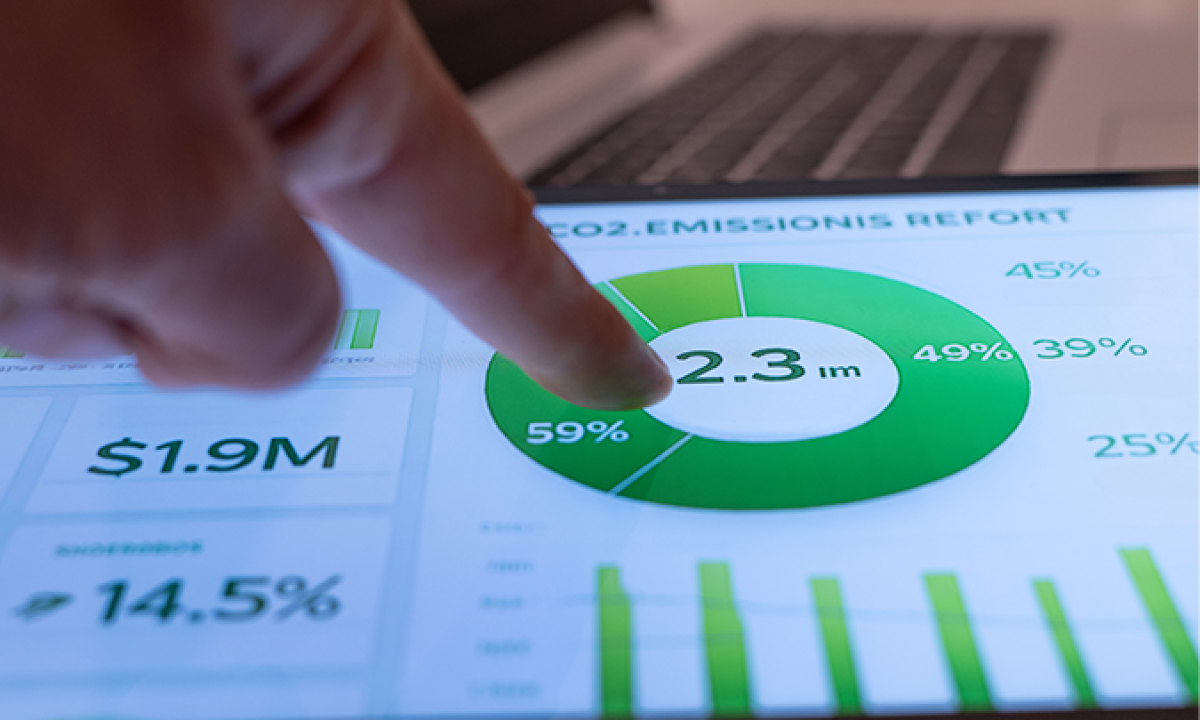
Climate risk assessment and resilience planning
Climate-related risk is now a mainstream business consideration, not a niche environmental concern. Investors, regulators, and customers increasingly expect organisations to understand and disclose how a changing climate could affect their operations, supply chains, and assets.
We help you assess physical climate risks (such as flooding, heat, and supply disruption) and transition risks (such as policy change, carbon pricing, and shifting market demand) across your operations and value chain. This includes scenario analysis aligned with recognised frameworks, helping you understand resilience under different future conditions rather than relying on a single forecast.
The output is a practical risk register and adaptation plan, not just a compliance document, giving your business a clear view of where resilience investment will matter most and building the evidence base UK SRS S2 expects to see behind a climate disclosure.
Governance, risk identification, and reporting alignment
Sustainability reporting has moved from a single voluntary framework to a genuinely crowded landscape, and getting the governance, risk identification, and disclosures right across all of them is a growing challenge for in-house teams.
Governance
Credible sustainability reporting starts with governance, not a spreadsheet. We help you establish clear board and management oversight of sustainability-related risks and opportunities, define who owns which data and decisions, and build the internal accountability structures that most current reporting frameworks now expect to see disclosed, not just implied.

Risk identification
Before you can report on sustainability risk, you need a structured way to identify it. We help you map material sustainability-related risks and opportunities across your operations and value chain, covering both climate-specific risk (which feeds into the climate risk assessment work above) and the wider set of environmental, social, and governance risks that can affect cash flow, access to finance, or cost of capital.

Reporting alignment
Once governance and risk identification are in place, the final step is aligning your reporting output to the frameworks that actually apply to your business. We help you navigate:
-
TCFD (Task Force on Climate-related Financial Disclosures): the governance, strategy, risk management, and metrics structure that underpins most current climate reporting.
-
ISSB (International Sustainability Standards Board) and UK SRS: the UK Sustainability Reporting Standards (UK SRS) are the UK government’s endorsed version of the ISSB’s global IFRS S1 and S2 standards, published in February 2026. UK SRS comprises two standards: UK SRS S1, covering general sustainability-related financial disclosures, and UK SRS S2, covering climate-related disclosures. Both are currently voluntary, with mandatory UK SRS S2 climate disclosures proposed for certain UK-listed companies from 2027.
-
CSRD (Corporate Sustainability Reporting Directive): the EU’s broader, double-materiality reporting regime, which affects many UK businesses with EU operations or supply chains. Read more in our CSRD guide.
-
ISO standards: including ISO 14064 for greenhouse gas quantification and reporting, which underpins credible carbon data across most other frameworks, including UK SRS.
We help you build the internal governance, risk identification processes, and disclosure workflows needed to report accurately once under the UK Sustainability Reporting Standards, CSRD, or whichever combination applies to your business, and reuse that data across each framework rather than duplicating effort framework by framework.
If you’re not yet sure whether UK SRS applies to your business, or want a plain-English view of what UK SRS S1 and UK SRS S2 actually require, our ESG and Sustainability Reporting Services team can walk you through it.
Sustainable supply chain and ESG consulting
Most organisations’ largest environmental and social impacts sit outside their own operations, in their supply chain. Sustainable supply chain consulting looks at supplier engagement, procurement criteria, and traceability, alongside the environmental and social dimensions of ESG performance more broadly.
We help you build supplier assessment criteria that go beyond a tick-box questionnaire, identify supply chain hotspots for both emissions and social risk, and develop a practical roadmap for improving supplier performance over time, with supply chain data structured to support UK SRS and CSRD reporting as those obligations land. This work sits alongside our wider ESG approach, connecting environmental, social, and governance performance into a single, coherent strategy rather than three disconnected workstreams.

What is sustainability consulting?
Sustainability consulting is a professional service that helps organisations measure, manage, and reduce their environmental impact while improving operational efficiency and meeting regulatory, investor, and customer expectations.
It typically includes:
-
Carbon footprint measurement across Scope 1, 2, and 3
-
Emissions reduction and decarbonisation strategies, including energy efficiency and renewable energy adoption
-
Lifecycle assessments and product impact analysis
-
Net zero target setting and delivery planning
-
Waste, water, and resource management assessment
-
Climate risk assessment and resilience planning
-
Sustainability reporting and compliance support, including CSRD, TCFD, ISSB, and the UK Sustainability Reporting Standards (UK SRS S1 and UK SRS S2)
Sustainability consulting enables businesses to turn environmental responsibility into measurable business value.
Speak to a consultantSustainability in action
Helping you reduce Scope 3 emissions
We help businesses measure, manage, and reduce Scope 3 emissions across complex supply chains.
By mapping emissions data and identifying key hotspots, we provide the insight needed to prioritise action and drive meaningful carbon reduction.
Through our data-led approach and specialist expertise, we support the development of targeted strategies that improve visibility, strengthen reporting, and deliver measurable progress towards net zero.
Developing a net-zero strategy
We help businesses develop clear, achievable net-zero strategies that align with their operations, supply chains, and long-term goals.
By combining emissions data, regulatory insight, and sector expertise, our team creates structured roadmaps that define priorities, set targets, and identify the most effective pathways to reduce your business’s carbon, including where energy efficiency and renewable energy investment can have the fastest impact.
By using our data-led approach and specialist team, we ensure your strategy is practical, measurable, and aligned with evolving frameworks, like CBAM, enabling you to move from ambition to action with confidence.

Improving product impact through lifecycle assessment
We help businesses improve the environmental impact of their products by identifying opportunities to reduce emissions, optimise materials, and enhance circularity.
By analysing product lifecycles and supply chain data, we provide the insight needed to make informed design and sourcing decisions that reduce environmental impact.
Through our specialist brands, we support the development of more sustainable products that improve performance, strengthen reporting, and align with regulatory and consumer expectations.


Why sustainability consulting matters
Sustainability consulting helps businesses turn ambition into action, providing the clarity, structure, and insight needed to drive meaningful progress.
As expectations continue to grow, organisations need a clear understanding of their environmental impact and a practical pathway to improve it. With the right approach, sustainability becomes a driver of efficiency, resilience, and long-term value.
Through expert guidance and data-led insight, businesses can:
-
Gain visibility of emissions across operations and supply chains
-
Build accurate, reliable data to support reporting and disclosures, including under the UK Sustainability Reporting Standards
-
Define clear, achievable pathways to net zero and emissions reduction
-
Understand and plan for climate-related risk across the business
Align sustainability goals with commercial performance and growth
Speak to our consultants
The benefits of Reconomy’s structured approach
With the right strategy and support, sustainability becomes a source of value, not just a requirement.
Benefits include:
-
Clear visibility of environmental impact
-
Data-driven decision-making
-
Reduced emissions and operational costs
-
Stronger ESG performance and reporting, aligned to CSRD, TCFD, ISSB, and UK SRS
Improved resilience and long-term competitiveness
See other environmental compliance servicesDownload our 2025 Sustainability Report
Ready to see real impact in action? Download our 2025 Sustainability Report to discover how Reconomy is accelerating the transition to a circular, net-zero future, one ambitious milestone at a time. Dive into the details, explore our progress, and be inspired to join us on the journey toward lasting change.
Sustainability consulting for your industry
We support organisations across a wide range of sectors, including:
- Manufacturing, improving efficiency and reducing production emissions
- Retail and eCommerce, addressing supply chain and Scope 3 emissions
- Consumer goods, enhancing product sustainability and lifecycle performance
- Logistics and supply chain, optimising transport and distribution emissions
Construction, supporting material impact and carbon reduction strategies
Who we do it forFAQs
Consultants assess climate risk by looking at both physical risks, such as flooding, extreme heat, and supply disruption, and transition risks, such as policy change and carbon pricing. This typically involves scenario analysis across different future conditions, mapped against your operations, assets, and supply chain, resulting in a practical risk register and adaptation plan rather than a purely theoretical assessment.
Common services include waste stream assessment and diversion from landfill, water use and efficiency reviews, and resource management strategies that identify opportunities for reuse or recycling before disposal. These assessments typically feed directly into wider ESG and sustainability reporting, since resource use is a core disclosure area under most current frameworks.
Sustainability consultants typically work across CSRD (the EU’s double-materiality reporting directive), TCFD (the climate governance and risk framework most current standards build on), and the ISSB’s global IFRS S1 and S2 standards, including the UK’s own endorsed version, UK SRS S1 and UK SRS S2, published in February 2026. Consultants help align data collection so it satisfies multiple frameworks without duplicating the underlying work.
UK SRS S1 and UK SRS S2 are the two standards that make up the UK Sustainability Reporting Standards (UK SRS), published by the UK government in February 2026. UK SRS S1 covers general sustainability-related financial disclosures, while UK SRS S2 covers climate-related disclosures specifically. Both are the UK’s endorsed version of the ISSB’s global IFRS S1 and S2 standards, and are currently available for voluntary use, with mandatory UK SRS S2 climate reporting proposed for certain UK-listed companies from 1 January 2027.
Carbon accounting is the process of measuring and recording an organisation’s greenhouse gas emissions across Scope 1, 2, and 3, using recognised methodologies such as the GHG Protocol and ISO 14064. Net-zero planning builds on that data to set science-aligned targets and a structured roadmap for reducing emissions over time. In consulting terms, the two go hand in hand: accurate carbon accounting is the foundation that makes a net-zero plan credible, measurable, and ready for disclosure under frameworks like UK SRS.
Consultants typically start with an energy audit to identify where consumption is highest and least efficient, then prioritise interventions such as equipment upgrades, process changes, and on-site or contracted renewable energy sources. These recommendations are usually sequenced by payback period and carbon reduction impact, so businesses can prioritise the changes that deliver the fastest return alongside emissions cuts.
A sustainability consultant helps organisations measure environmental impact, identify improvement opportunities, and implement strategies to reduce emissions and improve efficiency.
Carbon footprinting measures total emissions across Scope 1, 2, and 3, while Scope 3 focuses specifically on indirect emissions across the value chain, often the largest portion.
Typically between 8 to 16 weeks depending on data availability, organisational complexity, and scope of operations.
Yes, many organisations combine internal teams with external consultants to access specialist expertise and accelerate progress.
Industries with complex supply chains or high emissions, such as manufacturing, retail, logistics, and construction, benefit the most.
By improving resource efficiency, reducing energy use, optimising supply chains, and identifying cost-saving opportunities linked to emissions reduction.
Get in touch with us