

What is Circular Fashion? Trends shaping a more sustainable fashion industry
Last updated: 27 July 2026 at 3:19 pm - 30 min read
The fashion industry is undergoing one of the most significant transformations in its history. Long driven by a linear “take, make, use” model, the sector is now under increasing pressure to reduce waste, conserve resources, and adopt more sustainable practices.
In 2026, circular fashion has moved from a niche concept to a central focus for brands, policymakers, and supply chains globally. Businesses are exploring new ways to reuse, repair, recycle, and redesign clothing so that materials stay in circulation longer and fewer resources are wasted.
Yet, despite growing awareness and innovation, the industry still faces structural challenges. Textile waste continues to rise, global clothing production remains high, and the infrastructure needed to support circular systems is still developing.
Understanding the current state of circular fashion is essential for businesses looking to build resilient supply chains, reduce environmental impact, and remain competitive in an evolving regulatory landscape.
In this blog, we explore how the circular economy works in the fashion industry, why sustainable fashion matters, the challenges facing the industry, and the innovations helping to drive meaningful change.
Let’s dive in.
How circular is the fashion industry?
The global fashion industry generates huge volumes of waste and relies heavily on virgin materials. Over the past decade, clothing consumption has increased, driven by fast fashion production cycles and lower-cost garments.
In the European Union alone, the average consumer purchased 8 kilograms of clothing and 4 kilograms of footwear in 2022 (European Environment Agency).
At the same time, many garments are worn only a handful of times before being discarded. Some studies estimate that the lowest-cost garments are disposed of after as few as seven wears (McKinsey, 2025).
The scale of textile waste illustrates the urgency of the problem. In the UK alone:
-
Around 1.45 million tonnes of used textiles were generated in 2022 (European Environment Agency).
-
Only 650,000 tonnes were diverted from residual waste streams (WRAP, Textiles Market Situation Report, 2024)
-
Approximately 759,000 tonnes were lost to landfill or incineration (WRAP, Textiles Market Situation Report, 2024)
Global textile fibre production is reaching record highs. In 2023, the industry produced around 124 million tonnes of fibres, yet only a small fraction was recovered and used to make new materials. Less than 8% of fibres came from recycled sources, and under 1% was made from recycled textiles.
This matters because true closed-loop recycling — where used garments are collected, sorted, processed, and reintroduced into new clothing at scale — still isn’t happening widely enough. Without reliable textile-to-textile pathways, most fashion waste continues to be sent to residual waste streams, landfill, or incineration instead of being cycled back into new products.
While UK and EU data highlight the scale of the issue, the global picture is even more urgent. Every year, the world generates tens of millions of tonnes of textile waste, fuelled by high consumption, short garment lifecycles, and the ongoing reliance on virgin fibre production.
Crucially, only a small portion of this fashion waste is recovered for reuse or recycling. The rest is typically diverted to residual waste streams, landfill, or incineration — meaning valuable fibres and materials are lost instead of being kept in circulation.
This is where circular fashion becomes essential. By improving collection and sorting systems and expanding textile recycling capacity, circular models focus on the “leak” in the system — recovering textiles before they reach disposal. In line with the approach promoted by the Ellen MacArthur Foundation, the goal is to move from a linear take-make-waste model to one that keeps materials in use for longer and supports higher-value recovery outcomes.
To put it simply: global textile waste is measured in the tens of millions of tonnes annually, and recovery rates remain far too low to create true closed-loop recycling at scale. That gap between what is discarded and what is actually recovered is a key reason circular fashion is moving from a sustainability goal to an operational priority for brands and supply chains.
These figures highlight a major challenge: valuable materials are being lost rather than reused.
Moving from a linear system toward a circular economy in fashion offers a pathway to reduce waste, preserve resources, and build more sustainable supply chains.
What is circular fashion?
Circular fashion is a clothing design and production approach that aims to keep garments and materials in use for as long as possible — through reuse, repair, resale, and recycling. Unlike linear fashion (the traditional “take, make, use, dispose” model), circular fashion focuses on closing the loop so fewer textiles end up as waste and more resources stay in circulation.
Unlike traditional fashion systems that produce waste at the end of a product’s life, circular fashion aims to close the loop by recovering materials and reintroducing them into new products.
Circular fashion is built on several key principles:
Design for longevity
Garments are designed to last longer and withstand repeated use.
Design for recyclability
Products are constructed in ways that allow fibres and materials to be recovered at the end of life.
Reuse and resale
Second-hand markets and recommerce platforms extend garment lifespans.
Repair and refurbishment
Repair services help consumers maintain and extend the life of clothing.
Recycling and material recovery
Textiles are processed into new fibres or alternative materials.
Together, these strategies support a more sustainable and resilient fashion system.
Circular fashion principles — and how to spot greenwashing
Circular fashion is built on practical principles like keeping products in use longer, designing for repair and recyclability, and improving material recovery. But as the term “circular” becomes more mainstream, it’s also attracting marketing claims that may not reflect real-world impact.
Greenwashing in circular fashion often shows up when brands use circular language without clear evidence, measurable targets, or credible end-of-life pathways. For example, a product may be marketed as “recyclable” while the company cannot demonstrate that the required collection, sorting, and recycling infrastructure exists at scale.
To evaluate circular fashion claims more confidently, look for these signals:
-
Clear scope and metrics: Are the claims backed by data (e.g., recycled content percentages, expected lifespan, recovery rates) and time-bound targets?
-
A defined end-of-life route: Does the brand explain what happens after use — reuse, resale, take-back, or recycling — and where that process is available?
-
Design choices that enable circularity: Are garments designed for longevity (durability, repairability) and for material recovery (e.g., mono-material construction or detachable components)?
-
Evidence of scale: Pilot programmes are a start, but credible circularity should show progress beyond limited trials.
-
Third-party verification: Independent audits, certifications, or transparent reporting can help validate sustainability and circular economy claims.
When circular fashion is done well, it’s not just about materials — it’s about systems. That means aligning product design, consumer access to repair and resale, and the infrastructure needed for collection and recycling.
In the next section, we’ll look at how policy, data, and infrastructure are helping move circular fashion from marketing claims to measurable outcomes.
Rising interest in circular fashion
Over the past few years, circular fashion has rapidly moved from a niche sustainability concept to a mainstream industry priority. Brands, policymakers and consumers are increasingly exploring how clothing can be designed, used and recovered in ways that reduce waste and keep materials in circulation.
Search trends reflect this growing momentum. Global online interest in circular fashion has increased significantly since 2023 as businesses seek solutions to address textile waste, regulatory pressure and changing consumer expectations.
As awareness of the environmental impact of fashion grows, circular business models such as resale, repair, take-back schemes and textile recycling are attracting increasing attention from brands and investors alike.
This rising interest highlights a broader shift in the industry: circularity is no longer just a sustainability ambition, but an emerging operational priority for fashion supply chains.
The chart below shows global search interest in “circular fashion” from Google Trends between 2001 and 2026, indiciating the rise in popularity and awareness.
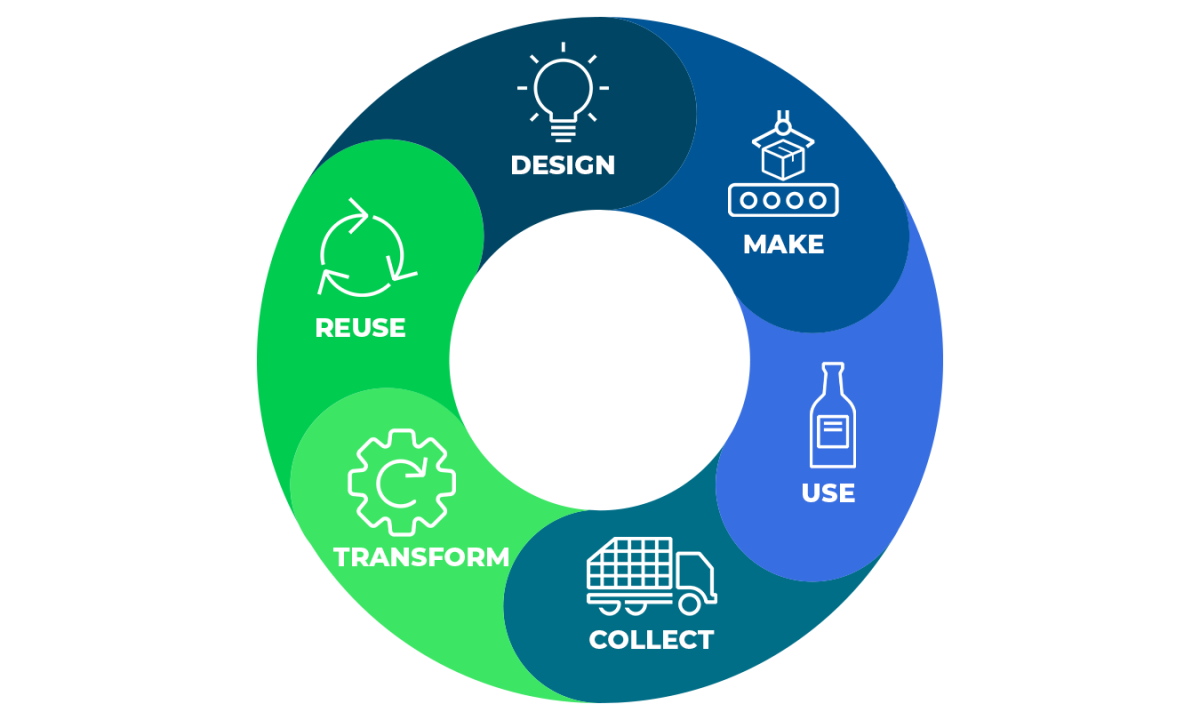
How the circular economy works in fashion
The circular economy transforms how clothing moves through the supply chain.
Instead of a one-directional lifecycle, circular systems create continuous material flows.
Design
Design teams choose materials and construction techniques that support reuse and recycling.
Examples include:
-
mono-material garments
-
detachable components
-
recyclable fibres
Production
Manufacturers integrate recycled materials and reduce waste during production.
Consumption
Consumers purchase, wear, repair, and potentially resell garments.
Collection and sorting
Used textiles are collected and sorted into categories such as:
-
reuse
-
resale
-
recycling
-
disposal
Recycling and remanufacturing
Materials are processed and transformed into new products or fibres.
However, scaling these systems remains challenging due to the complexity of global textile supply chains.
For a deeper analysis of industry progress, read our report on the state of the circular economy in the fashion industry.
How sustainable fashion impacts the environment
Sustainable fashion focuses on reducing environmental harm while improving social and economic outcomes across the industry.
Circular fashion helps reduce fashion waste sent to landfill and incineration by keeping garments and materials in use for longer. When brands design for longevity, repair, and recyclability — and when they offer take-back, resale, and recycling pathways — more textiles are diverted from residual waste streams and recovered for reuse or material recovery instead of being discarded.
Can circular clothing reduce environmental impact? What to measure over the next year
Circular clothing can reduce environmental impact, but results depend on whether circular systems are used at scale. Repair and resale often deliver strong benefits because they extend wear and reduce demand for new manufacturing. Recycling can also help, but outcomes vary depending on fibre type, collection rates, and whether textile-to-textile recycling is achievable. For brands and businesses, the most useful question is not only “is it circular?” but “what changed in practice?” A measurement approach can include average wears per garment, repair uptake, resale volumes, take-back participation, and the share of collected items that achieve reuse rather than being diverted to residual waste streams, landfill, or incineration.
DPP-based information and data can strengthen these measurements by improving traceability and making end-of-life outcomes more visible. Over the next year, progress in circular fashion is likely to be shaped by operational investment (collection and sorting capacity, repair services, and recycling routes) alongside regulatory pressure, including ESPR and DPP requirements. The brands that reduce environmental impact most effectively will be those that link design choices to measurable outcomes, work closely with suppliers to improve data quality, and build clear pathways for reuse, repair, resale, and recycling — aligned with circular economy principles promoted by organisations such as the Ellen MacArthur Foundation.
Reduced raw material extraction
Circular models reduce reliance on virgin fibres and natural resources.
Lower textile waste
Resale, repair and recycling systems help keep garments in circulation.
Reduced emissions
Extending product lifecycles lowers the emissions associated with manufacturing new clothing.
Water conservation
Sustainable materials and circular production processes reduce water use.
Beyond environmental benefits, sustainable fashion also offers important commercial advantages.
Companies adopting circular strategies can unlock:
-
new revenue streams from resale and repair
-
improved supply chain resilience
-
stronger brand reputation
-
improved regulatory compliance
These benefits demonstrate that circularity can support both environmental and economic sustainability.
The biggest challenges facing circular fashion
Despite growing momentum, several systemic barriers still limit the widespread adoption of circular fashion.
Fragmented supply chains
Fashion supply chains involve multiple suppliers, manufacturers, and logistics partners across different countries. This complexity makes it difficult to coordinate circular initiatives.
Working with suppliers: building the data foundation for DPP and circular fashion
Improving upstream visibility is one of the most practical ways to make circular fashion more credible. In many fashion supply chains, suppliers hold critical information about fibre origin, fabric processing, chemical treatments, and manufacturing conditions. Without that information, it becomes harder for brands and companies to evidence sustainability claims or build reliable end-of-life routes. A DPP approach can change the workflow by setting clear supplier expectations for what data must be provided, how it is formatted, and how often it is updated. This can improve consistency and reduce delays when a business needs to answer customer questions, verify recycled content, or support take-back and recycling partners. It can also help reduce conflicting requirements created by multiple brand frameworks, because suppliers can work towards a shared set of information outputs. A practical starting point is to focus on high-volume categories (for example, jeans and core basics) and define a minimum viable DPP dataset — fibre composition, fabric construction, recycled content, trim materials, and care guidance. From there, businesses can expand to include repair guidance, disassembly notes, and verified certifications, helping circular systems scale and reducing fashion waste over time.
Lack of industry standards
Many brands have developed their own circular frameworks. While well-intentioned, these fragmented approaches can create conflicting requirements for suppliers.
To help you spot circular fashion greenwashing, look beyond the buzzwords and check whether the brand can prove the “circular” part of the claim. Common red flags include:
-
Vague language without evidence: Phrases like “eco-friendly,” “circular,” or “sustainable” without data, targets, or a clear methodology.
-
Claims that ignore end-of-life reality: The product is marketed as “recyclable” or “designed for circularity,” but the brand doesn’t explain the collection, sorting, and recycling route where it will actually go.
-
Recycled content claims without traceability: “Recycled” materials are used, but there’s no transparency on sourcing, fibre type, or whether the material can realistically be recovered again.
-
Design-for-circularity that isn’t measurable: Promises of durability or repairability aren’t backed by lifespan testing, repair availability, or clear service coverage.
-
Pilot projects presented as scaled solutions: Limited trials are used to imply industry-wide impact, even when infrastructure and volumes remain small.
-
One-way circularity: The brand focuses on recycling while neglecting the earlier steps — reuse, resale, repair, and take-back — that typically deliver the biggest waste reduction.
-
No third-party verification: Lack of independent audits, certifications, or transparent reporting makes it harder to validate claims.
When circular fashion is credible, it’s supported by measurable outcomes — clear end-of-life pathways, realistic recovery rates, and transparent reporting that shows progress over time.
Limited recycling infrastructure
Textile-to-textile recycling is still limited, particularly for garments made from blended fibres. When fabrics combine materials (for example, cotton with polyester), separating them into clean, single-fibre streams is technically difficult. The required sorting and processing can be costly and energy-intensive, and the necessary recycling capacity is not yet available widely enough to support high volumes.
Because of these constraints, many blended textiles are more likely to be downcycled into lower-value products or diverted to residual waste streams instead of being returned to new clothing. This is one reason circular fashion outcomes can fall short of “closed-loop” expectations — especially for the most common fabric blends.
That said, progress is underway. New sorting technologies are improving how fibres are identified and separated, while chemical recycling methods can help break down complex textile blends into usable inputs. At the same time, better product design for recyclability — such as simplifying construction, reducing mixed-material components, and improving material traceability — makes end-of-life recovery more feasible.
The remaining challenge is scale and consistency. To achieve reliable, high-quality textile-to-textile recycling for blended fabrics across global supply chains, the industry needs wider infrastructure, more mature processing routes, and stronger coordination between brands, recyclers, and collection systems.
Without improved infrastructure, large volumes of textiles will continue to be lost to waste streams.
Financial barriers
Circular initiatives often require long-term investment in infrastructure, technology, and logistics.
Many circular fashion projects remain stuck in pilot phases rather than scaling across the industry.
Consumer behaviour
Low-cost fashion has reshaped how many consumers value clothing. When garments are inexpensive, they are often treated as disposable, making them more likely to be discarded rather than repaired, reused or resold.
Consumers play a key role in making circular fashion work. The most effective actions are the ones that keep garments in use longer — by choosing repair over replacement, buying second-hand through resale and recommerce channels, and using take-back or textile recycling schemes when a garment can no longer be worn.
When repair services are easy to access, garments stay in circulation for more wear cycles. When resale options are available, consumers can reduce demand for new production. And when textile recycling routes are clear and convenient, more materials can be recovered instead of being sent to residual waste streams, landfill, or incineration.
However, affordability does not necessarily have to come at the expense of sustainability. Some large retailers are beginning to demonstrate how circular fashion principles can be applied at scale. For example, Primark has introduced a Circular Product Standard, embedding durability, recyclability and the use of recycled or more sustainably sourced fibres into product design.
Through this framework, garments are designed to last longer, use safer materials and be more easily recycled into new fibres at the end of their life. The company reports that 45% of clothes sold are already made from recycled or more sustainably sourced materials, with a goal for all clothing to meet this standard by 2030 (The Primark Circular Product Standard).
Examples like this show that while fast fashion consumption patterns remain a challenge, brands can still support circularity through better product design, consumer education and scalable recycling infrastructure.
Circular fashion innovations and green fashion initiatives
Innovation is playing a critical role in accelerating the transition toward circular fashion.
Several circular fashion innovations are gaining traction across the industry.
Choosing the right circular model depends on your product type, customer behaviour, and the end-of-life routes you can realistically support. Rather than treating repair, resale, rental, and take-back as separate initiatives, many brands combine them to keep garments in use for longer and reduce the volume that reaches residual waste streams.
Repair is often the best starting point for items with high wear potential (e.g., denim, outerwear, knitwear). It directly extends product lifecycles and can be relatively straightforward to scale through in-store services, mail-in repairs, or partner networks. Repair also helps build customer loyalty because it keeps familiar products in rotation.
Resale and recommerce work well when garments retain value after use — especially for durable basics, seasonal lines with strong demand, and brands with recognizable quality. Resale reduces the need for new production by shifting demand to second-hand channels. It also creates a feedback loop: brands can learn which styles last longest and adjust design and sourcing accordingly.
Clothing rental is most effective for categories where demand is time-bound or event-driven (e.g., occasionwear, workwear for short cycles, seasonal fashion). Rental can reduce the number of new garments required per wearer, but it requires operational capability — cleaning, maintenance, inventory planning, and clear hygiene standards.
Take-back schemes are essential for closing the loop when garments can no longer be worn. They are most valuable when you can connect collection to a credible pathway — reuse, recycling, or material recovery — rather than simply collecting items. Take-back also supports better data collection on material composition and end-of-life outcomes, which strengthens future design-for-recyclability decisions.
In practice, the “best” model is the one that matches your product and infrastructure while maximizing time in use. Repair and resale typically deliver the biggest impact for garments that can still be worn, while take-back becomes critical for managing what’s left at end of life. Rental can add value where usage patterns make shared access more efficient.
Clothing rental platforms
Rental services allow consumers to access fashion without purchasing new garments, reducing demand for production.
Resale and recommerce
Second-hand fashion platforms extend garment lifespans and reduce waste.
Many brands now operate their own resale platforms.
Take-back schemes
Retailers are introducing garment collection programmes that allow customers to return used clothing for reuse or recycling.
How DPP data supports resale, repair and recycling
Circular models work best when they are supported by clear, accessible information. A DPP can make that information available at the point of decision — whether that’s a consumer choosing resale, a technician completing a repair, or a sorter directing items into the right recycling stream. In resale and recommerce, DPP data can improve trust by confirming product details and materials, which helps reduce uncertainty that can limit second-hand volumes. In repair, a Digital Product Passport can link to component information, approved repair methods, and spare-part specifications, helping garments stay in use for longer. In recycling, DPP-enabled information can improve sorting accuracy and increase the quality of material recovery. Sorting facilities can use DPP information to identify fibre blends, dyes, and finishes that affect processing routes — a key issue because blended fabric remains one of the biggest challenges for textile-to-textile recycling at scale. Over time, aggregated DPP data can also help brands measure end-of-life outcomes, estimate recovery rates, and identify which designs reduce waste most effectively.
Digital product passports
Digital product passports provide detailed information about materials, production processes, and recyclability.
These technologies improve supply chain transparency and enable better material recovery.
Digital product passports (DPP): what they are and why they matter for circular fashion
Digital product passports are moving from a concept to a practical tool for circular fashion. A Digital Product Passport (often shortened to DPP) is a digital record linked to a specific product that stores structured information about its materials, design, manufacturing, and end-of-life options. In the fashion industry, a DPP can include information such as fibre composition, fabric treatments, recycled content, trim details, care guidance, repair instructions, and recycling routes.
This matters because without reliable product information, it’s difficult to scale collection and sorting, improve material recovery, or build credible textile-to-textile recycling pathways. For businesses, DPP data helps connect design decisions to real-world outcomes. Recyclers can use consistent information to route garments into the right processes, while resale and repair services benefit when consumers can access clear care and repair guidance. As regulatory frameworks evolve — including ESPR — DPP requirements are also likely to shape how companies manage product data, collaborate with suppliers, and evidence progress on sustainability targets over time.
Sustainable materials transforming fashion
Material innovation is another important driver of circular fashion.
Recycled fibres
Recycled polyester and recycled cotton help reduce reliance on virgin materials.
However, recycled textiles currently represent only a small portion of global fibre production.
Bio-based materials
Emerging materials include:
-
mycelium leather
-
algae-based textiles
-
plant-based fibres
Regenerative natural fibres
Regenerative agriculture supports soil health and biodiversity while producing natural fibres.
Examples include:
-
regenerative cotton
-
hemp
-
flax
While sustainable materials are important, material innovation alone cannot solve the industry’s environmental challenges. Circular systems must also address product design, consumption patterns, and waste management.
Even though circular fashion can significantly reduce waste and emissions, it’s not a “perfect solution” for every product or every stage of the lifecycle. To cut environmental impact in a credible way, it helps to understand the limits and trade-offs.
First, circular strategies depend on scale and access. Repair, resale, and take-back only deliver strong results when there are enough services, convenient drop-off points, and reliable end-of-life routes. If collection and sorting are limited, garments may still end up in residual waste streams, landfill, or incineration.
Second, not all circular outcomes are equal. Recycling can be valuable, but textile-to-textile recycling — especially for blended fabrics — remains challenging. In many cases, materials are downcycled into lower-value products or alternative materials, which can reduce the overall environmental benefit compared with true closed-loop recycling.
Third, circular fashion can shift impacts rather than eliminate them. For example, resale and recommerce require logistics, cleaning, and processing. If these steps are inefficient or powered by high-carbon energy, the net benefit may be smaller than expected.
Finally, design choices matter. A garment that is “recyclable” on paper may still be difficult to recover in practice if fibre composition, construction, and sorting requirements aren’t aligned with available recycling infrastructure. That’s why circular fashion should be evaluated as a system — design, use, and end-of-life — rather than a single claim.
In the next section, we’ll look at how policy, data, and infrastructure help address these limitations and make circular fashion outcomes more measurable.
Brands leading the circular fashion movement
Several brands are pioneering circular fashion strategies.
Patagonia
Known for repair programmes and durable product design, Patagonia supports circular fashion by helping customers keep garments in use longer through practical repair services and take-back-style resale pathways. By extending product lifecycles and reducing the need for new purchases, the brand helps cut textile waste and strengthens the shift from linear “take-make-dispose” consumption toward a more circular model.
See Patagonia’s sustainability
Stella McCartney
A leader in sustainable materials and ethical fashion production.
See Stella McCartney’s sustainability
Eileen Fisher
Operates take-back and resale programmes that extend garment lifecycles.
See Eileen Fisher’s sustainability
Nike
Through initiatives such as Nike Grind, materials from used footwear are repurposed into new products and surfaces.
These companies demonstrate how circular business models can support both sustainability and innovation.
Policy, data and infrastructure supporting circular fashion
Policy and regulation are becoming powerful drivers of circular fashion.
Governments and regulatory bodies are introducing new frameworks designed to reduce textile waste and encourage sustainable production.
ESPR and DPP requirements: what fashion businesses should prepare for now
Policy is becoming a major driver of circular fashion, particularly in Europe. The ESPR (Ecodesign for Sustainable Products Regulation) is expected to increase the focus on product durability, repairability, and transparency across categories, including textile products. In practice, ESPR-linked requirements will push companies to maintain consistent information about products from raw materials through manufacturing and end-of-life.
This is where a DPP becomes practical: it can provide a standard way to collect, store, and share product information across the value chain. For brands and businesses, preparation often comes down to operational readiness — reliable data, clear governance, and the ability to retrieve information quickly. Many companies will need new internal processes to validate claims and ensure suppliers can provide accurate inputs. Starting early can reduce disruption later, especially in global fashion supply chains where supplier capability and digital maturity vary.
Extended producer responsibility (EPR)
EPR regulations require brands to take responsibility for the environmental impact of their products throughout the lifecycle.
Digital transparency
Data systems and digital product passports help track material flows and improve supply chain transparency.
Recycling infrastructure investment
Investment in textile sorting and recycling facilities is essential for scaling circular systems.
Without stronger infrastructure, many textiles will continue to be lost to landfill or incineration.
The future of circular fashion
The transition to circular fashion is accelerating as environmental pressures, regulatory frameworks, and consumer expectations evolve.
Several trends are likely to shape the industry in the coming years.
Stronger regulation
Governments are increasingly introducing policies that require companies to manage textile waste and improve product sustainability.
Greater supply chain collaboration
Circular systems require collaboration between designers, manufacturers, recyclers, logistics providers and retailers.
Consumer engagement
Consumers are becoming more aware of fashion’s environmental impact and are increasingly participating in resale, repair and recycling initiatives.
Data-driven circularity
Advanced tracking systems will allow businesses to better understand material flows and identify opportunities to recover resources.
Together, these developments will help move the fashion industry toward a fully circular ecosystem.
Key takeaways
The fashion industry is facing a critical moment of transformation.
Key insights include:
-
Clothing consumption continues to rise globally
-
Textile waste remains a major environmental challenge
-
Circular fashion offers a pathway to reduce waste and conserve resources
-
Innovation, policy and collaboration will be essential to scaling circular systems
By embracing circular principles, the fashion industry can shift away from linear production models and build more sustainable, resilient supply chains.

Closing the circularity gap
The transition to circular fashion will require collaboration across the entire ecosystem, from designers and manufacturers to recyclers, policymakers, and consumers.
By rethinking how garments are designed, produced, used and recovered, the industry can conserve resources, reduce waste and unlock new economic opportunities.
At Reconomy, we believe circularity should be practical, accessible and commercially viable, helping businesses close the circularity gap and build more resilient supply chains.
Learn about The Circularity GapFAQs: Circular fashion
Precise global figures vary by source, but the industry generates tens of millions of tonnes of textile waste annually, driven by high consumption, short garment lifecycles and continued reliance on virgin fibre production. In the UK alone, around 1.45 million tonnes of used textiles were generated in 2022, with roughly 759,000 tonnes lost to landfill or incineration.
Common signs include vague claims like “eco-friendly” or “circular” with no data or targets behind them, “recyclable” products with no real collection or recycling route, recycled content claims with no traceability, pilot programmes presented as scaled solutions, and a lack of third-party verification or independent certification.
Circular fashion keeps garments and materials in use for longer through design for longevity, repair and recyclability, alongside take-back, resale and recycling pathways. Each extra wear cycle or successful recovery route means one less garment sent to landfill or incineration, and one less new garment needed to replace it.
The most effective consumer actions are the ones that extend a garment’s life: choosing repair over replacement, buying second-hand through resale and recommerce platforms, and using take-back or textile recycling schemes once a garment can no longer be worn.
Textile-to-textile recycling is limited because many garments are made from blended fibres, such as cotton mixed with polyester, which are technically difficult and costly to separate into clean, single-fibre streams. Sorting and recycling infrastructure also isn’t yet available at the scale needed to process high volumes cost-effectively.
Circular fashion is a design and production approach that keeps garments and materials in use for as long as possible, through reuse, repair, resale and recycling. Linear fashion follows a “take, make, use, dispose” model instead, where garments are manufactured, worn and then discarded with no route back into new products.
Patagonia supports circular fashion through its Worn Wear programme, which offers practical repair services alongside take-back-style resale. By helping customers keep garments in use for longer rather than replacing them, the programme reduces textile waste and demand for new production.
The right model depends on the product and the end-of-life routes a business can realistically support. Repair suits items with high wear potential, such as denim and outerwear. Resale works well for garments that retain value. Rental suits time-bound or event-driven categories. Take-back is essential for closing the loop once a garment can no longer be worn.
Circular fashion depends heavily on scale and access, so its impact is limited wherever collection, repair or resale services aren’t widely available. Recycling blended fabrics remains far from a true closed loop, and processes like resale logistics can shift environmental impact rather than eliminate it.
Globally, under 1% of new textile fibre production currently comes from recycled textiles, even though the industry produced around 124 million tonnes of fibres in 2023. Less than 8% came from any recycled source at all, showing how far the industry still is from true closed-loop, textile-to-textile recycling at scale.
Discover how the circular economy works
Circular fashion is just one example of how industries are beginning to rethink the way products are designed, used and recovered.
Across sectors, the circular economy is helping businesses move beyond the traditional take, make, waste model by keeping materials in use for longer, reducing waste and protecting valuable resources.
For organisations navigating sustainability challenges, understanding how circular systems work in practice is the first step toward building more resilient supply chains and unlocking new value from materials that might otherwise be lost.
Explore our introduction to the circular economy to learn how circular principles work across industries, and how businesses can begin turning sustainability ambitions into practical action.
Learn about the Circular EconomyUse our Circular Economy Glossary
Providing definitions of key terms related to the Circular Economy, including Waste Hierarchy, closed-loop systems, carbon emissions, and the Circularity Gap.
Speak to our specialists in circular fashion