
ASDA George
Read More about ASDA GeorgeReverse Vending Machines
Reverse vending, forward thinking
A recycling device with integrated technology that accepts used (empty) beverage containers in return for a monetary or non monetary reward.
Find out moreReady to meet any Deposit Return Scheme (DRS) legislation
The Reconomy Reverse Vending Machine (RVM), delivered through our specialist brand EcoVend, is a recycling device with integrated technology that accepts used (empty) beverage containers in return for a monetary or non monetary reward. This could be; vouchers, discounts or even charitable donations.
A reverse vending machine (RVM) automates the collection and storage of drinks containers to support recycling. Depending on the model and configuration, it can accept empty plastic drinks bottles and aluminium cans, subject to the machine’s capabilities and the relevant scheme’s eligibility rules. Before collecting a container, configured identification technology may check details such as its barcode, shape or material. The machine then directs accepted containers for sorting, compaction or storage, depending on its design. RVMs are used across Europe, Asia and the Americas, and established schemes in some markets have seen strong user engagement and high beverage-container recycling rates.
UK Deposit Return Scheme
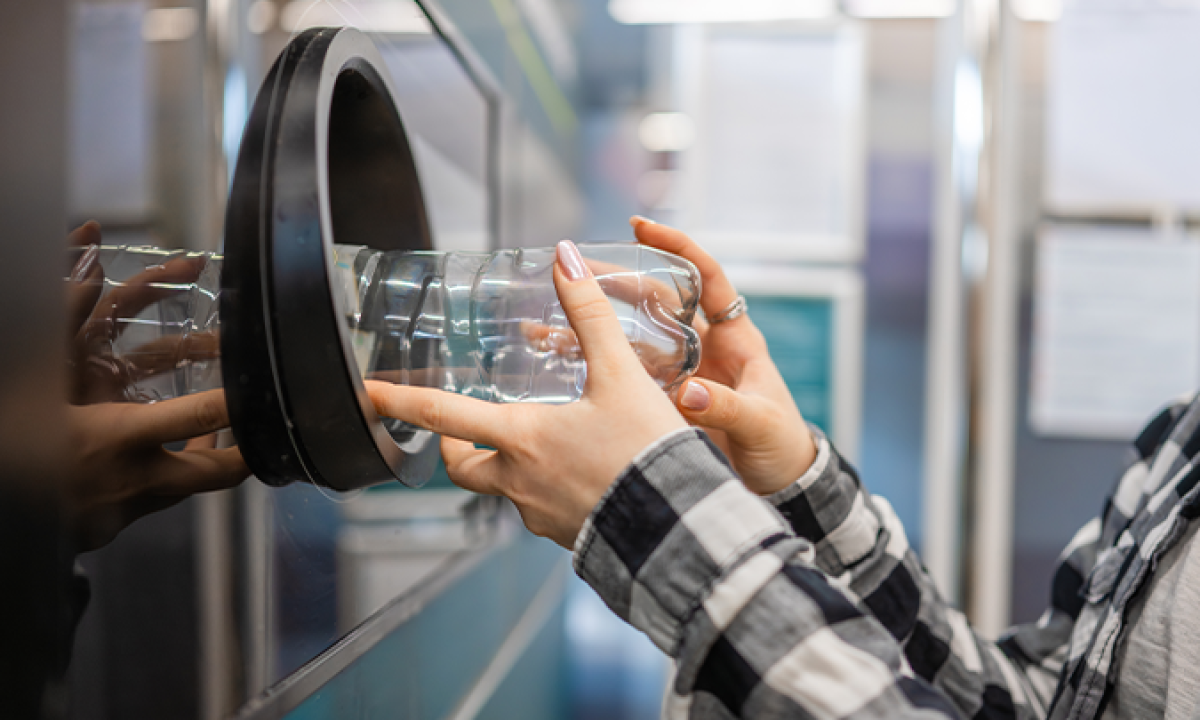
A reverse vending machine can support UK Deposit Return Scheme takeback by checking whether drinks containers meet the applicable eligibility rules and collecting accepted returns. Where the scheme and machine configuration allow, returning an eligible container may trigger a deposit refund. Requirements and refund processes vary by scheme, so check that the machine is configured for your site’s obligations.
Speak to our DRS expertsRVM capacity and configuration
RVM capacity and configuration should reflect your operational requirements, available space, expected return volumes and wider circularity objectives. A well-planned setup helps organisations manage resources efficiently, improve collection performance and support the recovery, reuse or recycling of returned materials.
Choosing the right capacity
Capacity planning typically considers:
- the number and type of containers expected at each location;
- daily and peak-period return volumes;
- collection frequency and storage requirements;
- available floor space and access arrangements; and
- the level of automation and staff involvement required.
Matching capacity to demand can help reduce collection interruptions, make better use of space and create a more consistent experience for customers and operational teams.
Configuring the RVM for your operation
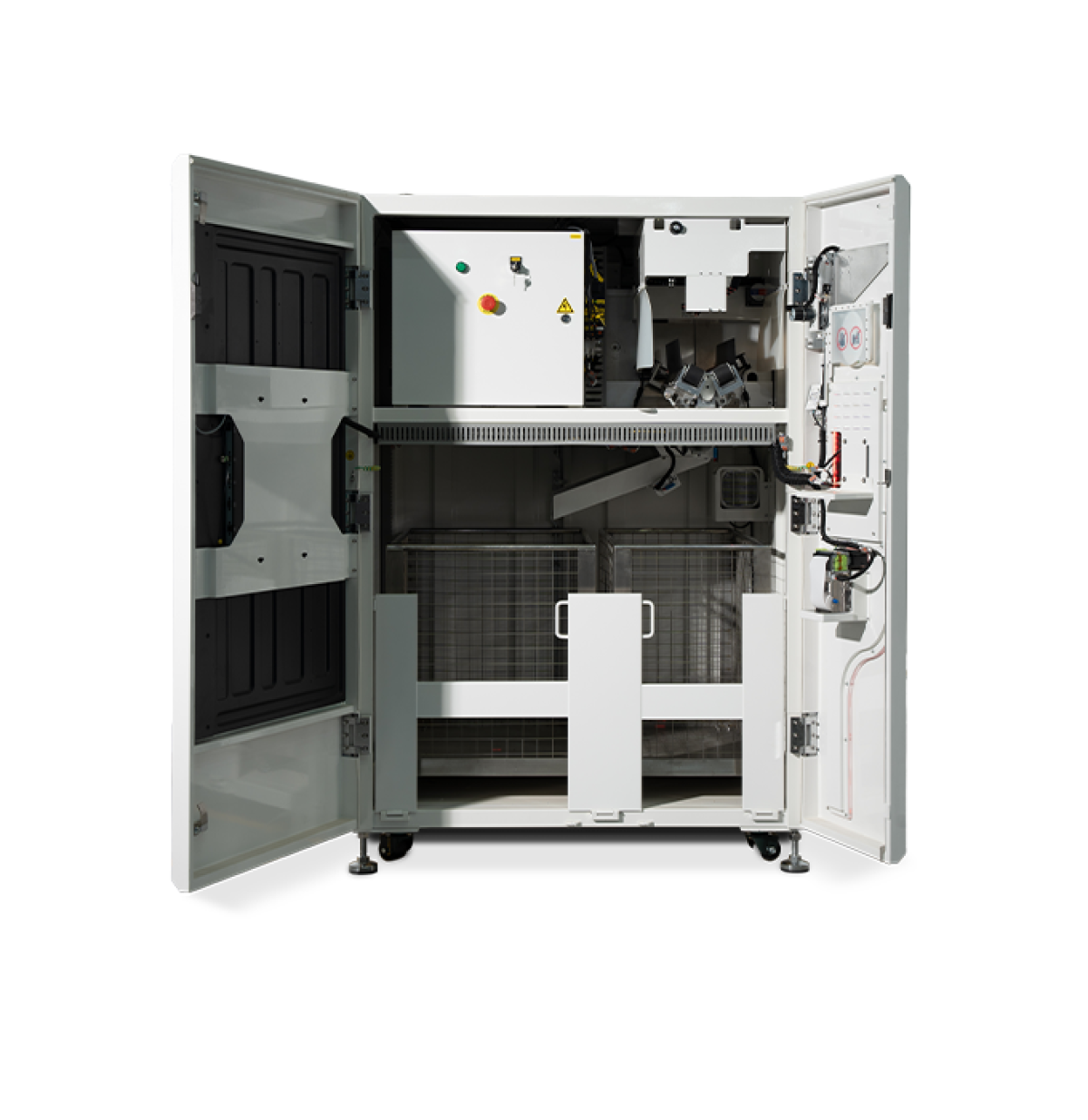
RVM configurations can be tailored to suit different environments, including retail sites, hospitality venues, workplaces and public-facing locations. The configuration may include options for container acceptance, sorting, storage, identification and data capture, depending on the requirements of the programme.
Technology-enabled monitoring can provide greater visibility of return volumes and collection needs. Combined with practical operational expertise, this data can help teams optimise servicing, identify changes in demand and support more accountable resource management.
Supporting circular resource management
When integrated into a broader reverse logistics or resource recovery model, an RVM can help move materials into the appropriate next stage of the resource cycle. This may include recycling, reuse or compliant handling, helping organisations close circularity gaps while improving operational control.
The most effective configuration is one that balances customer convenience, site practicality, collection efficiency and measurable environmental performance. A considered approach helps ensure the RVM supports both immediate operational needs and longer-term circular economy goals.
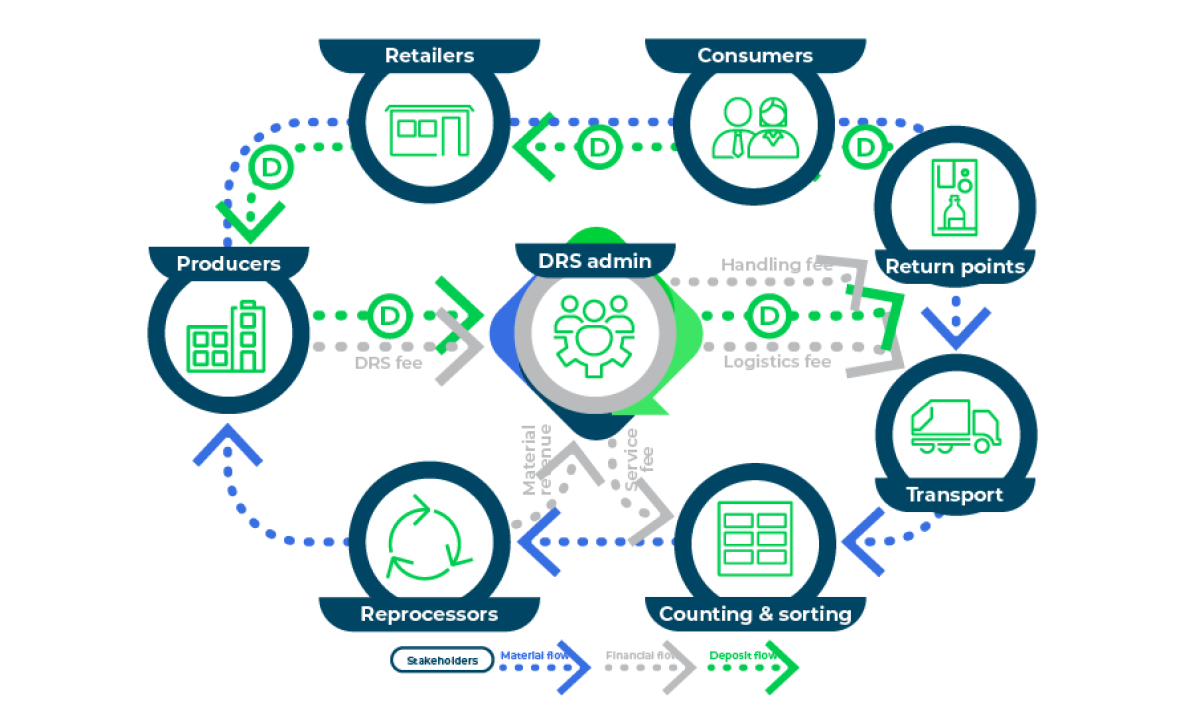
Our Reverse Vending Machine models
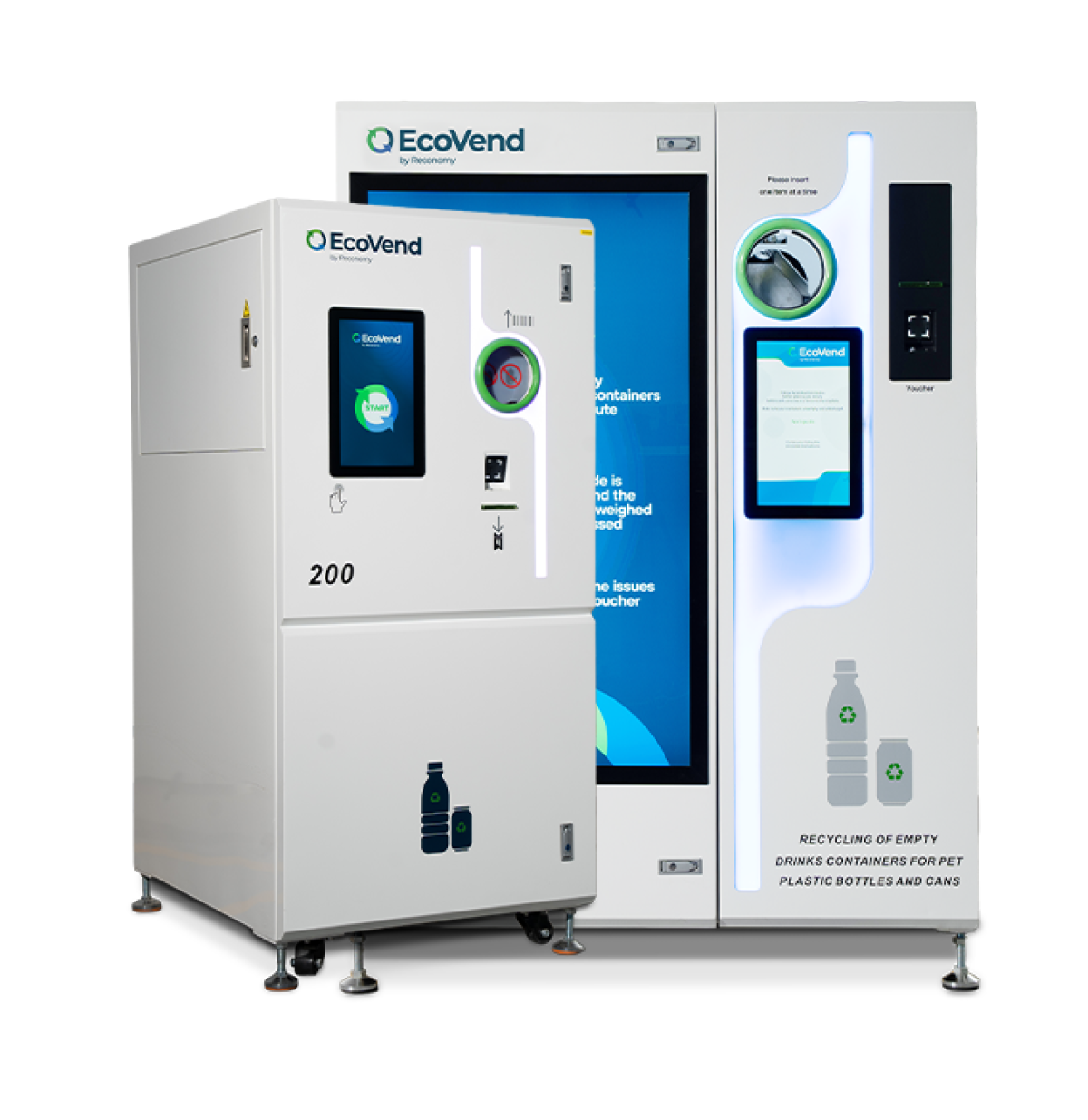
Our specialist brand, EcoVend, has a wide range of Reverse Vending Machines available. Designed to be tailored to your specific needs and waste streams, explore our range below to see what model works best for your business.
200 range
Up to 250 PET bottles and 350 cans (twin chamber).
Compact at 850mm wide and processing up to 12 containers a minute, this model is perfect for small to medium venues needing to comply with DRS.
Request a quote400 range
PET bottles and cans, with a 55-inch advertising screen.
Built for businesses that need more capacity than our smaller machines. Its built-in screen can carry advertising and promotions to help generate a return on investment.
Find out more400X range
Up to 1,700 PET bottles and 5,000 cans.
Two compactors, larger collection baskets and 360-degree scanning process up to 45 bottles a minute. Designed for high-footfall sites with heavy daily volumes.
Request a quote1450X range
Up to 1,060 PET bottles, 500 glass bottles and 3,080 cans.
Accepts glass as well as PET and cans, at up to 45 containers a minute. Ideal for supermarkets, shopping centres, leisure sites, schools and universities.
Request a quoteDownload our 10-point framework
Reconomy’s 10-Point Framework to enable the Circular Economy
To support systemic change, Reconomy has developed a 10-point regulatory framework. These principles are designed to simplify waste systems, drive investment, and scale up sustainable practices.
FAQ about Reverse Vending Machines
Choose a bottle recycling machine by estimating the number of drinks containers you expect to collect and checking that the machine fits the available space, with room for servicing. The 100 range holds up to 200 bottles or 300 cans in a single chamber; the 200 range holds 250 bottles and 350 cans in twin chambers; and the 400 range holds 500 bottles and 700 cans in segregated chambers. Consider how often the machine can be serviced, too, so it can manage expected returns without disrupting site operations.
Choose an indoor or outdoor location based on access for users, protection from weather, and the site’s power and servicing arrangements. An indoor position may offer more shelter, while an outdoor installation needs suitable weather protection and a practical route for servicing. Check the specifications for the recycling machinery you are considering, as outdoor suitability can vary by model, and allow enough space for users and maintenance.
A single-feed RVM accepts one container at a time, while a bulk-feed machine lets users load several bottles or cans in one go. Bulk feeding can make returns more convenient when users have multiple containers, while single-feed machines suit one-at-a-time returns. The right option depends on your site’s expected return volumes and operating needs; check each machine’s specifications, as feed options vary by model.
A high-throughput RVM is worth considering at a busy return point where many people are likely to return containers, particularly during peak periods. Look beyond storage capacity: check how quickly the machine can accept containers, whether its feed method suits your users, and how often it will need servicing. Matching throughput to expected demand can help keep returns moving and support smooth site operations.
An RVM can support takeback under the applicable UK Deposit Return Scheme by identifying eligible drinks containers and collecting them for recycling. Where the scheme and machine configuration support it, an accepted return can trigger a deposit refund. This is distinct from optional rewards such as vouchers or charitable donations. Eligibility, refund processes and other takeback requirements depend on the scheme that applies, so check that the RVM is configured to meet your site’s requirements.
The cost of a reverse vending machine in the UK depends on factors such as capacity, feed type, installation requirements and ongoing servicing. As these needs vary by site and machine configuration, request a quote based on your expected return volumes and operating requirements.
Choose an RVM by matching its capacity and footprint to your expected return volumes, available space and operational requirements. Start by estimating peak as well as average usage, then consider the container types and materials you need to collect, collection frequency, user access and future growth. Compact RVMs suit locations with limited space or lower volumes, while higher-capacity or modular systems are better for busy sites and larger return programmes. A site assessment can help you balance throughput, accessibility, servicing needs and resource efficiency, creating a scalable solution that supports your circularity goals.
Get a recycling equipment quote