
What is a Circular Economy?
Definition and meaning
The circular economy is an economic model that keeps resources in use for as long as possible through reuse, repair, and recycling — replacing the linear ‘take-make-dispose’ approach. Reconomy enables the circular economy for businesses through three service loops: Recycle, Comply, and Re-use, helping organisations reduce waste, meet compliance targets, and extract full value from their resources.
How the Circular Economy works
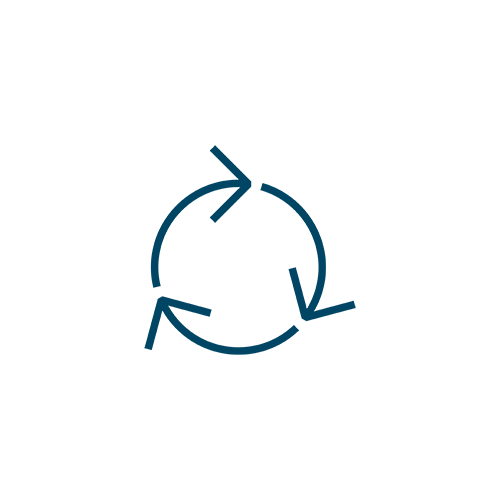
A circular economy model is a way of designing and running business so that products, materials, and resources stay in use for as long as possible. Rather than using a linear “take, make, dispose” approach, it keeps value circulating through reuse, repair, refurbishment, remanufacturing, and recycling. The result is less waste and fewer new raw materials needed, because materials are recovered and reintroduced into production instead of being thrown away after one use.
The goal is to preserve the value of products and materials while minimising waste and environmental impact. By extending the lifecycle of resources, businesses can reduce the need for new raw materials and lower the volume of waste sent to landfill.
This is a move away from the linear economy, where the “take, make, waste” model extracts resources, turns them into products, and then discards them after use. In contrast, a circular economy is designed to keep materials in use for longer — recovering them at end of life and reintroducing them into new production cycles through reuse, repair, refurbishment, and recycling. The result is a more resource-efficient system that reduces waste and lowers the need for new raw materials.

Design

Make

Use

Collect

Transform

Reuse

Design
Circularity begins with design. By focusing on more circular designs, it helps businesses emphasise the importance of creating durable, repairable, and recyclable products. By opting to choose more sustainable materials and modular design, we can keep resources valuable beyond their initial use.

Make
Incorporating more sustainable practices into our manufacturing processes can significantly improve circularity efforts. This could be businesses introducing more sustainable materials, focusing on the minimisation of waste, and the optimisation of energy efficiency.
This approach helps businesses prioritise responsible sourcing, ethical production methods, and the utilising of recycled content to remove the need for virgin materials.
Reuse
The final step is to reintroduce transformed materials back into the economy. This can be achieved through new repurposed products, second-hand markets, or closed-loop manufacturing. Focusing on monitoring reuse levels ensures your resources maintain value and contribute to a circular system.

Transform
After collection, all materials should be processed through more sustainable methods such as recycling, remanufacturing, or upcycling.
This process brings new life to discarded items by monitoring and converting them into high-quality raw materials for new products, limiting the necessity for extracting virgin resources.
Collect
At the end of a product’s first life, proper collection systems are essential to ensure materials don’t end up in landfill. Efficient take-back schemes, waste management programmes, and consumer participation allow valuable resources to be recovered and reintegrated into the system.
Use
Extending the lifespan of products is essential. By shifting to responsible consumption, maintenance, or sharing models, businesses can make sure items are utilised to their maximum potential. Promoting repair, resale, and rental services will reduce unnecessary waste and maximises resource efficiency.
Core circular economy principles
The circular economy is built on three core principles, set out by the Ellen MacArthur Foundation: eliminate waste and pollution, circulate products and materials at their highest value, and regenerate natural systems. Together, they replace the traditional take, make, dispose model with a system designed to keep value in use for longer.
Read our full guide to circular economy principles to see how each principle works in practice, and how to start applying them in your business.
What are the benefits of the circular economy?
Businesses, governments, parliaments, and individuals alike stand to benefit from embracing the circular economy. There are three key benefit pillars, each offering significant contributions:
Economic benefits
Some of the most compelling reasons for businesses to adopt a circular economy are financial. With the global economy still only being 6.9% circular (Circularity Gap Report, 2025), businesses leveraging circular economy practices could see significant competitive advantages.
Examples include:
-
Cost savings, reduce raw material costs and waste disposal fees.
-
New revenue streams, unlock resale, leasing, and recycling opportunities.
-
Enhanced resource efficiency, maximise productivity and profitability.
By shifting to a circular economy model, businesses can unlock new revenue streams, improve operational efficiency, and strengthen resilience against resource scarcity.
To adopt circular economy strategies in practice, start by extending product lifecycles through reuse, repair, and refurbishment, then set up take-back and reverse logistics to recover materials at end of use. Next, redesign products and packaging for recyclability and easier recovery, and use data to track material flows, performance, and compliance. Finally, scale what works with circular business models such as product-as-a-service, resale, and closed-loop recycling — so circularity becomes a measurable, ongoing operating system rather than a one-off initiative.
Social benefits
The shift towards a circular economy provides numerous advantages to society:
-
Job creation, drive employment in recycling, remanufacturing, and eco-design.
-
Improved quality of life, a cleaner environment and healthier ecosystems.
-
Community engagement, support local initiatives and circular collaborations.
Consumers play a key role in the circular economy by choosing products and services that keep materials in use for longer. You can support circularity by buying durable items, repairing instead of replacing, choosing second-hand or resale options, and using take-back and recycling schemes when available. Small actions — such as sorting waste correctly, returning used products, and opting for product-as-a-service where it fits — help reduce landfill waste and lower demand for new raw materials.
When consumers participate, circular systems become more viable and can also support a fairer society by creating demand for repair, reuse, and recycling services that benefit communities and workers.

Environmental benefits
The implications when following a transition to a circular are substantial to the environment:
-
Reduction of waste and pollution, by eliminating waste, businesses significantly contribute to the improvement of air, water, and soil quality.
-
Conservation of natural resources, reducing demand for raw materials lessens deforestation, mining, and water depletion.
-
Mitigating climate change, a circular economy reduces carbon emissions, contributing to environmental sustainability and mitigating climate change.
The circular economy transition is instrumental to addressing climate change and conserving biodiversity, putting more focus on sustainable production and consumption practices in the environment. For companies, these changes reduce exposure to volatile material prices and help lower emissions when paired with renewable energy in manufacturing and logistics.

How Reconomy enables the circular economy
At Reconomy, we help businesses transition to circularity through data-driven insights and innovative sustainability services. Through cutting-edge technology and strategic partnerships, we provide tailored solutions to help businesses reduce waste, optimise supply chains, and achieve sustainability targets. We offer a comprehensive suite of services, including:
Applications and industry examples of the circular economy
The circular economy is already transforming industries, not as a future ambition but as an operational reality. Across sectors, businesses are moving away from single-use, linear models toward circular systems that prioritise value retention, resilience, and long-term performance.
At Reconomy, we help organisations lead that transformation. Through our Recycle, Comply, and Re-use Loops, we create end-to-end circular solutions that turn ambition into action, from closed-loop packaging and returns management to regulatory compliance and data-driven insight.
Circular business models in practice
Across industries, circularity is delivered through a growing set of proven business models, including:
-
Product life extension models, such as repair, refurbishment, and remanufacturing
-
Product-as-a-service, where access and performance replace ownership
-
Take-back schemes that recover products and materials at end of use
-
Sharing platforms that increase utilisation and reduce demand for new production
-
Closed-loop recycling and remanufacturing systems
These approaches reduce reliance on virgin materials, cut waste, and unlock new commercial opportunities while strengthening supply chain resilience. For example, switching from single-use plastic packaging to reusable formats, and powering recovery operations with renewable electricity, can reduce waste and carbon impacts while improving resource efficiency.

Textile and fashion
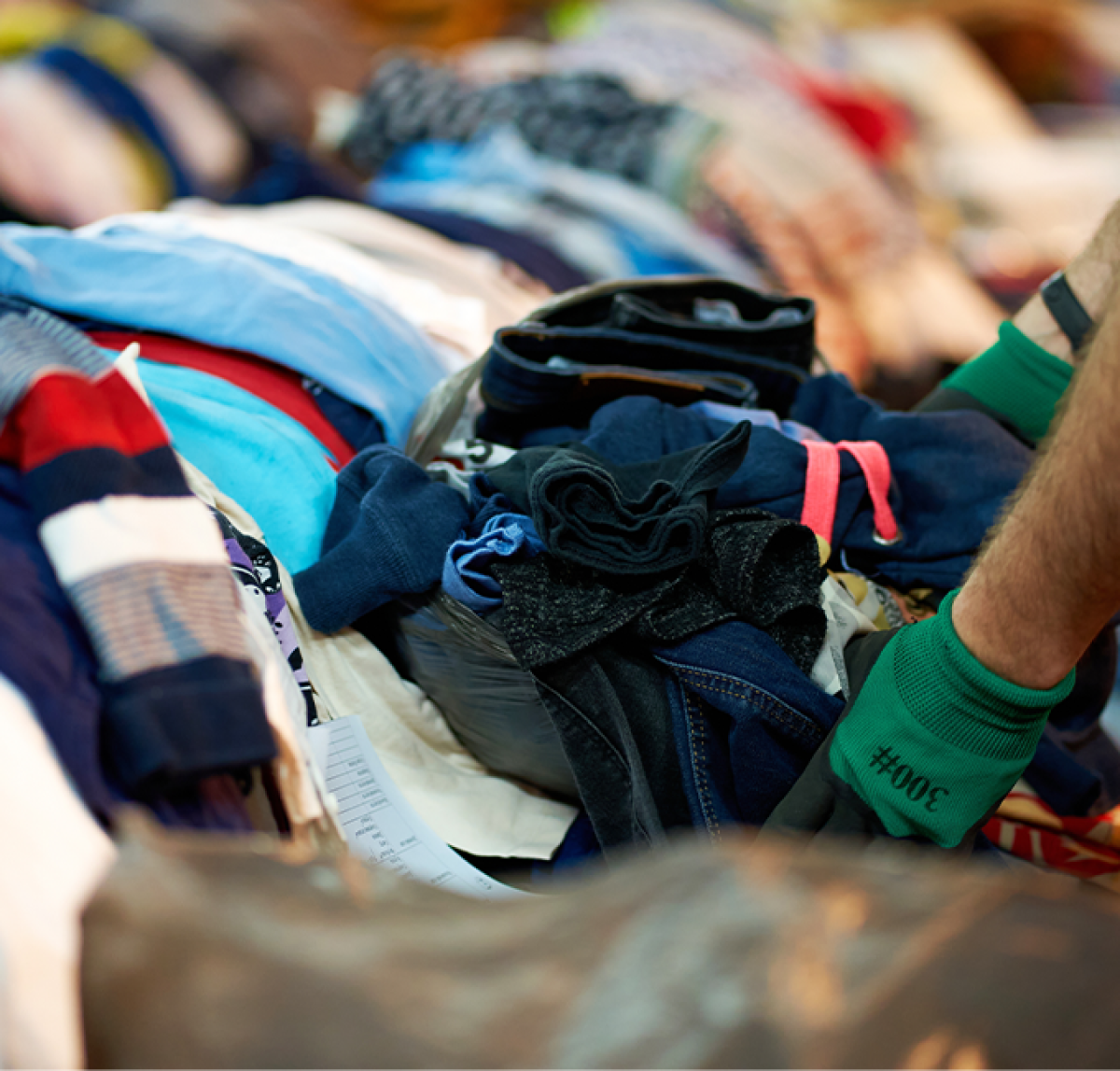
Fashion has become a focal point for circular innovation due to high material intensity and short product lifecycles. A circular textile economy prioritises durability, repair, reuse, and fibre-to-fibre recycling.
Practical applications include:
-
Brand-led take-back schemes
-
Repair, resale, and recommerce platforms
-
Design for recyclability and mono-material construction
-
Remanufacturing and upcycling
A widely cited example is Eileen Fisher’s Tiny Factory, which demonstrates how repair and remanufacturing can be embedded directly into a brand’s operating model, extending product life while creating skilled jobs.
Reconomy supports fashion retailers by optimising take-back schemes, improving recyclability at scale, and enabling compliant, data-driven circular operations.
Construction and the built environment
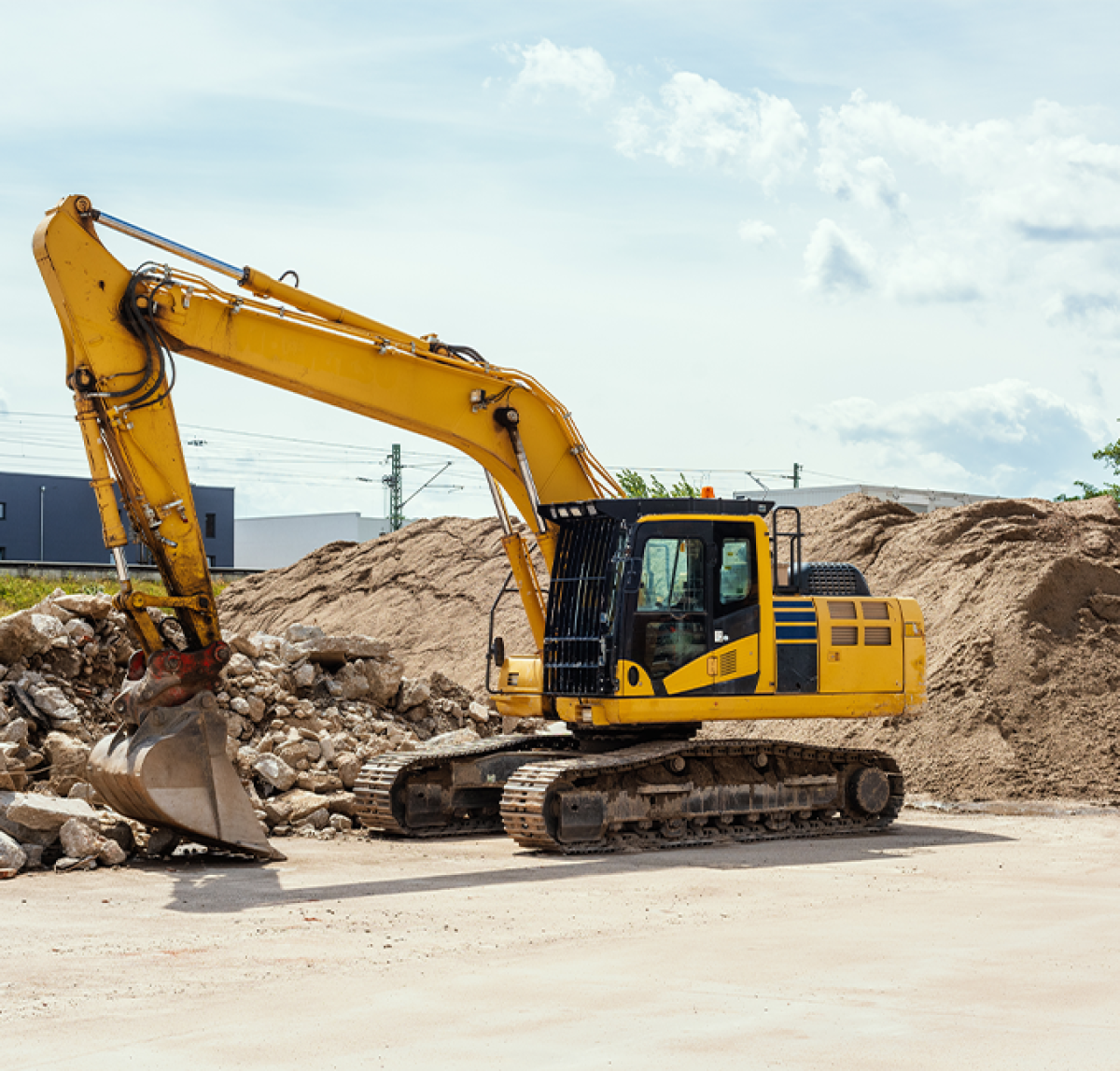
Construction is one of the most resource-intensive sectors globally, making it critical to the circular transition. Circular construction focuses on designing buildings and infrastructure for longevity, adaptability, and material recovery rather than demolition and disposal.
Key applications include:
-
Modular construction systems that enable disassembly and reuse
-
Cradle to Cradle certified products that meet strict material health and circularity standards
-
Material passports and lifecycle tracking
-
Reuse of secondary and reclaimed materials
These approaches reduce waste, lower embodied carbon, and create flexible, future-proof structures. Reconomy ensures efficient material flows and compliance across construction sites, helping organisations embed circularity from design through delivery.
Grocery and retail
Grocery and retail sectors are embracing circular practices by redesigning packaging for recyclability, implementing closed-loop logistics, and reducing food waste across supply chains.
Circular applications include:
-
Recyclable and reusable packaging systems
-
Closed-loop distribution and returns
-
Food waste prevention and redistribution
-
Data-driven waste management and reporting
Reconomy supports grocers with the infrastructure, insight, and compliance solutions needed to minimise waste, improve efficiency, and strengthen sustainability performance at scale.

Automotive and mobility
The automotive sector is increasingly adopting circular models to address material scarcity, emissions, and end-of-life impacts.
Circular applications include:
-
Vehicle recycling and high-value material recovery
-
Battery reuse, repurposing, and recycling
-
Remanufacturing of components
-
Leasing and mobility-as-a-service models
Global collaboration is accelerating progress, with initiatives such as the Global Battery Alliance improving transparency and circularity across battery supply chains.

Global developments and policies shaping the circular economy
Circular economy principles are now embedded in policy, investment, and regulation worldwide. Governments are moving beyond voluntary commitments toward structured frameworks that support closed-loop flows of materials and strengthen producer and manufacturer responsibility. In practice, these frameworks influence how companies design products, report environmental data, and manage waste streams across countries.
What this means for businesses is clear: circularity is increasingly becoming a requirement for market access, risk management, and long-term competitiveness, not just a sustainability ambition.
Europe: leading through regulation
Europe remains at the forefront of circular policy. The European Green Deal and the Circular Economy Action Plan are designed to decouple economic growth from resource use, with a strong focus on waste prevention, sustainable product design, and extended producer responsibility.
These ambitions are reinforced by an expanding landscape of European reports and legislation, alongside innovation funding through Horizon 2020, which has accelerated progress in eco-design, bio-based materials, and enabling tools such as digital product passports. For many European companies, these initiatives support product and packaging redesign, including measures to reduce plastic waste and improve recycling outcomes.

Global standards and collaboration
International alignment is improving through the ISO/TC 323 Circular Economy Standard, which provides shared terminology, measurement approaches, and best practices. For global organisations, this creates a more consistent language for setting targets, measuring performance, and demonstrating progress across regions.
Collaboration is also accelerating. The Platform for Accelerating the Circular Economy (PACE) brings together public and private stakeholders to align policy, finance, and innovation, helping circular solutions scale across sectors and value chains.

China and emerging markets
China was an early adopter of circular economy thinking at a national level, embedding it into strategic planning through China’s 11th Five-Year Plan. Its circular development pathway has driven large-scale initiatives in plastic waste management, industrial efficiency, and urban resource systems, influencing how other emerging markets approach growth alongside resource security.

Binding global agreements and rising accountability
Momentum is also growing through international legally binding agreements, particularly those targeting plastic pollution and waste exports. These agreements reinforce a clear direction of travel: linear systems are being phased out, and accountability is moving upstream.
Combined with producer/manufacturer responsibility policies, these frameworks are accelerating the transition to circular systems and increasing expectations around data, traceability, and compliance.
At Reconomy, we help businesses navigate this evolving policy landscape, translating regulation into practical, scalable compliance and circular strategies that work across regions and material streams.

What are the challenges of implementing a circular economy?
The circular economy offers a compelling alternative to linear models, but transitioning at scale is complex. For many organisations, the challenge is not understanding why circularity matters, but how to implement it in a way that is practical, commercially viable, and resilient over time. The most common barriers fall into technological, behavioural, and policy-related categories, often overlapping across global value chains.
Legacy asset investments and transition costs
Many businesses are built on long-standing asset investments, from manufacturing plants to logistics networks, that were designed for linear production. These systems can be costly or difficult to adapt, creating friction when organisations attempt to shift toward reuse, remanufacturing, or closed-loop models.
Transition costs can include:
- Retrofitting or replacing equipment
- Redesigning products and packaging
- Investing in new collection, sorting, or recovery infrastructure
Without a clear long-term strategy, these upfront costs can slow decision-making, even when circular models offer stronger lifecycle value.

Technical skills, research, and recycling limitations
Circular systems rely on specialised technical skills, robust data, and ongoing research and development. Many organisations face capability gaps in areas such as material science, lifecycle assessment, digital traceability, and advanced recycling technologies.
In addition, recycling limitations remain a real constraint. Certain materials, mixed composites, and hazardous building materials are difficult to process safely or economically at scale. Poor product design can further reduce recovery rates, undermining circular ambitions before products even reach end of life.
Addressing these challenges requires investment not only in technology, but in people and skills across the organisation.

Consumer interest, cultural barriers, and mindset shift
Behavioural change is a critical but often underestimated barrier. Circular models depend on participation, from repair and resale to take-back schemes and product-as-a-service models.
However, consumer interest varies by market, and cultural barriers can slow adoption. In some cases, circular options are perceived as inconvenient, lower quality, or unfamiliar. Internally, businesses may also struggle with a mindset shift, moving from volume-driven growth toward value retention and long-term performance.
Successful circular strategies place equal emphasis on engagement, education, and incentives, both inside the organisation and across customer bases.

Policy complexity, government intervention, and subsidies
Government intervention is accelerating circularity, but policy landscapes remain fragmented. Regulations, subsidy payments, and producer responsibility rules differ across countries and regions, creating complexity for businesses operating internationally.
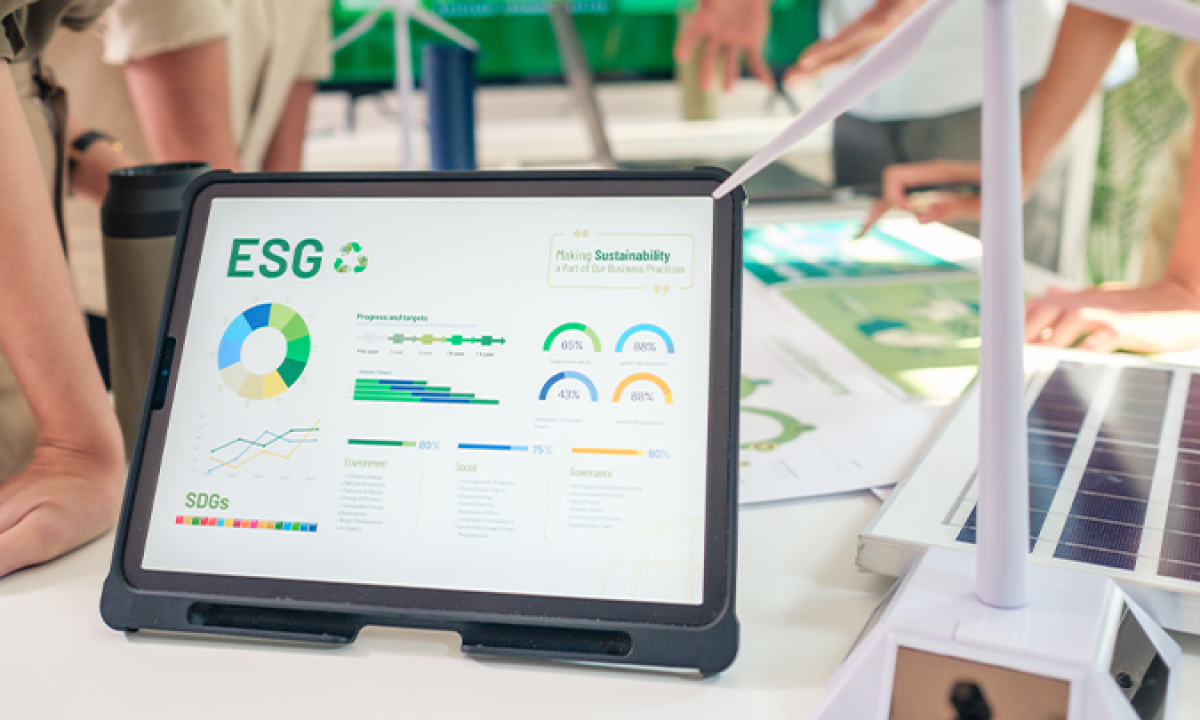
While subsidies and incentives can support early-stage circular initiatives, reliance on short-term funding without long-term policy alignment can introduce uncertainty. Businesses must balance compliance with flexibility, ensuring they can adapt as legislation evolves.
Navigating this environment requires strong governance, clear accountability, and access to up-to-date regulatory insight.

Systemic transformation and implementation
The circular economy represents a fundamental shift in how economic systems are designed and operated. Rather than optimising linear flows of extraction, production, and disposal, circularity requires systemic transformation, reconfiguring how products, materials, and value move through society.
This transformation is not achieved through isolated initiatives. It requires coordinated change across business models, supply chains, technologies, governance structures, and behaviours.

From linear economy to circular systems
Traditional linear economies follow a “take, make, use, waste” model, where value is created through volume and speed. Circular systems challenge this approach by redesigning the entire product lifecycle, ensuring materials remain in use through closed-loop processes and reverse cycles such as reuse, repair, refurbishment, and remanufacturing.
This transition requires organisations to:
- Take responsibility for products beyond the point of sale
- Replace disposal with recovery and regeneration
- Align design, production, use, and end-of-life as one connected system
Systemic transformation means shifting from managing waste to managing resources across the full lifecycle.
Learn more from our blog
Frameworks, standards, and structured implementation
Systemic change benefits from structured guidance. Standards such as BS 8001:2017 provide organisations with a practical framework for embedding circular economy principles into strategy, governance, and decision-making.
Complementary tools, including the lifecycle-value stream matrix and key elements framework, help organisations:
- Identify where value is lost across the product lifecycle
- Prioritise interventions with the greatest circular and commercial impact
- Translate high-level ambition into operational action
These frameworks ensure circularity is implemented consistently and strategically, rather than through disconnected pilots.

Digital enablement and Industry 4.0
Technology plays a critical role in scaling circular systems. Industry 4.0 technologies, including automation, data analytics, IoT, and AI, enable visibility and control across complex, multi-tier value chains.
Digital systems support:
- Tracking materials and products across lifecycles
- Managing reverse cycles and recovery flows
- Measuring circular performance and identifying inefficiencies
When combined with circular design principles, digital enablement allows organisations to manage complexity and operate closed-loop systems at scale.
Learn about AI in the Circular EconomyCircular economy concepts
Behind the circular economy lie some powerful concepts: Cradle to Cradle, Biomimicry, Industrial Symbiosis, and the Blue Economy. These frameworks inspire how we design, use, and recover resources. At Reconomy, we translate these concepts into practical action.
Our services integrate regenerative design, life cycle thinking, and Extended Producer Responsibility (EPR), ensuring sustainability strategies are grounded in science and deliver tangible results. We support our clients in designing for longevity, embracing closed-loop systems, and shifting from ownership to access. This is where theory becomes practice, and innovation delivers on its promise.
Cradle to Cradle and regenerative design
The Cradle to Cradle framework challenges the traditional notion of waste by designing products so that all materials can safely return to either biological or technical cycles. Rather than minimising harm, this approach aims to create systems where materials retain value indefinitely.
Closely linked is regenerative design, which goes a step further by restoring and enhancing natural systems. Regeneration reframes sustainability from “doing less bad” to actively creating positive environmental outcomes, aligning closely with the circular economy’s long-term ambition.

Biomimicry
Biomimicry looks to nature for inspiration, using the laws of ecology as a guide for designing resilient systems. In natural ecosystems, there is no waste, every output becomes an input for another process.
These principles influence circular economy design by encouraging:
- Closed-loop material flows
- Resource efficiency through simplicity and adaptability
- Systems that evolve and self-correct over time
By mimicking natural systems, circular models become more robust, efficient, and scalable.

Industrial ecology and industrial symbiosis
Industrial ecology treats economic systems as ecosystems, where material and energy flows are optimised across industries rather than within isolated organisations. Building on this, industrial symbiosis enables collaboration between businesses so that waste, by-products, or excess energy from one process become valuable inputs for another.
This systems-based approach reduces resource extraction, lowers emissions, and strengthens regional resilience. It also reinforces the importance of value chain collaboration, a core requirement for circular economy success.

Eco-efficiency, the Blue Economy, and system balance
Eco-efficiency focuses on delivering more value with fewer resources and is often an entry point for organisations beginning their circular journey. However, while eco-efficiency improves relative performance, it does not always address absolute resource consumption.
The Blue Economy complements circular thinking by promoting locally available resources, zero waste systems, and business models that generate environmental, social, and economic value simultaneously. Together, these frameworks highlight the need to balance efficiency with regeneration and system-wide impact.

Join the circular revolution with Reconomy
Adopting circular practices is not just an environmental necessity, it’s a smart business strategy that delivers tangible benefits.
Let’s shape a waste-free future together.
Future prospects and trends
The future of the circular economy will be digitally enabled, intelligence-led, and increasingly interconnected. As regulatory expectations rise and resource constraints intensify, circularity is evolving from a sustainability initiative into a core driver of business resilience, competitiveness, and innovation.
Digital technologies accelerating circularity
Digital technology is reshaping how circular systems are designed and managed. Tools such as artificial intelligence, big data, blockchain, and the internet of things (IoT) are enabling greater transparency, traceability, and control across complex value chains.
These technologies support:
- Real-time tracking of materials and products
- Verified data sharing through tools like product circularity data sheets
- Smarter waste management and recovery decisions
- Measurement of circular performance at scale
Together, they form the foundations of a smart circular economy framework, where data-driven insight enables continuous optimisation rather than static reporting.

Innovation in circular business models
Circular business model innovation is accelerating as organisations rethink how value is created and retained. Product-as-a-service models, shared platforms, and advanced industrial symbiosis networks are replacing ownership-based models with performance, access, and collaboration.
These approaches:
- Increase utilisation of products and assets
- Reduce dependency on virgin materials
- Enable closed-loop systems that are commercially viable
As digital platforms mature, businesses can coordinate circular activity across suppliers, customers, and partners more effectively than ever before.
Policy alignment and strategic direction
Policy continues to play a critical role in shaping the future of circularity. Initiatives such as the Circular Economy Action Plan are accelerating requirements around product design, data transparency, and producer responsibility, reinforcing the shift toward closed-loop systems.
At the same time, investment in renewable energy and low-carbon infrastructure is strengthening the environmental case for circular systems, ensuring material recovery and reuse are powered by cleaner energy sources.

From efficiency to regeneration
Future circular systems will go beyond efficiency and waste reduction. The focus is shifting toward regeneration, creating economic systems that restore natural capital while supporting growth.
This means designing systems that:
- Keep resources in use at their highest value
- Minimise environmental impact across full lifecycles
- Actively contribute to climate and biodiversity goals
At Reconomy, we help businesses navigate this evolving landscape. By combining digital innovation, regulatory insight, and practical delivery, we enable organisations to turn future circular trends into measurable, scalable impact.

Explore our insights
Here you will find key industry insight on all things related to the circular economy. Keep your finger on the pulse with the Reconomy blog.
Critiques and limitations of the circular economy
The circular economy presents a compelling vision for rethinking resource use, but like any systemic model, it is subject to debate and limitation. For decision-makers, understanding where circularity may fall short is essential to assessing feasibility, measuring effectiveness, and designing systems that deliver genuine impact rather than unintended consequences.
These critiques do not invalidate the circular economy. Instead, they highlight the importance of clarity, robust measurement, and inclusive system design.
Diverging definitions and the umbrella concept
One of the most widely cited critiques is that the circular economy operates as an umbrella concept, encompassing a broad range of ideas, from recycling and reuse to regeneration, industrial symbiosis, and product-as-a-service models.
While this breadth has supported widespread adoption, it has also resulted in diverging definitions across policy, academia, and business.
As a consequence, organisations can struggle to:
- Compare circular performance across regions or sectors
- Align strategic ambition with operational delivery
- Distinguish systemic transformation from incremental or symbolic action
Without clearer definitions and shared frameworks, circularity risks becoming a loosely applied label rather than a measurable economic transition.

Engineering-centric assumptions and material circularity limits
Much circular economy thinking has historically been grounded in engineering-centric assumptions, prioritising material flows, technical efficiency, and recycling performance. While these elements are fundamental, they can oversimplify real-world constraints.
Material circularity is not limitless. Physical degradation, contamination, and thermodynamic losses mean that materials cannot be recycled indefinitely without quality loss or increased environmental cost. In some cases, an emphasis on recycling can obscure deeper issues of overproduction and consumption.
A narrow technical focus risks improving material throughput without delivering meaningful environmental or social outcomes.
Measurement challenges and performance indicators
Another significant limitation lies in how circularity is measured. Circular economy performance indicators, such as recycling rates or material circularity metrics, provide useful signals but rarely capture system-wide impact on their own.
Key challenges include:
- Inconsistent economic performance measurement tools
- Limited ability to link circular initiatives to absolute reductions in resource use or emissions
- Weak integration of social and environmental outcomes into performance frameworks
Without robust, outcome-focused metrics, organisations may optimise for indicators rather than long-term value and resilience.
A growing critique of circular economy implementation concerns the social dimension of sustainability. Circular transitions can redistribute benefits and costs unevenly across society if not designed carefully.
Examples include:
- Choice editing or rationing unsustainable products, which may restrict access for lower-income groups
- Shifts in employment patterns that create new opportunities in some sectors while displacing workers in others
- Increased responsibility placed on consumers without sufficient infrastructure or support
Addressing the social justice component of circularity is essential if the transition is to be equitable as well as environmentally effective.

Circular systems are often highly interconnected, which can introduce vulnerability alongside efficiency. Cascading failures may occur when a disruption in one part of the loop, such as collection, processing, or secondary material markets, undermines the wider system.
These risks highlight the need for resilience, redundancy, and adaptive capacity within circular systems, particularly as they scale across regions and industries.

FAQs
Discover the most frequently asked questions surrounding the circular economy.
The primary goal of a circular economy is to keep resources in use for as long as possible, extracting their maximum value before recovering and regenerating materials at the end of their life.
Unlike the traditional linear model of take, make, use, and dispose, a circular economy designs out waste, reduces environmental impact, and creates systems where materials continually flow back into use.
At Reconomy, we see circularity not just as a sustainability goal, but as a smarter way of doing business — one that builds resilience, reduces cost, and helps organisations move from managing waste to managing resources.
This approach lowers expenses, generates new revenue opportunities such as product leasing, helps with monitoring performance against circular economy and sustainability, and enhances brand reputation.
Learn about Circular Economy initiativesThe circular economy reduces environmental impact, creates economic opportunities, and promotes social well-being by fostering sustainable practices.
The circular economy is an economic model that keeps resources in use for as long as possible through reuse, repair, and recycling — replacing the linear ‘take-make-dispose’ approach. Reconomy enables the circular economy for businesses through three service loops: Recycle, Comply, and Re-use, helping organisations reduce waste, meet compliance targets, and extract full value from their resources.
Reconomy can help your business by providing tailored waste management solutions, resource efficiency audits, and innovative recycling strategies.
A circular economy is an economic model aimed at minimising waste and maximising resource efficiency. It focuses on reusing, repairing, refurbishing, and recycling existing materials and products to create a closed-loop system that reduces impact on the environment.
- Resource security – Finite resources are being depleted faster than they can be replenished.
- Economic resilience – Circular models help businesses stabilise supply chains.
- Sustainability – Over 91% of materials extracted globally are wasted after a single use (Circularity Gap Report).
Did you know a circular economy could reduce global carbon emissions by 39% by 2032? (Source: World Economic Forum).
The concept became notable in the late 20th century, with significant developments in the 1970s when Walter Stahel proposed the idea of a closed-loop economy. The Ellen MacArthur Foundation outlined its principles in the early 2010s.
This term refers to an economic system that shifts towards more utilisation of resources through means of reuse, recycling, and regeneration, subsequently reducing our reliance on finite resources like food.
The circular economy does not have a single inventor. It draws from ideas like industrial ecology, cradle-to-cradle design (by William McDonough and Michael Braungart), and the work of Walter Stahel on the “performance economy.”
Circular economy can be measured using:
- Circularity indicators: Helping with monitoring metrics such as Material Circularity Indicator (MCI).
- Waste reduction rates: Monitoring the amount of waste avoided.
- Recycling rates: The percentage of materials recycled is tracked.
- Carbon footprint: Emissions saved through circular practices are assessed.
- Zero Waste Index: Reconomy’s Zero Waste Index provides a detailed breakdown and analysis of your progress towards zero waste, alongside our other consultancy services. Whether you are already on your zero-waste journey and focusing on food waste minimisation or have only just begun and are simply trying to recycle as much as possible, our Zero Waste Index can help you focus your efforts and make improvements toward your goals.
Looking to implement circular practices to your business? Get in touch