
Soil sampling and testing
to suit any project
From the first soil sample to final disposal, we handle every part of your soil sampling and soil testing. We help you understand your soil, classify it correctly and find the right route for reuse, recycling or disposal.
Get a soil testing quoteSoil sampling and testing services
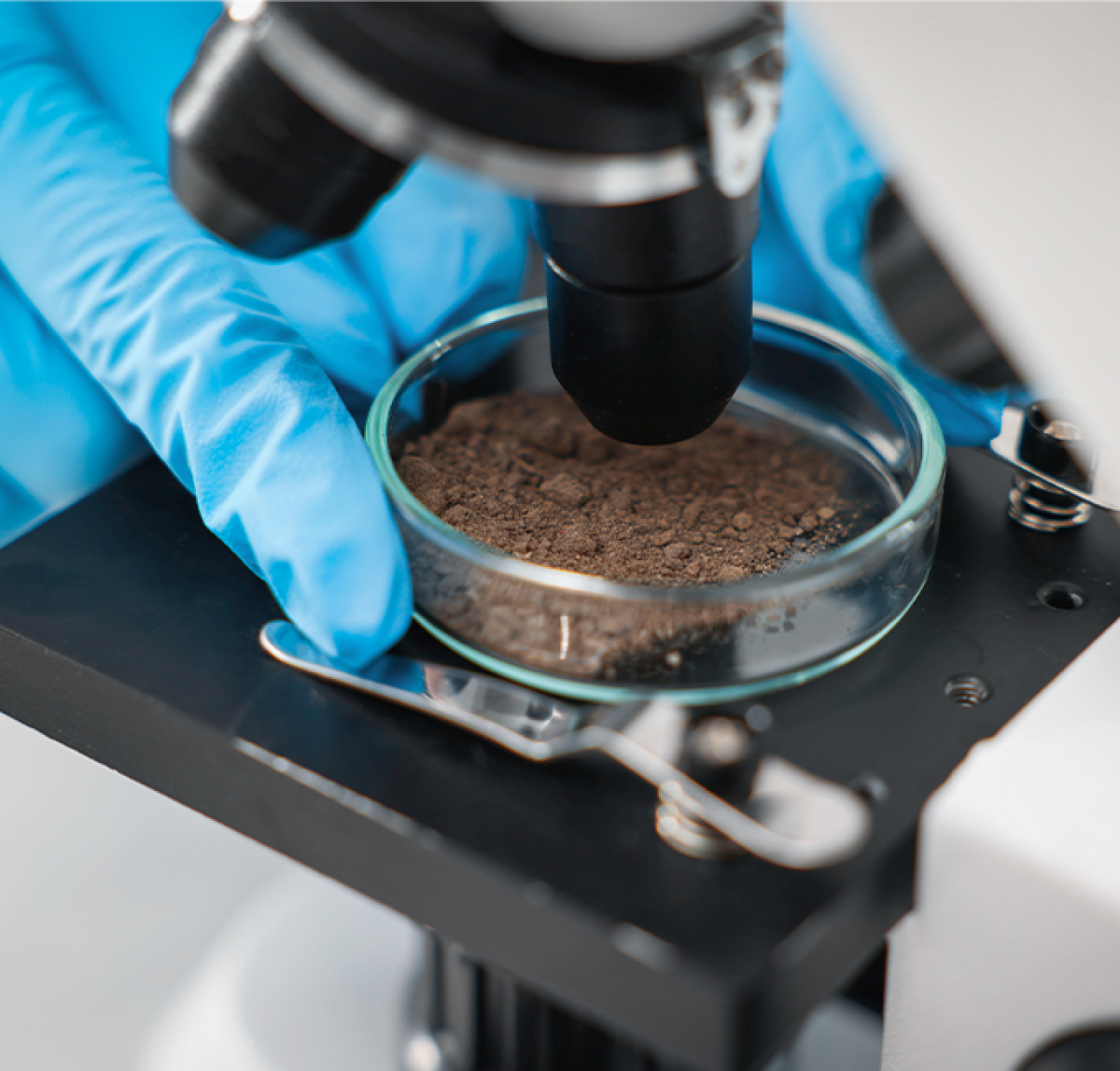
Soil sampling is collecting soil from the right places and depths. Soil testing is the laboratory analysis of those samples. Together, they show whether soil is contaminated, how it should be classified as waste, and whether it’s healthy enough for reuse, landscaping or agricultural land. Our soil analysis uses UKAS and MCERTS accredited laboratories, with fast results.
As a producer of waste, your business is responsible for making sure any soil or material removed from your site is correctly classified through a compliant soil test, and that it goes to an appropriate disposal route. It’s part of your duty of care for waste.
We have the skills and knowledge to oversee every part of the process, from initial investigations and classification through to eventual disposal. Through our nationwide network of supply chain partners, we’re licensed to collect, recycle and dispose of all types of waste, so you stay fully compliant. The earlier we’re involved in your project, the more we can potentially save you.
Our fully inclusive testing service covers:
- Full segregation strategies and sample plans tailored to your site
- Testing through UKAS and MCERTS accredited laboratories, for accurate, reliable results
- Next day courier delivery of soil sampling kits if you order before 2pm
- Accelerated chemical analysis results, so your project isn’t held up
- Classification and assessment of waste materials in line with WM3 guidance
- Disposal and reuse routes, from muck away to contaminated soil removal
Here to help with:
- Full segregation strategy and sample plans
- Testing carried out using UKAS & MCERTS accredited laboratory
- Next day courier service for testing kits if booked before 2pm
- Accelerated chemical analysis results
- Classification and assessment of waste materials in accordance with WM3 guidance.
Soil sampling kits
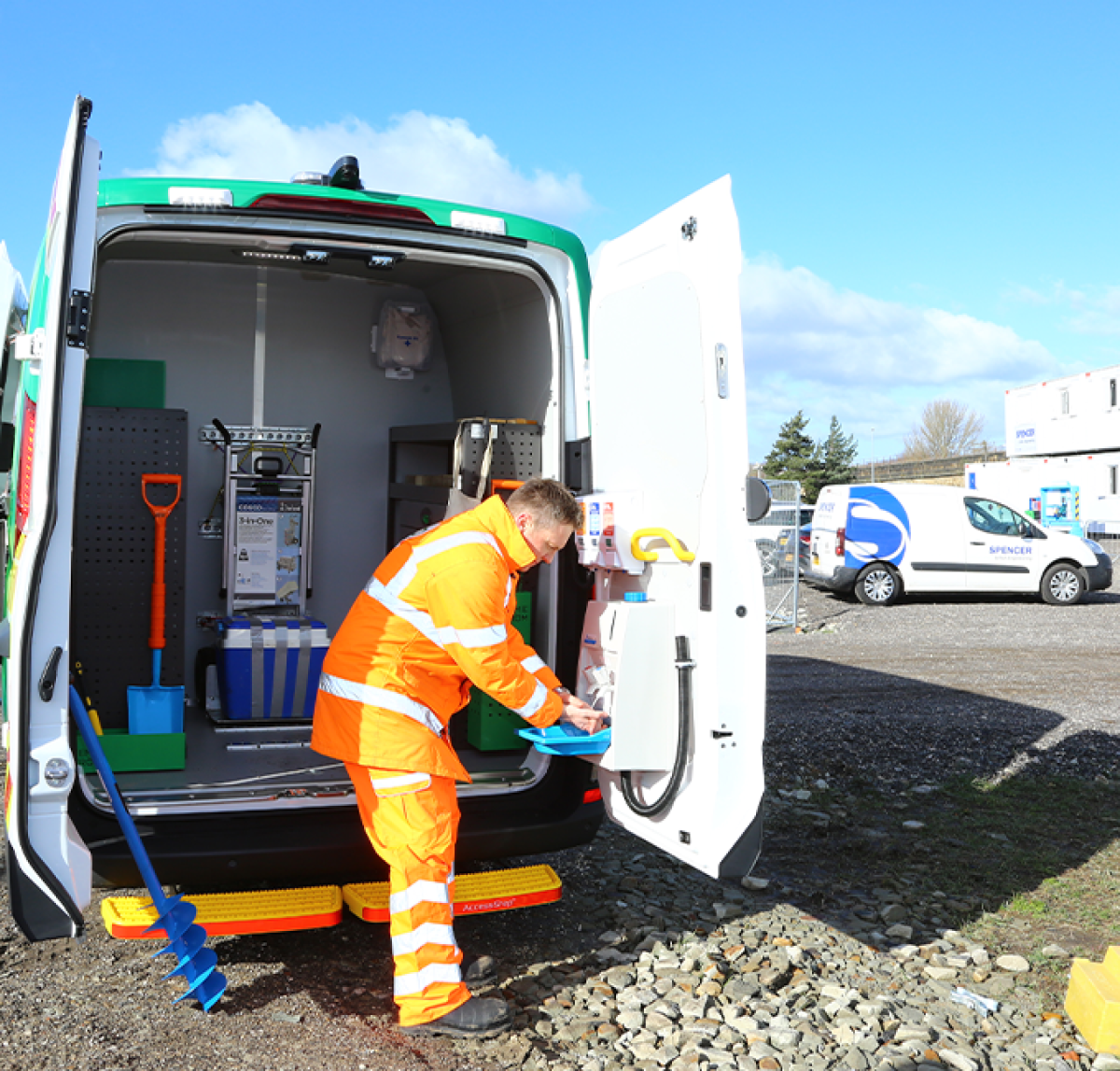
Our soil sampling kits are a simple, fast and effective way to sample small to medium volumes of stockpiled materials. They’re designed so your own project team can sample stockpiles safely and correctly, with next working day delivery on kits ordered before 2pm. We also provide toolbox talks and training at your depots on correct sampling procedures, and our kit packaging is designed to be reused and recycled.
Order a soil sampling kitOn-site testing
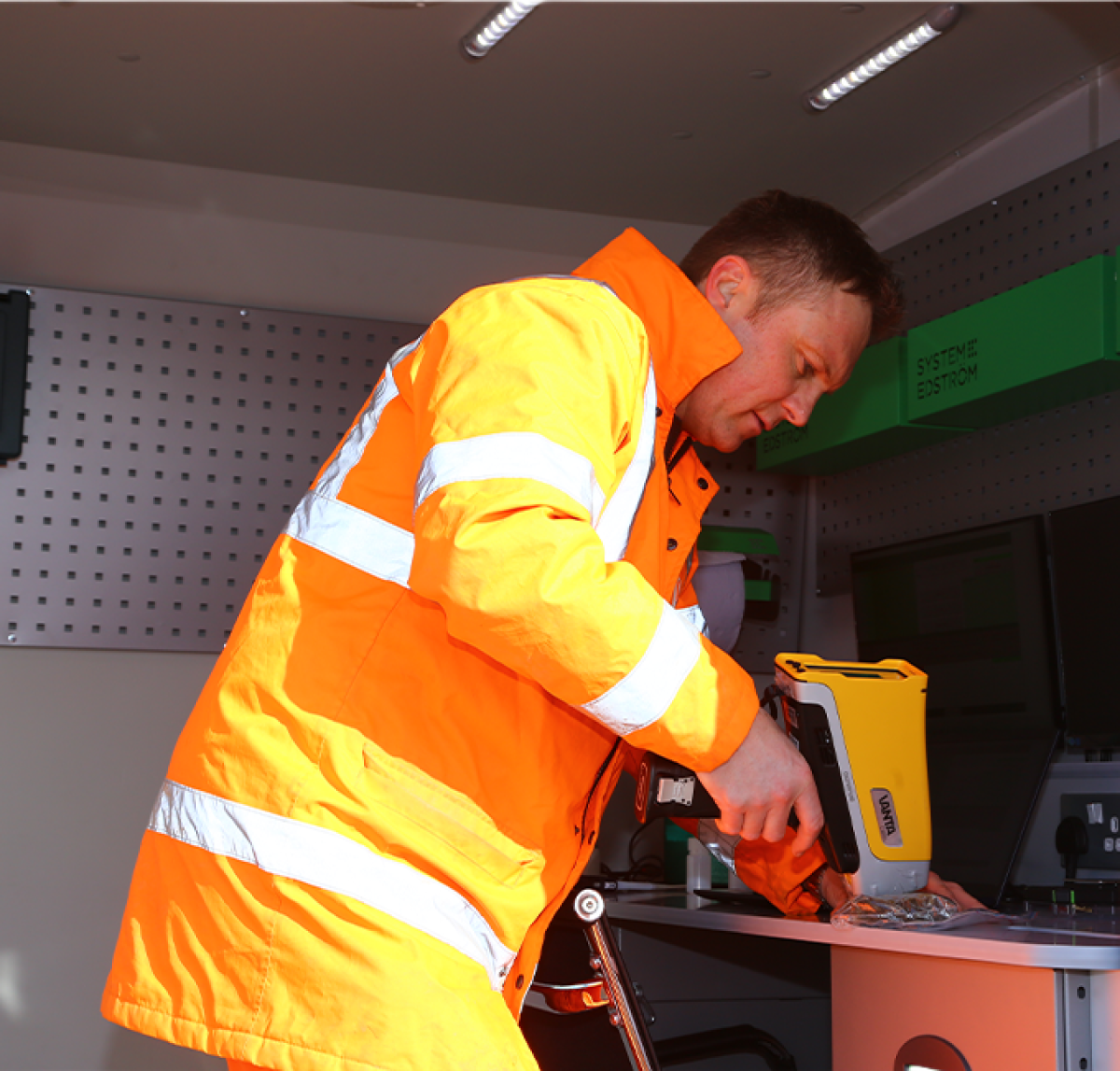
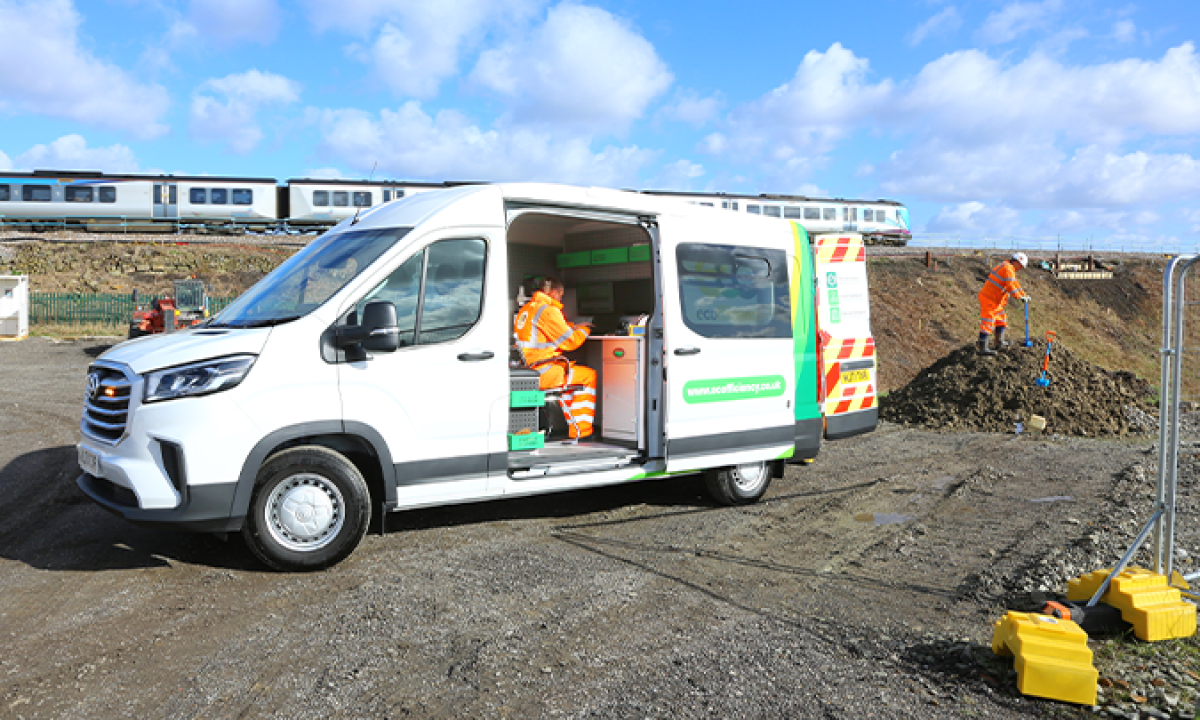
For bulk volumes and in-situ testing and exploration, our fully qualified engineers come to your site. They take the uncertainty and hassle out of larger-scale sampling and give you a detailed sample plan, segregation strategy and full on-site specification. Every visit ends with a full report covering the sampling methodology, a sample location plan, site photographs, waste classification and a segregation strategy, with waste treatment and removal options available.
Book on-site testingRapid on-site testing (RMT)
Rapid Measuring Technology (RMT) gives you the data you need without your soil ever leaving site. Our rapid testing covers TPH and metals contamination and gives you results straight away. You get the same sample plan, segregation strategy and detailed assessment report as on-site testing, carried out by one of our qualified engineers, with no waiting for the laboratory.
Discuss RMTRepresentative Sampling
Representative sampling is the process of collecting soil samples that reflect the whole area you’re assessing, not just one spot. It means sampling the site or field in a planned pattern, using enough sampling points, at the right depth, keeping different soil types separate and documenting every sample. Without it, even the best laboratory analysis can give misleading results.
Why representative sampling matters
A sample that misses a contaminated area can lead to hazardous soil being sent to the wrong facility and the load being rejected. Mixing clean and contaminated soil does the opposite, and clean soil ends up classified and charged as hazardous. Representative sampling gives you results you can trust for planning conditions, remediation and reuse, and a documented sampling plan shows regulators and receiving sites exactly how the results were reached.
How do you collect a representative soil sample?
On construction and development sites, sampling follows a written plan:
-
Divide the site into areas: made ground, natural ground, stockpiles and hotspots.
-
Use a grid or targeted pattern, based on the site’s history.
-
Sample at different depths, as contamination often changes with depth.
-
Keep soil types separate, so clean soil isn’t classed as hazardous.
-
Record everything, so results can be traced back.
Discrete samples are preferred on potentially contaminated sites, because mixing soil can hide a hotspot. Investigations usually follow BS 10175.
On agricultural land, samplers walk the field in a W shape, taking at least 20 cores to 15cm (7.5cm in permanent pasture) and mixing them into one sample. On larger farms, precision grid sampling produces nutrient and soil pH maps, so farmers apply lime and fertiliser only where it’s needed.
Handling, storing and timing soil samples
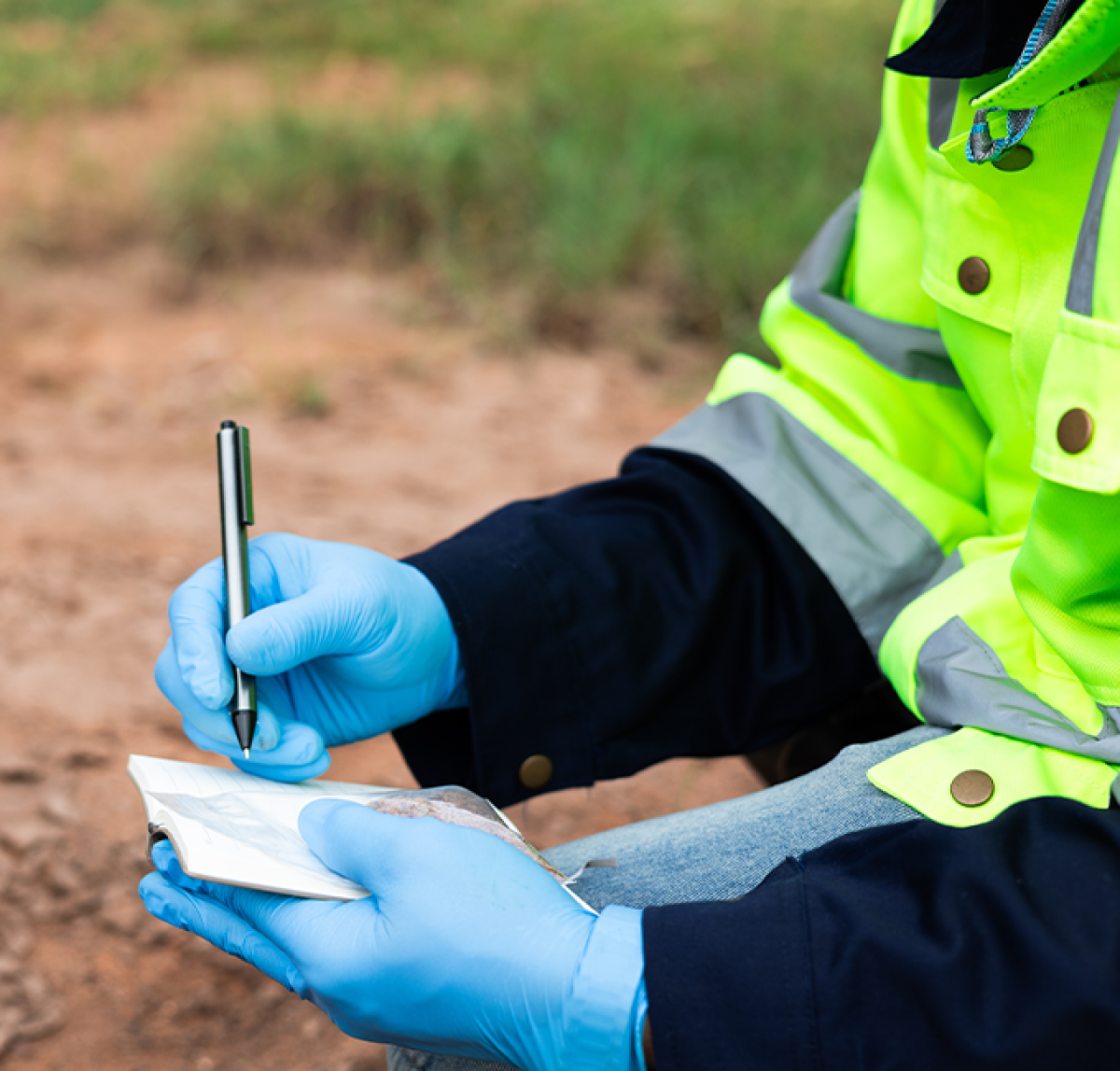
Use clean containers, such as the jars and tubs in our sampling kits, and label every sample with its location, depth and date. Keep samples cool and out of direct sunlight, then send them promptly with a completed chain of custody form so the laboratory can test them within the required time.
On construction sites, take samples before work starts, then again before excavated soil leaves site. On agricultural land, autumn is usually preferred. Avoid sampling within 6 months of a lime or fertiliser application (except nitrogen), within 6 weeks of applying organic manure, or when soil is waterlogged or very dry.

Trusted by







Test Selection and Interpretation
Test selection is choosing which soil tests to run, based on why you’re testing and what will happen to the land or the soil. Interpretation is comparing the results with reference values, such as optimum ranges for nutrients and pH, or guideline values for contaminants, then deciding what to do next. The right tests, read against the right reference values, lead to the right decision on fertiliser, lime, remediation, reuse or disposal.
Every soil test answers a specific question. A fertility test asks whether soil can grow healthy plants and crops, a contamination test asks whether soil is safe for its planned use, and a waste classification test asks how soil leaving site must be handled.
Find the right tests for your siteContamination Risk Assessment
A contamination risk assessment works out whether contaminants in soil could harm people, water or the environment. In England, it follows the Environment Agency’s Land Contamination Risk Management (LCRM) guidance. The results decide whether land needs remediation and how excavated soil must be classified and disposed of.
How contamination risk is assessed
LCRM sets out a tiered approach. It starts with a preliminary risk assessment, a desk study of the site’s history, geology and surroundings that builds an initial conceptual site model. Next comes a generic quantitative risk assessment, which compares soil test results against generic screening values for the planned land use. A detailed quantitative risk assessment, using site-specific modelling, is only needed where generic values aren’t enough.
At each stage, the question is whether there’s a pollutant linkage: a source of contamination, a pathway such as dust or groundwater, and a receptor such as people, water or crops. If there’s no linkage, there’s no unacceptable risk.
Find out if your site needs remediationWaste classification and WAC testing
When soil leaves site, it becomes waste. It must be classified as hazardous or non-hazardous using WM3, the UK’s technical guidance on waste classification, based on the total concentrations of substances in the soil. That classification decides the disposal route and the paperwork, from waste transfer notes to hazardous waste consignment notes.
WAC testing comes afterwards and only applies to soil going to landfill. It measures what leaches out of the soil to show whether it can go to an inert, non-hazardous or hazardous landfill. A common and costly mistake is treating WAC results as a classification, but they can’t show that soil is non-hazardous. Commissioning both tests together, from the same samples, avoids delays and rejected loads. Hazardous soil can be handled through our hazardous waste services, while clean soil may be suitable for reuse or recycling into recycled aggregates.
Book WM3 and WAC testing togetherSoil Fertility Testing
Soil fertility testing measures the nutrients, pH and organic matter in soil. It shows whether soil can support healthy plant and crop growth, and how much fertiliser or lime it needs. It’s used for topsoil certification on construction and landscaping projects, and for agricultural land, including land being restored to agricultural use.
What soil fertility testing measures
A standard soil fertility test covers pH and lime requirement, and the main nutrients used in fertiliser planning: phosphorus (P), potassium (K) and magnesium (Mg). High acidity locks up nutrients, so correcting pH often raises available nutrient levels too. The test also measures soil organic matter, a key indicator of soil health, structure and water retention. Because crop growth is held back by whichever nutrient is most deficient, the results let you target fertiliser and lime where they’re needed.

Topsoil certification to BS 3882
Topsoil used on construction and landscaping projects is usually specified to BS 3882, the British Standard for topsoil. Testing covers nutrient content, pH, organic matter, particle size, electrical conductivity, the carbon to nitrogen ratio and phytotoxic contaminants. For a multipurpose grade, the standard sets a pH range of 5.5 to 8.5. Our topsoil certification confirms your topsoil is fit for purpose, whether you’re reusing site-won soil or importing new material.
Fertility testing for agricultural and restored land
When land is returned to agricultural use after a project, fertility testing shows whether it can support crop growth. Testing each field helps you plan fertiliser, protect crop yields and monitor soil health, and many farms test on a rolling cycle of around five years.
Why choose Reconomy for soil sampling and testing?
We combine accredited soil analysis through UKAS and MCERTS laboratories with fast turnaround, from next day sampling kits to rapid on-site testing. Our qualified engineers carry out on-site and rapid testing, classification follows WM3 with a full compliance and waste audit trail, and one team takes you from the first sample to final disposal.
Earthworks and site services
Our fully trained teams provide a visible presence on your site and a single point of contact for everything to do with waste. They keep waste properly handled and your project moving, while finding ways to divert waste from landfill and increase recycling. Our earthworks and site services cover:
- Full testing methodology, sample plans and chemical classification
- Contaminated and hazardous land removal
- Soil treatment and reuse
- Bulk soil removal and muck away
- Site clearances and asbestos removal
- On-site recycling solutions and project management
Digital tracking and reporting
Our ePod app replaces printed tickets with fast, accurate electronic waste transfer notes. It’s paperless and, when used by our logistics partners, reduces travel and carbon. Our online portal gives you access to your waste data, including the associated carbon, calculated using the UK government’s carbon conversion factors.
Learn about Digital Waste TrackingWaste classification and WAC testing
We carry out robust compliance checks on every supply partner when they join us and throughout the year, and use recycled aggregates rather than primary materials wherever a project allows.
Through Earth/Work, we combine our earthworks and soil testing services with our award-winning social value programme. We can provide labour for on-site activities through our Community Interest Company, which offers meaningful work to people from hard-to-reach groups, including ex-offenders through our FreshStart programme with RMF. The social value created on your site can then be reported as part of your own sustainability strategy.
Classify your soil correctlyExplore more related services
From plant and tool hire to soil analysis, you rest assured knowing Reconomy has the relevant site services you require. Browse our full range of services below:
Get in touch
Soil sampling and testing FAQs
Soil sampling and testing supports developers, housebuilders, contractors, infrastructure teams, landscapers and landowners. On construction sites, it shows whether ground is safe to build on and how excavated soil must be handled. On landscaping projects and agricultural land, it shows whether soil can support healthy plant and crop growth.
Start with why you’re testing and where the soil is going. Construction sites usually need contamination testing and waste classification, soil going to landfill may need WAC testing, topsoil for landscaping is tested to BS 3882, and agricultural land needs a fertility test. Past industrial use or made ground points to extra tests, such as asbestos or hydrocarbons. We’ll recommend the right tests, so you don’t pay for analysis you don’t need.
Your report will provide nutrient levels and other information for each sample, with each result compared against a reference value: an optimum range or nutrient index for nutrients and pH, a guideline value for contaminants, or waste classification thresholds for soil leaving site.
A standard suite for brownfield land or made ground typically covers heavy metals such as arsenic, cadmium, chromium, copper, lead, mercury, nickel, selenium and zinc, plus PAHs, TPH, BTEX, phenols, cyanide and an asbestos screen. pH, sulphate and organic matter are usually included too. The desk study then adds tests, such as pesticides on a former farmyard or VOCs near fuel storage, so you only test for what’s likely to be there.
Under the AHDB Nutrient Management Guide (RB209), phosphorus, potassium and magnesium results are converted into an index from 0 to 9. For most arable crops and grassland, the target is index 2 for phosphorus and magnesium, and index 2- for potassium. On most mineral soils, the target pH is around 6.5 for arable land and 6.0 for grassland.
Results are compared with generic screening values for the planned land use, most commonly the LQM/CIEH Suitable 4 Use Levels (S4ULs) and Category 4 Screening Levels (C4SLs). Where enough samples have been taken from the same soil type or area, results can also be assessed statistically, following CL:AIRE and CIEH guidance, to show whether the average concentration exceeds the guideline value and whether a high result is an outlier or a separate hotspot.
For nutrients, a low result usually means applying fertiliser or lime, while a high result means you can reduce or skip applications. For contaminants, a result above the guideline value means further assessment is needed, such as more sampling or a detailed risk assessment, before deciding on remediation, reuse or disposal. Our team explains every result in plain English and recommends the next step.
Soil sampling kits suit small to medium stockpiles, where your own team can take samples. On-site testing suits bulk volumes and in-situ investigation, with a qualified engineer and a full report. Rapid on-site testing (RMT) gives you TPH and metals results on site straight away, so works can carry on without waiting for the laboratory.
It depends on the tests you need. We offer accelerated chemical analysis to keep your project moving, and rapid on-site testing gives TPH and metals results straight away. Tell us your deadline and we’ll confirm turnaround times.
Soil sampling is the fieldwork. It means collecting soil from the right locations, at the right depth, in a way that represents the whole site or field. Soil testing is the laboratory analysis of those samples, measuring things like contaminants, nutrients and pH. The two depend on each other: a soil test can only be as good as the sample behind it, so poor sampling gives results that won’t reflect your site, however accurate the laboratory.
Every site has its own challenges and pressures, so we offer three soil testing options.
Request soil contamination testing when:
- The site has an industrial or commercial history, such as factories, fuel stations, gasworks or depots
- There’s made ground, where soil has been imported or mixed with demolition waste
- The planning authority asks for it, often as a planning condition on brownfield land
- You see signs of contamination, such as staining, odours, ash, fibrous material or oily sheens
- Soil is leaving site, because it must be classified before it can be disposed of or reused
- Land use is changing, for example from industrial to housing or gardens