

Digital Product Passports
What they are and what steps you can take to prepare for new legislation.
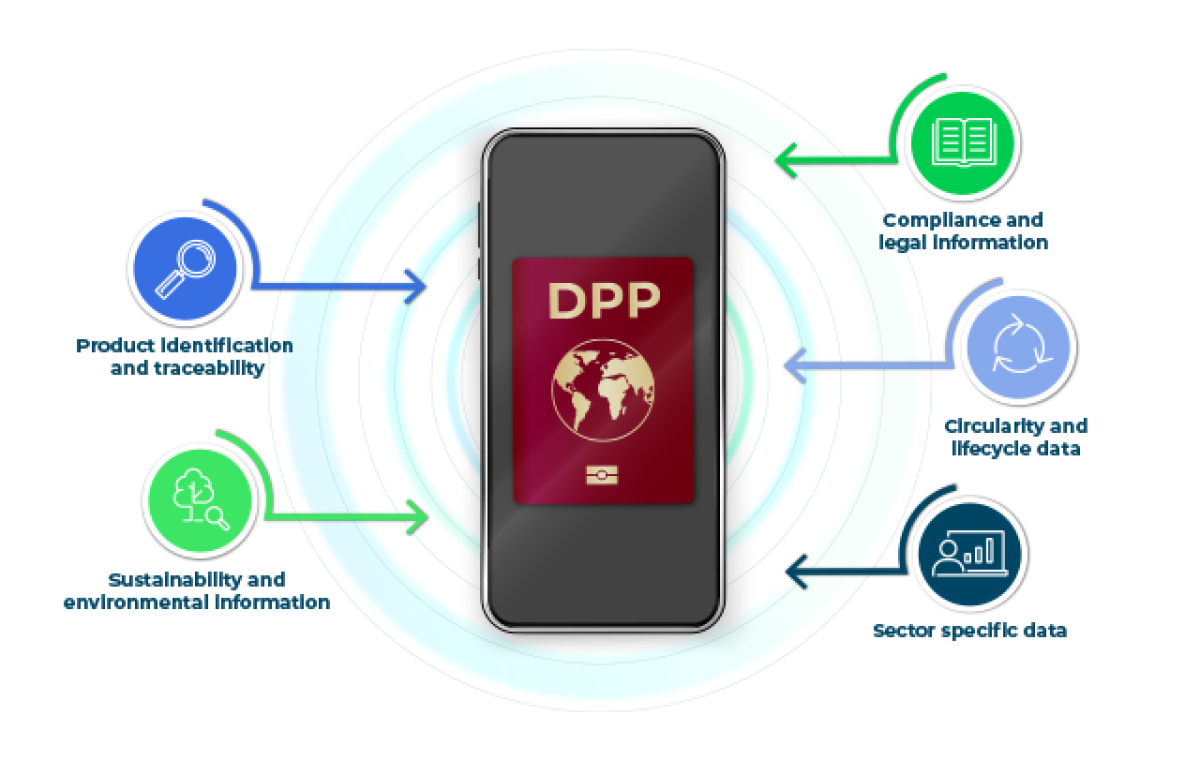
What is a Digital Product Passport?
Digital Product Passports (DPPs) are secure, digital records that hold detailed information about a product. What it’s made from, how it’s manufactured, and how it should be reused, recycled, or responsibly disposed of at end-of-life. This information allows end users to make informed decisions based on transparent carbon footprint data, assist end of life handling with useful sorting and recycling information or even speed up import/export clearance.
Each passport is linked to a physical product, often via a QR code or RFID tag, and accessible by everyone from producers and consumers to regulators and recyclers.
See features and requirementsCore features and data requirements of Digital Product Passports
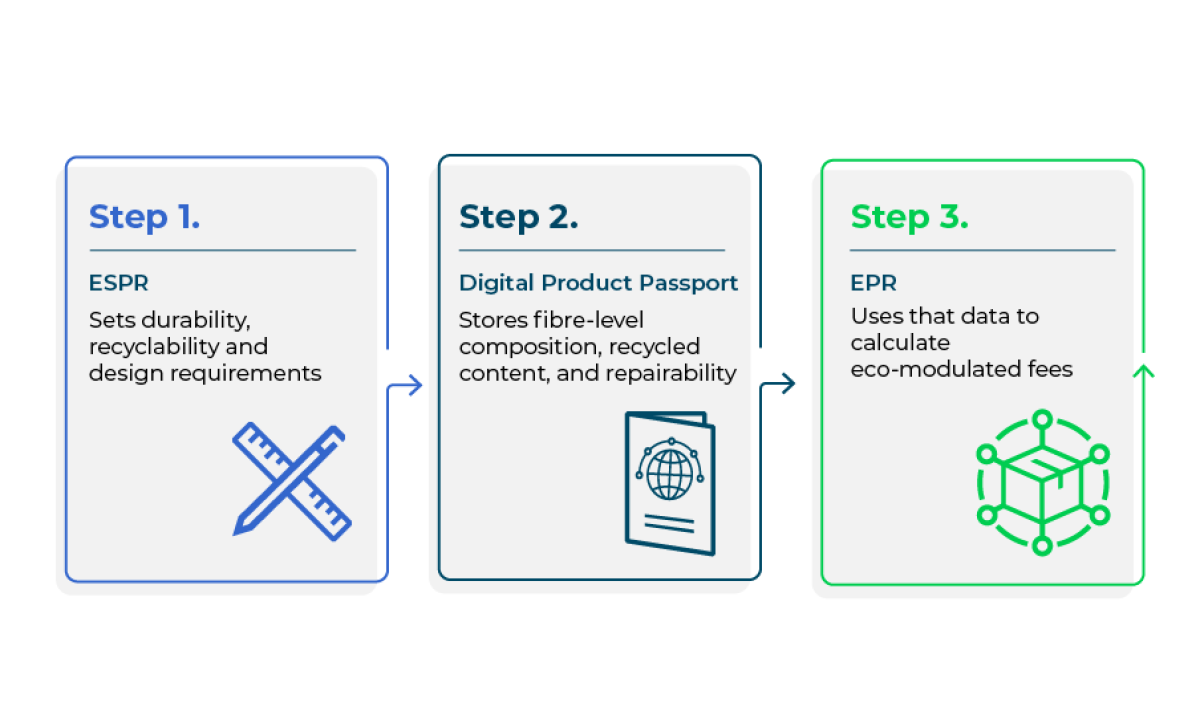
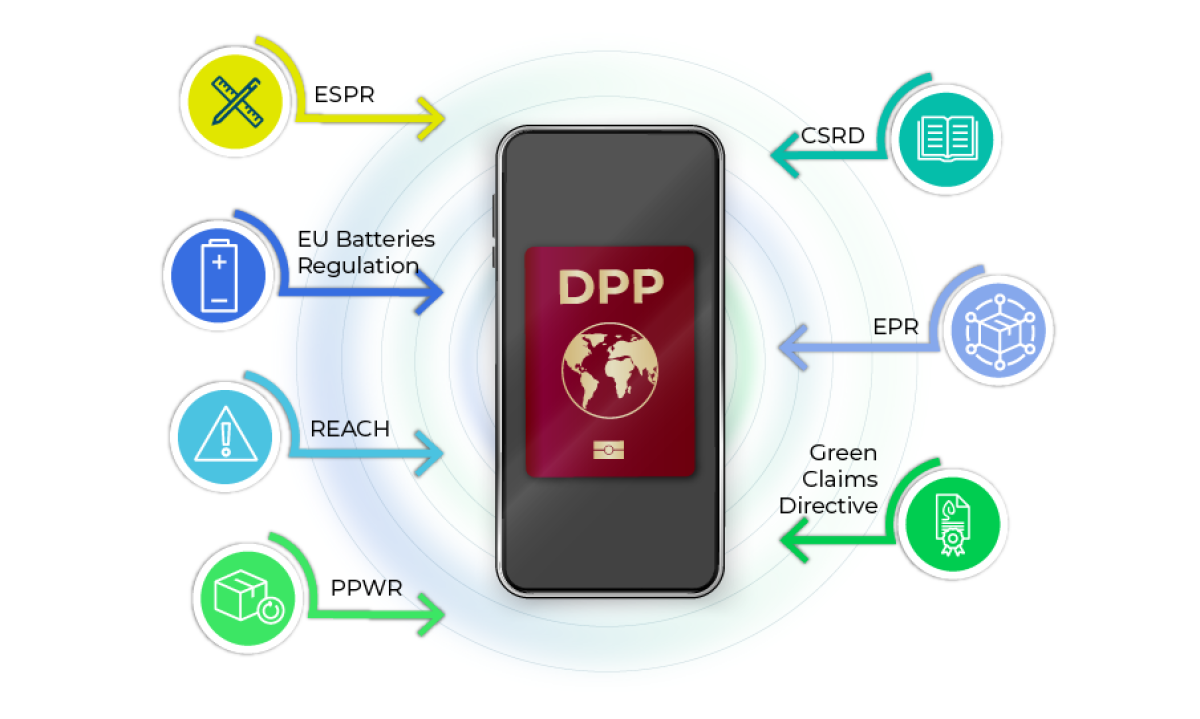
The new Eco-design for Sustainable Products Regulation (ESPR) sets the framework for DPPs. It specifies mandatory information categories that must be included, though exact data points will vary by product group. At a high level, DPPs will need to contain:
Product identification
The key product identification requirements are: Product type and model, unique product identifier (e.g., barcode, QR code, RFID), manufacturer/importer name and contact, and place of production.

Sustainability Information
Key sustainability data includes material composition (e.g. recycled content, hazardous substances), carbon footprint, resource efficiency, product lifespan, reuse potential, repairability, recyclability, and critical raw materials.

Lifecycle data
The key lifecycle data requirements are: repair instructions, maintenance requirements, end-of-life guidance (e.g., dismantling, recycling), availability of new spare parts, and warranty information.

Compliance information
Key compliance data includes declarations of conformity (e.g. CE mark), eco-design compliance, EPR registration numbers, safety or usage restrictions, and any sector-specific required information.

Sector-specific data
Key DPP requirements include sector-specific data for textiles, electronics, and batteries (e.g. fibre content, durability, battery info, carbon footprint), delivered via QR code in a secure, machine-readable, role-based format. Rollout begins from 2026–2027 under Sustainable Products Regulation (ESPR).

Implementation and technical infrastructure
Here are the key steps involved for businesses wanting to implement new methods to introduce Digital Product Passports (DPPs).
Data collection methods
Collecting accurate product data is the foundation of a Digital Product Passport. Information has to be captured from manufacturers, suppliers, and sometimes even during use or repair. The challenge is ensuring this data is consistent, reliable, and linked to the correct product.
Possible solutions and services companies can adopt:
- Use QR codes or NFC tags on products to link physical items to digital records.
- Standardize data entry by using industry templates (e.g., for textiles: fibre content, dyeing process, washing instructions).
- Automate data capture from supply chain management systems to reduce manual entry errors.
- Require suppliers to provide digital compliance certificates (materials, safety, sustainability).

Data transfer and sharing
Once collected, product data must move across a complex supply chain from manufacturers to distributors, retailers, repairers, and recyclers. Systems used by different companies often aren’t compatible and businesses want to keep control over sensitive data.
Possible services and solutions companies can adopt:
- Connect through cloud-based data spaces (e.g., based on International Data Spaces standards) to securely share information.
- Potential use of Application Programming Interfaces, allowing IT systems to communicate seamlessly.
- Provide role-based access controls, so recyclers can see material composition but not sensitive design files.
- Establish data-sharing agreements with partners to clarify ownership and permissions.

Storage solutions
DPP data often must be available for much longer than most business IT systems are designed for. Storing large, detailed records securely and cost-effectively is a major hurdle.
Possible services and solutions companies can adopt:
- Use cloud storage providers for scalability and reliability.
- Adopt hybrid storage models: store large files (manuals, impact reports) off-chain in the cloud, while keeping essential product IDs or certificates on secure registries.
- Regularly back up data using redundant systems.
- Build storage systems that comply with long-term regulatory requirements for accessibility.

Security
Businesses need to make sure product data isn’t tampered with, and only the right actors can update or view sensitive information.
Possible services and solutions companies can adopt:
- Encrypt data during both storage and transfer.
- Use Decentralised Identifiers (DIDs) to verify the identity of manufacturers, recyclers, and regulators.
- Employ blockchain to record timestamped updates that cannot be altered later.
- Monitor system access with audit trails so any misuse or breaches can be traced.

Scalability and accessibility
Millions of products will require DPP’s, so systems need to be affordable and easy to use, not just for large companies, but also for small and medium-sized enterprises (SMEs).
Possible services and solutions companies can adopt:
- Use DPP-as-a-Service platforms or partnerships that provide ready-to-use digital passport solutions without building custom IT systems.
- Develop user-friendly portals so smaller suppliers can upload required data without technical expertise.
- Adopt modular architecture so companies can start with core regulatory data and add voluntary features later.
- Share best practices and training across supply chains.

Shining a light on circularity
Reconomy’s ‘Think Circular Award’ seeks to showcase the achievements of organisations that are making proactive and innovative strides towards a more sustainable future.
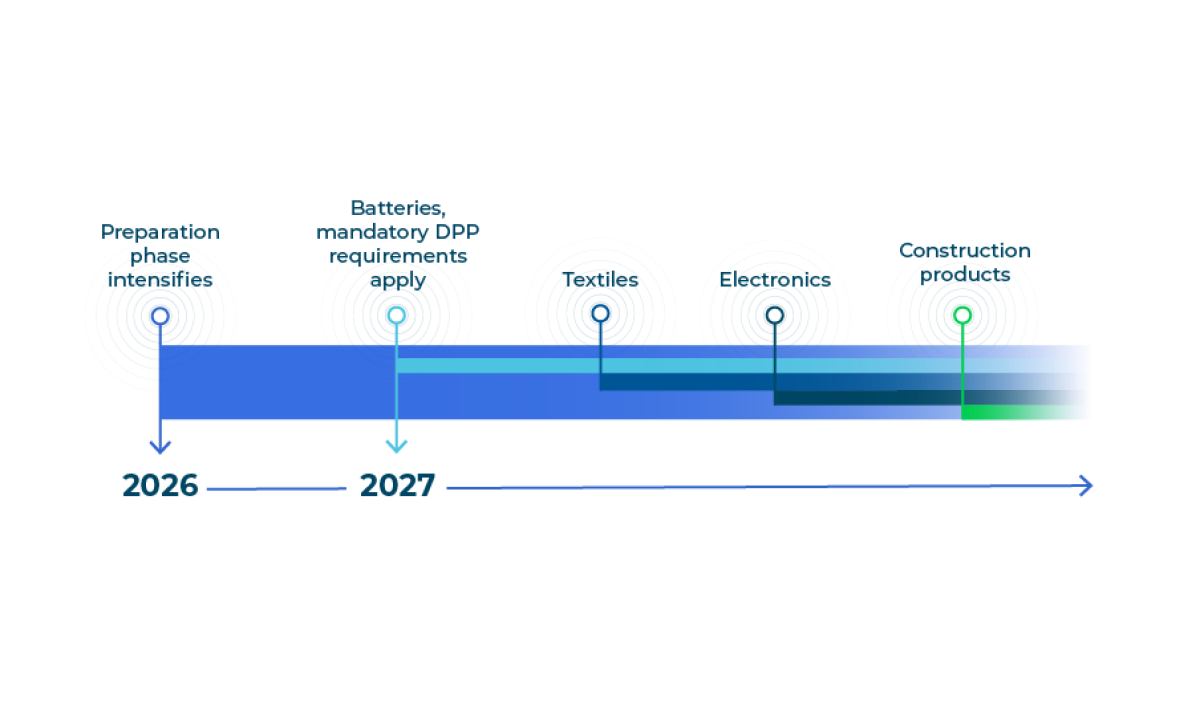
Digital Product Passport timeline
Digital Product Passports (DPPs) are moving from policy to mandatory requirement across the EU.
They will transform how products are labelled, tracked and managed, making structured product data essential for market access.
Key milestones include:
- 2026: Technical standards are finalised. Businesses begin system alignment and readiness.
- 2027: DPPs become mandatory for priority sectors including textiles, batteries and electronics.
- 2030: Expansion to 30+ product groups. DPPs become a standard condition for placing products on the EU market.
Preparation now reduces risk later.
Get in touchClosing the circularity gap
Through our #CloseTheGap movement, Reconomy is helping businesses move from ambition to action, making circularity practical, measurable and achievable across sectors, supply chains and markets.
Digital Product Passport priority sectors
Digital Product Passport for textiles
Passports in textiles can carry data on fibre composition, dyeing processes, and care instructions. This information is crucial to the industry because most textiles are blends that are difficult to recycle without knowing what’s inside.
Use cases and opportunities:
- Sorting for recycling: QR codes on garments let recyclers in the industry instantly know if a shirt is 100% cotton (recyclable) or a polyester blend (requires chemical recycling).
- Consumer transparency: Shoppers in the industry can scan tags to see supply chain details (origin of cotton, water footprint).
- Resale markets: Platforms can verify authenticity and material quality before accepting second-hand items.

Digital Product Passport for electronics
Electronics often contain critical raw materials and hazardous components. DPPs can detail material content, repair manuals, and part replacements.
Use cases and opportunities:
- Repair and maintenance: Service providers can access official repair guides and check part compatibility.
- Material recovery: Recyclers know exactly which metals are inside batteries (e.g., cobalt, lithium), improving recovery rates and material value.
- Refurbishment: A used laptop’s passport could show its repair history, helping resellers value it accurately.

Digital Product Passport for tyres
Tyres are resource-intensive and often difficult to recycle effectively. A DPP can track their material mix, mileage, and re-treading history, helping to preserve material value throughout their lifecycle.
Use cases and opportunities:
-
Safe reuse: Fleet operators can check how many times a tyre has been re-treaded before putting it back on the road, ensuring both safety and value retention.
-
Targeted recycling: Recyclers know whether the rubber can be reused in new tyres or downcycled into products like flooring.
-
Performance tracking: Manufacturers can study wear data across tyres in use, feeding insights into design improvements.

Digital Product Passport for EV batteries
Tyres are resource-intensive and often difficult to recycle effectively. A DPP can track their material mix, mileage, and re-treading history, helping to retain material value and promote more sustainable lifecycle management.
Use cases and opportunities:
-
Safe reuse: Fleet operators can check how many times a tyre has been re-treaded before putting it back on the road, ensuring both safety and value preservation to make it more sustainable.
-
Targeted recycling: Recyclers know whether the rubber can be reused in new tyres or downcycled into products like sustainable flooring.
-
Performance tracking: Manufacturers can study wear data across tyres in use, feeding insights into design improvements.


Benefits of Digital Product Passports (DPPs) legislation
Adopting Digital Product Passports offers a wide range of strategic benefits for brands, manufacturers, and retailers alike, extending well beyond compliance.
These include:
- Transparency and trust: DPPs provide clear, accessible product data that builds trust and value with consumers and partners.
- Regulatory compliance: They simplify compliance with evolving legislation by centralising required product information.
- Customer engagement: They open a new channel to connect with consumers through scannable product interactions.
- Streamline operations: Rollout DPP’s with minimal initial data and scale efficiently as your datasets mature, boosting internal workflows.
- Sustainability and circularity: DPPs support circular economy goals by enabling better reuse, recycling, and impact tracking.
- Competitive advantage: Early adoption signals innovation and readiness for upcoming regulation, setting brands apart.

Getting your business ready
Preparing for DPP’s can seem daunting, but it’s a manageable journey. Here’s a practical roadmap to get your business DPP-ready:
- Understand process length of onboarding new products – This will help you understand when certain actions will be needed.
- Map your product data – Identify what information you have and where it is located. Identify what data you don’t have and plan how you may get it.
- Engage your supply chain – Work with suppliers to gather and validate missing data.
- Choose your DPP solution – Select a trusted platform or partner to structure and manage your data.
- Start small, then scale – Pilot with a small number of product lines to test and refine your approach.
- Stay informed – Monitor evolving legislation and ensure your brand and business remains compliant.
Our Digital Product Passport consultation
Set a strong foundation with expert guidance. We work closely with your teams to:
- Assess your current product data systems, identifying gaps and reducing future compliance risks.
- Engage key stakeholders and define clear data ownership and responsibilities, ensuring internal alignment from day one.
- Develop a tailored DPP roadmap aligned with legislation and your business goals, giving you a structured, low-risk path to rollout.
Helping your business with implementation
Test and launch with confidence. Our team supports your technical rollout by:
- Migrating your existing data into a compliant, digital-ready format to unlock traceability and long-term efficiency.
- Integrating systems and APIs across your supply chain to enable seamless data exchange and transparency.
- Testing and validating data flows, ensuring everything works reliably before you scale.

Training and support
Build capability, not dependency. We equip your teams for long-term success through:
- Interactive training sessions that upskill your staff and embed digital know-how.
- Clear documentation and user guides to support adoption and reduce onboarding time.
- Ongoing technical support to troubleshoot issues and optimise performance.

Ongoing maintenance and optimisation
Stay compliant, agile, and ahead of the curve. We help you maintain and evolve your DPP solution by:
- Conducting regular audits to ensure data quality and legal compliance.
- Applying updates and changes to stay ahead of evolving legislation and standards.
- Driving continuous improvement through technology enhancements and best practices that turn DPP into a competitive edge.
Explore our Media Library
Explore our Media Library, a collection of informative, fascinating, and fun video resources all about Reconomy, our colleagues, customers, the varied services we provide, and the impact we make.

Start your journey
Digital Product Passports (DPPs) are more than a compliance tool, they’re your gateway to a brand’s environmental transparency, efficiency, and deeper customer trust.
At Reconomy, we make DPPs simple. Our expert team guides you through every step — from strategy and data readiness to implementation and long-term optimisation. Whether you’re preparing for EU (European Union) regulations or looking to lead on environmental sustainability, we’ll help you turn complexity into clarity, and regulation into opportunity.
Get in touch today to future-proof your operations and build a brand that lasts.
Book a consultationFAQs: Digital Product Passports (DPPs)
Here are some of the most frequently asked questions surrounding Digital Product Passports (DPPs) and their implementation into businesses through Sustainable Products Regulation (ESPR).
Yes. At least in the European Union market, they’re becoming mandatory:
- Under the Ecodesign for Sustainable Products Regulation (ESPR), DPPs will be required for many brands’ product categories starting in 2027.
- Initial focus includes batteries, textiles, electronics, furniture, and chemicals.
- A brand’s products that are sold in the European Union market must include a DPP to ensure environmental transparency, traceability, and regulatory compliance.
The Digital Product Passport is designed to make essential product information accessible throughout a product’s entire lifecycle. Its purpose is to support a more circular economy by giving manufacturers, businesses, and consumers clear, verified data about what a product is made of, how it was produced, and how it can be reused, repaired, or recycled.
By providing this information digitally and consistently across sectors, the Digital Product Passport helps to:
-
Improve transparency across supply chains
-
Enable better repair, reuse and recycling
-
Support regulatory compliance, including new Sustainable Products Regulation (ESPR) requirements
-
Reduce waste by keeping materials in use for longer
-
Help businesses make smarter, more sustainable decisions
In short, the DPP exists to close the circularity gap by ensuring every product carries the information needed to unlock its full circular potential.
The Ecodesign for Sustainable Products Regulations implementing Digital Product Passports has many benefits, however, there are some challenges. These are:
- Messy data: Supply chains are fragmented, making clean, consistent data hard to collect.
- Old systems: Legacy platforms like ERP and PLM don’t play nice with new tech.
- Sensitive info: Brands worry about exposing proprietary details.
- High costs: For small brands, upgrades and training can be a big burden.
- Unclear rules: European Union regulations are still evolving, so targets keep shifting, including those tied to environmental performance and reporting.
Digital Product Passports are developed by a mix of players across the market:
- Industry groups like Catena-X and the Global Battery Alliance
- Tech providers offering blockchain and data platforms
- Manufacturers and brands integrating DPPs into their products
- Standards bodies and researchers shaping the rules and frameworks
It’s a collaborative effort to make product data smarter, more environmental, transparent, and future ready for brands and consumers alike.
A practical example of a Digital Product Passport (DPP) can be seen in the textile industry. Imagine a jacket sold by a brand in the European Union from 2027: its label contains a QR code that links to a secure digital record. By scanning the code, anyone – from consumers to recyclers – can instantly access key information such as:
- Fibre composition (e.g., 70% recycled polyester, 30% organic cotton)
- Manufacturing details (where and how it was produced)
- Environmental footprint (carbon and water usage)
- Care and repair instructions (washing guidance, availability of spare parts like zips or buttons)
- End-of-life guidance (how the garment can be dismantled and recycled).
A Digital Product Passport (DPP) isn’t something you “buy” off the shelf. It’s a data system that manufacturers, brands or supply-chain partners must create and maintain to meet upcoming EU requirements (starting with textiles, electronics and batteries from 2026–2027).
Here’s where you actually get or build a DPP:
1. Through your compliance or circularity service provider
Organisations like Reconomy, EPR schemes, and compliance partners can help you design, structure and manage DPP data across the product life cycle. This is especially useful if you handle large product ranges or complex supply chains.
2. Via specialised DPP software platforms
Several emerging platforms offer DPP creation tools, QR code generation, data management and interoperability features aligned with the Sustainable Products Regulation (ESPR). These integrate with PLM, ERP or LCA tools to assemble required datasets.
3. By developing an internal system
Some businesses choose to build their own DPP database, generating QR codes and managing access rules, as long as the system meets EU requirements for:
- machine-readable, interoperable data
- secure, role-based access
- lifecycle and sustainability information
- QR code or digital identifier accessibility
4. Through your industry’s Producer Responsibility Organisation (PRO)
In regulated sectors (electronics, batteries, packaging, textiles), PROs may provide the data frameworks or integrations needed to fulfil DPP obligations.
As sustainability moves from aspiration to regulation, transparency is now a business imperative. Starting in 2027, EU legislation will require Digital Product Passports (DPPs) for high-impact sectors like textiles, electronics, and batteries—making structured product data essential for market access.
DPPs empower businesses and consumers to:
- Extend product lifecycles through reuse and repair
- Improve recycling and end-of-life outcomes
- Make informed, responsible purchasing decisions
But fragmented data, limited supply chain visibility, and inconsistent formats make compliance complex.
Reconomy simplifies the challenge. We transform scattered information into scalable, compliant DPP solutions,future-proofing your brand and building trust through verifiable sustainability.
Digital Product Passports (DPPs) are designed as secure, structured digital systems — not open databases.
Under the Ecodesign for Sustainable Products Regulation (ESPR), DPPs must operate through controlled access architecture. This means:
-
A unique product identifier linked to a digital carrier (such as a QR code or RFID tag)
-
A secure data repository
-
Defined access rights for different stakeholder groups
Not all users see the same information. Access is layered and role-specific.
For example:
-
Consumers may access repair instructions, durability information and sustainability indicators
-
Recyclers may access material composition and disassembly guidance
-
Regulators may review conformity declarations and compliance documentation
-
Producers retain access to full lifecycle tracking and reporting data
This structured approach ensures commercially sensitive data remains protected, while required sustainability and compliance information is made accessible to those who need it.
Yes, Digital Product Passports (DPPs) are becoming mandatory in the European Union, with implementation rolling out by product category.
They are introduced under the Ecodesign for Sustainable Products Regulation (ESPR) and related legislation, and will apply to manufacturers, importers and distributors placing products on the EU market.
However, they are not being implemented across all sectors at once.
Digital Product Passports (DPPs) create a continuous digital record that follows a product throughout its lifecycle.
Rather than storing information in disconnected systems, a DPP acts as a structured, interoperable data layer linked directly to the physical product via a digital carrier such as a QR code or RFID tag.
This creates what can best be described as a digital thread running through the entire product journey.
Digital Product Passports (DPPs) give manufacturers more than regulatory compliance, they create a structured, future-ready foundation for product data.
By implementing DPPs, manufacturers can:
-
Reduce compliance risk through verified, product-level data aligned with EU regulation
-
Improve supply chain visibility across materials, recycled content and substances of concern
-
Lower potential EPR costs by designing more durable and recyclable products
-
Support repair, reuse and resale models, preserving product value
-
Strengthen brand credibility with transparent, auditable sustainability data
In short, DPPs help manufacturers move from reactive compliance to proactive control, building resilience, efficiency and competitive advantage in a rapidly evolving regulatory landscape.
Book a DPP consultation today