
Earth Day
Earth Day 2026: Our Power. Our Planet.
World Earth Day 2026 offers a moment to pause, not to make claims, but to ground environmental action in fact, systems and insight.
Taking place on Wednesday 22 April 2026, Earth Day has grown into one of the world’s largest environmental moments, prompting reflection and action across communities, governments and businesses alike. This year’s theme, Our Power, Our Planet, is both a reminder and a challenge: progress depends on how power is used, and where it is applied.
“The future of our planet is shaped not by intention, but by informed action.”
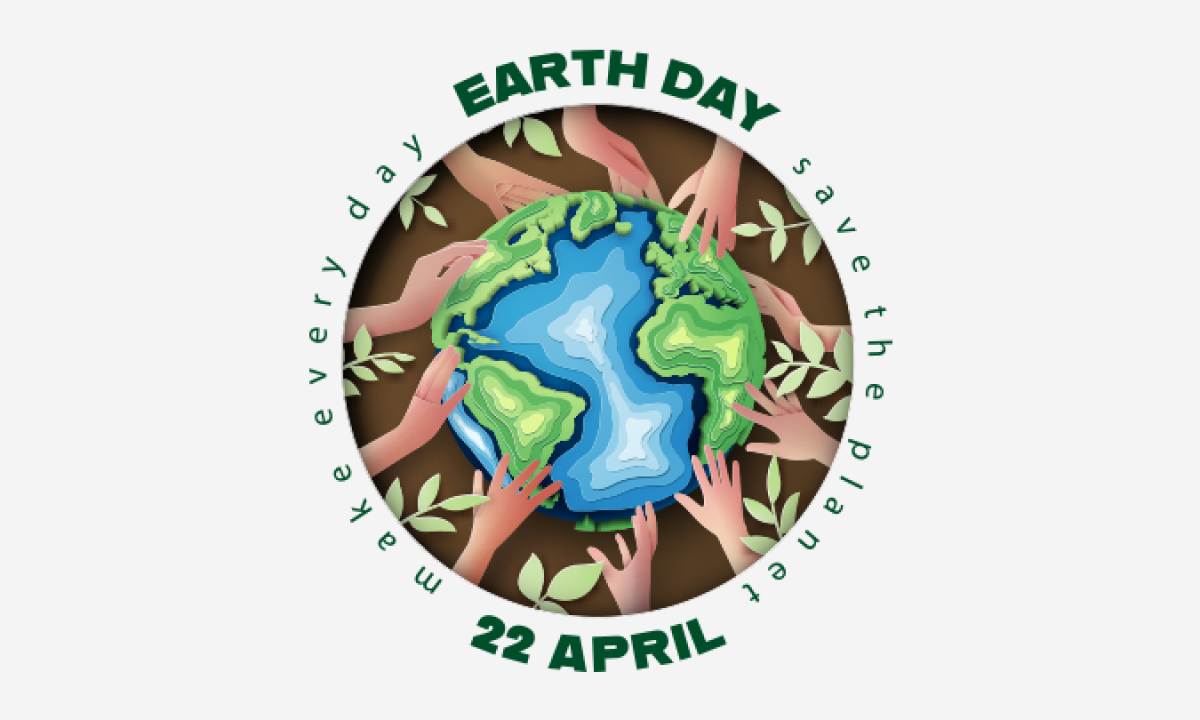
When is Earth Day 2026, and why does it matter?
For those asking when is Earth Day 2026?, the date is fixed: 22 April.
But Earth Day is not designed to be confined to a single day. Its purpose is to create space for deeper questions, about how resources are extracted, how materials flow through the economy, and how decisions made today affect ecosystems and communities tomorrow.
In 2026, those questions feel more urgent than ever.
Earth Day 2026 theme: Our Power, Our Planet
The Earth Day 2026 theme recognises that power exists far beyond policy or regulation. It lives in the everyday systems businesses rely on, from procurement and logistics to reporting frameworks and operational decisionmaking.
For organisations, this power is often invisible because it is embedded. Yet it is precisely within these systems that meaningful, scalable change can happen, when decisions are informed by insight rather than assumption.
“Power sits inside the systems we design, and the insight we apply to improve them.”
Earth Overshoot Day and Earth Day
To understand what this means in practice, explore our dedicated Earth Overshoot Day page, where we break down the drivers behind the date, track how it’s shifting over time, and highlight how circular actions are already helping to move it. Because when insight is applied with intention, even small changes can create measurable impact.
Turning power into progress through circularity
At Reconomy, Earth Day reflects our role as an international circular economy specialist, supporting businesses to operate more effectively within planetary boundaries.
Working with Reconomy
We work with organisations to:
- Repurpose materials, keeping value in circulation for longer
- Reimagine supply chains, reducing waste, energy use and emissions
- Lower energy inputs, by removing unnecessary processing and disposal
- Reduce pollution, by moving materials higher up the waste hierarchy
- Foster effective partnerships, enabling change at scale
By shifting away from linear take–make–waste models, circularity becomes not just an environmental ambition, but a practical framework for better decisionmaking.
“Circularity is not about doing less harm, it’s about designing systems that work.”

Why data is one of the most powerful tools we have
In a complex global economy, the ability to act responsibly is increasingly shaped by data.
Understanding how materials move, where value is lost, how regulations differ across markets and where inefficiencies sit allows organisations to reduce uncertainty and improve decision quality. Without this insight, action risks being reactive, or superficial.
This is where Reconomy’s data capability, supported by CircuLab, our dedicated circular economy innovation lab, plays an important role. Through CircuLab, we:
- Analyse environmental and financial data to identify emerging trends
- Track global regulations to inform product, service and geographic decisions
- Assess projects using Life Cycle and Circularity Assessments
- Improve transparency by strengthening sustainability reporting
- Identify technologies and industry synergies that accelerate progress
This approach helps businesses move from assumptions to evidence, and act with greater confidence.
“Insight turns responsibility into action, and data makes that possible.”

Respecting ecosystems and society, together
Sustainability does not exist in isolation.
Operating responsibly means considering both environmental systems and the people who depend on them. By using data to make better decisions, improving how resources are managed, and designing smarter systems, businesses can reduce impact while strengthening resilience and long-term value.
This is how we move closer to a model of natural resource management that respects ecosystems, communities, and future generations alike.

Explore our Media Library
Explore our Media Library, a collection of informative, fascinating, and fun video resources all about Reconomy, our colleagues, customers, the varied services we provide, and the impact we make.
Looking beyond World Earth Day 2026
World Earth Day 2026 is a reminder, not a finish line.
The power to shape what comes next sits with organisations willing to examine their systems honestly, use insight intelligently, and act with intention. At Reconomy, we believe that when power is understood and applied with clarity, it can help build a future where both the planet and society can thrive.
“Our power is collective. Our insight is growing. Our responsibility is clear.”
FAQs: Earth Day
Earth Day is a global moment to reflect on our relationship with the planet, but in 2026, it’s more than awareness. It’s a call to act.
With resource consumption continuing to outpace regeneration, organisations have a critical role to play. Earth Day highlights the need to move beyond intention and into measurable, system-level change, where sustainability becomes part of how business operates, not just what it says.
Earth Day takes place every year on April 22.
In 2026, it serves as a timely checkpoint for organisations to assess progress, reset priorities, and accelerate action towards sustainability goals.
While themes evolve each year, the direction remains consistent, collective action, environmental responsibility, and scalable impact.
For organisations, this translates into understanding where they can create the greatest change, across supply chains, resource use, and operational systems.
Earth Day is increasingly relevant for businesses because sustainability is no longer optional, it’s operational.
- Regulations are tightening
- Customers expect transparency
- Resources are becoming more constrained
Organisations that act now can reduce risk, unlock efficiencies, and build long-term resilience, turning sustainability into a strategic advantage rather than a cost.
The circular economy is a model where resources are kept in use for as long as possible through reuse, repair, and recycling, reducing waste and reliance on virgin materials.
Earth Day reinforces the urgency of this shift. Today, the global economy is still largely linear, meaning most materials are used once and discarded. Closing this gap is essential to building a more sustainable future.
Real impact comes from practical steps, not one-off initiatives.
Businesses can start by:
- Understanding their resource flows and waste streams
- Identifying opportunities to reuse, repair, or recycle
- Using data to inform better decisions
- Embedding circular thinking into supply chains
Small, targeted changes, applied consistently, can create significant cumulative impact.
No single organisation can solve sustainability challenges alone.
Collective power means:
- Collaboration across supply chains
- Shared responsibility between partners
- Industry-wide action to scale impact
When organisations align around common goals, they can accelerate change far beyond individual efforts.
Earth Day is only symbolic if it ends there.
Its real value lies in how organisations use it, as a moment to reassess, realign, and act.
The most effective organisations treat Earth Day not as a campaign, but as a catalyst for long-term, measurable progress.