

Circular economy trends for 2026
Last updated: 2 July 2026 at 9:55 am - 10 min read
In 2026, we predict the circular economy will become a practical, operational reality, driven and shaped by existing and incoming regulations.
This article dives into the key circular economy trends for businesses to watch in 2026.
Contents
- Why 2026 is a turning point for circular economy regulation
- Policies and regulations shaping circular economy action in 2026
- Key dates and timelines businesses must plan for
- Key circular economy trends driving change in 2026
- Where large businesses should start in 2026
- Turning regulation into opportunity
- Frequently asked questions
Why 2026 is a turning point for circular economy regulation
The EU’s circular economy agenda has continued to gain momentum. What significantly changes in 2026 is the scale, enforcement and expectation.
Key policies will reach implementation dates or critical milestones at the same time. These include new packaging rules, product design requirements, and more reporting frameworks. At the same time, policymakers are aligning circular economy regulation with climate, nature and trade objectives.
For large businesses, this creates both complexity and opportunity. Policies and regulations now impact more areas, like design, procurement, compliance, logistics, and reporting. Organisations that continue to treat each policy in isolation will see disorganisation and increased costs. Those that take an integrated, circularity approach will reduce risk, improve resilience and even gain a competitive advantage.
Policies and regulations shaping circular economy action in 2026
In a year set to be full of change, here are some of the key policies and regulations we predict will shape circular economy action in 2026.
Packaging and Packaging Waste Regulation (PPWR)
The Packaging and Packaging Waste Regulation (PPWR) will now replace the existing directive and will become active across the EU. From 12th August 2026, this regulation will introduce mandatory requirements for businesses on key elements of packaging.
For large businesses, you can expect to see a direct impact on packaging portfolios, supplier specifications and design decisions. Unlike previous frameworks that were in place, PPWR removes national interpretation, meaning less flexibility but greater consistency across EU markets.
Key implications include:
- Mandatory recyclability requirements for all packaging formats entering markets.
- More focus on labelling to help correct packaging waste for sorting and recycling.
- More pressure on businesses to eliminate unnecessary or hard-to-recycle packaging.
These changes aim to reinforce the importance of packaging EPR strategies and overall packaging redesign.
Corporate Sustainability Reporting Directive (CSRD)
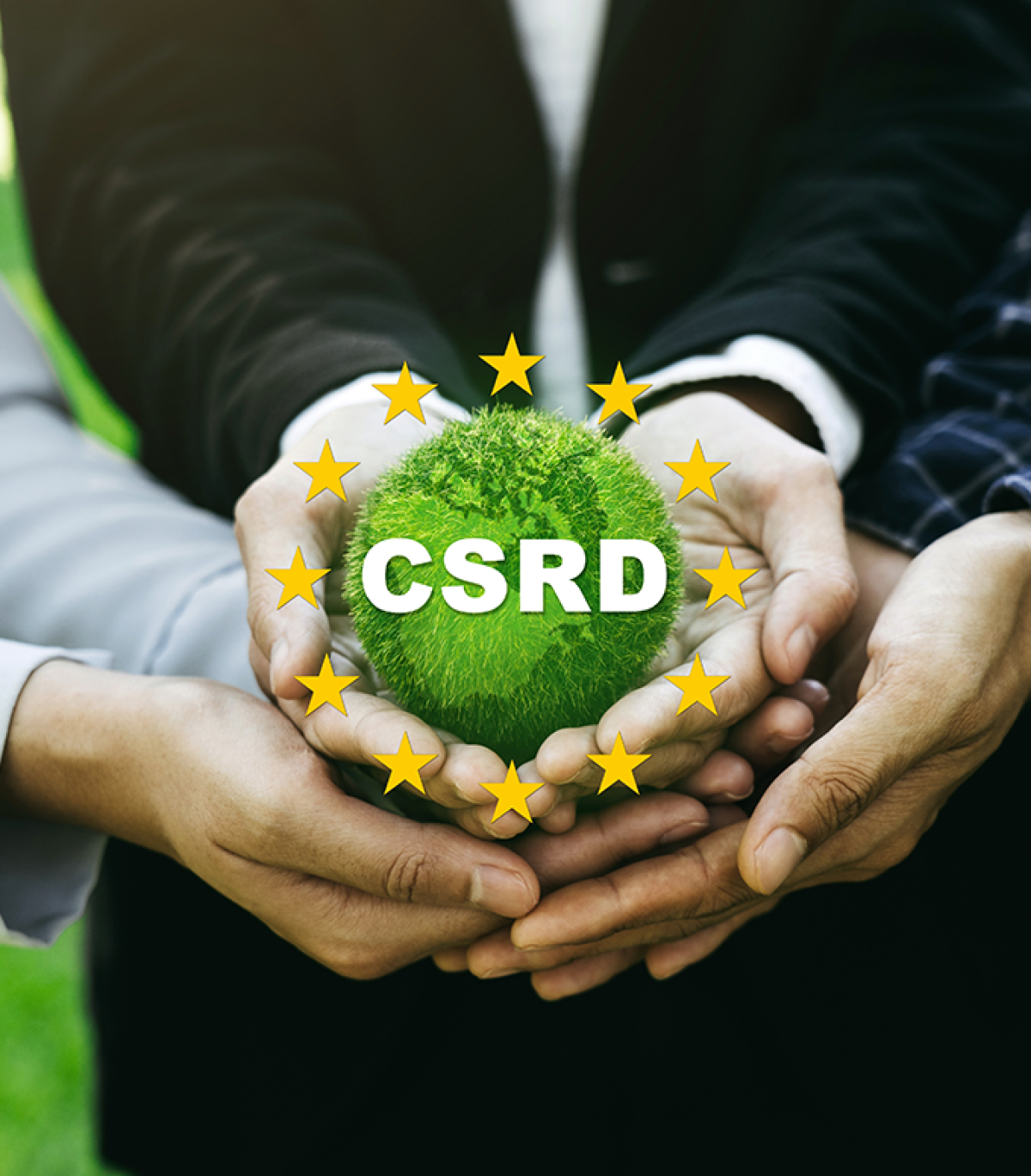
The Corporate Sustainability Reporting Directive (CSRD) mandates in-depth sustainability reporting and is being implemented in ‘waves’ for companies in scope.
Circular economy is likely to be material for many businesses under ESRS disclosure, where material businesses must now include:
- Resource use and material efficiency
- Recycled versus virgin material inputs
- Product durability, reparability and recyclability
- Circular business models and value retention strategies
CSRD can be seen as a strategic opportunity as for many in scope organisations it will become the backbone behind their circular economy governance. One of its aims is to bring together alignment and collaboration between critical business departments like finance, operations, sustainability, and procurement.
Corporate Sustainability Due Diligence Directive (CSDDD)
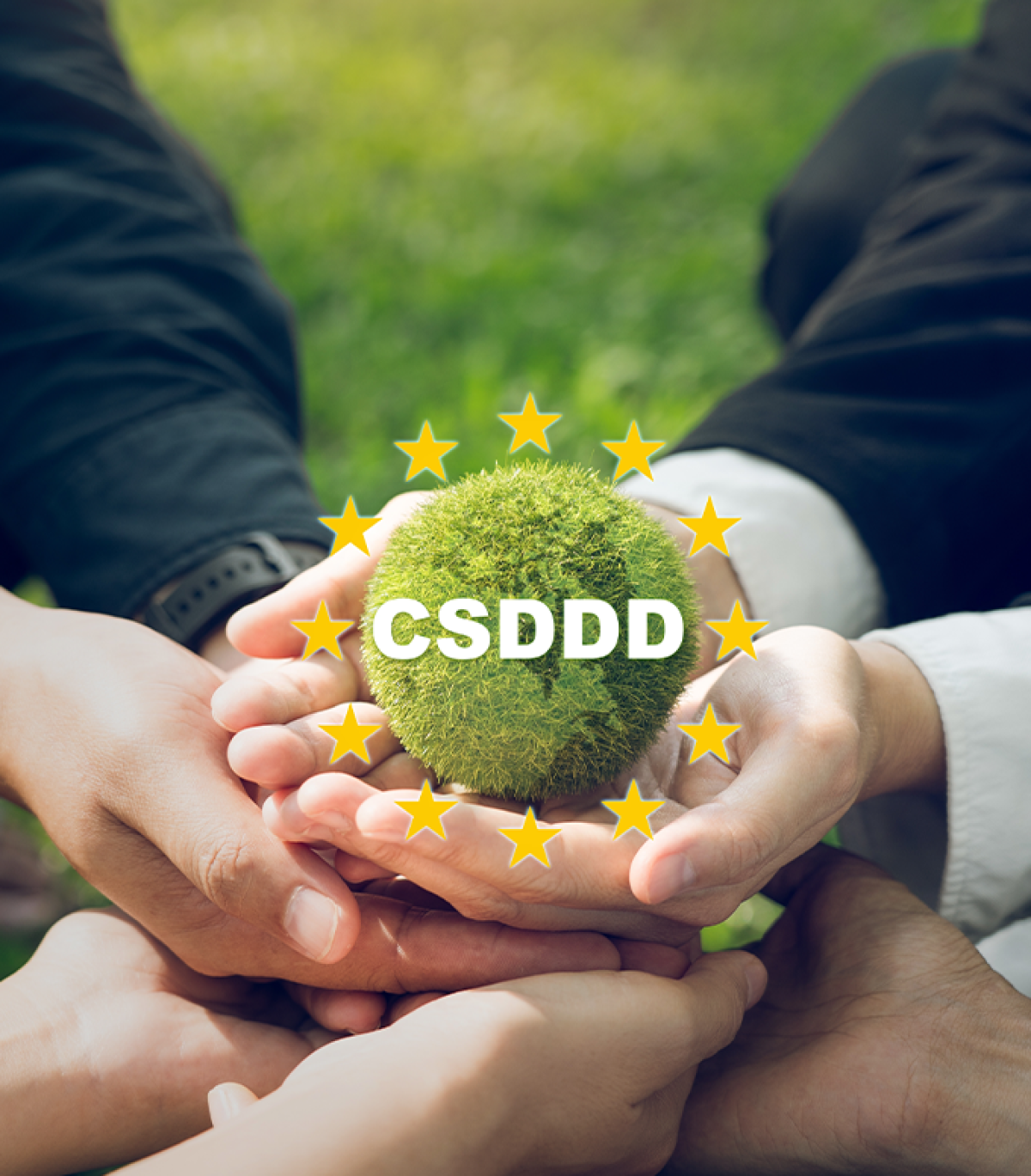
With CSRD focusing on transparency of disclosure, the Corporate Sustainability Due Diligence Directive (CSDDD) focuses more on the action taken by businesses. It examines corporate responsibility across the full value chain, requiring businesses to identify, prevent and mitigate environmental and human rights risks.
From a circular economy perspective, CSDDD reinforces:
- Responsible sourcing of raw materials
- Reduced reliance on high-risk virgin inputs
- Greater emphasis on reuse, repair, take-back and remanufacturing models
Although compliance obligations commence in 2027, 2026 will be a critical preparation year. Tasks such as mapping suppliers, understanding material dependencies and embedding circular supply chain models take time. Early action taken by businesses has the potential to limit both regulatory and operational risk.
Ecodesign for Sustainable Products Regulation (ESPR)
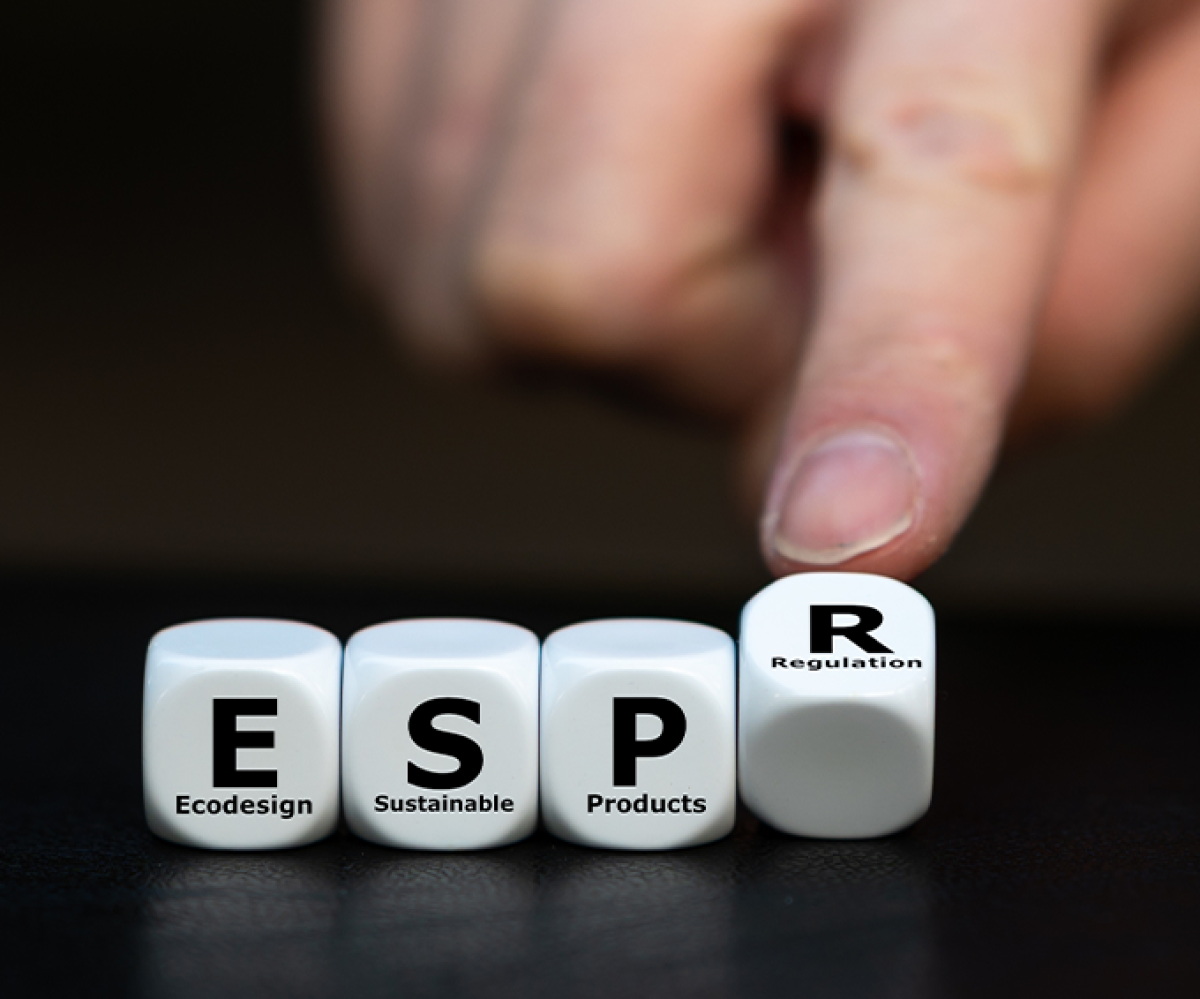
The Ecodesign for Sustainable Products Regulation (ESPR) marks one of the most important shifts in EU product policy. This regulation embeds circular economy principles directly into the product design stage, covering key elements such as durability, reparability and recyclability.
From 19th July 2026, the regulation bans the destruction of businesses’ unsold apparel and footwear. It also introduces a key policy, Digital Product Passports (DPPs), with the central EU registry expected by July 2026. For large manufacturers and retailers, ESPR means circularity must be designed and embedded from the very beginning. Product data, material composition and lifecycle impacts must be captured and shared in structured, digital formats.
EU’s Carbon Border Adjustment Mechanism (CBAM)
The Carbon Border Adjustment Mechanism (CBAM) is in place to apply a carbon price to certain goods being imported, such as steel, cement, aluminium and fertilisers. Its aim is to tackle ‘carbon leakage’, which is where businesses may relocate to countries with less climate policy in place, which subsequently increases global emissions. From 2026, importers into the EU must purchase certificates that reflect the embedded emissions.
Although CBAM is a climate policy, it still directly incentivises circular economy strategies. Whether businesses use recycled materials, aim to improve material efficiency or extend product lifespans, all can reduce embedded emissions and CBAM exposure. For large businesses with complex global supply chains, circular material strategies are becoming a practical way to manage carbon cost risk while strengthening resilience. The UK is set to follow the EU by implementing it’s own CBAM, staring January 1st 2027.
EU Circular Economy Act
The upcoming EU Circular Economy Act, expected to be in place by Q4 2026, it aims To establish a market for secondary materials, reduce waste and increase recycling making circular products mainstream.
While still in development, the direction is clear. Policymakers want to increase both the supply and demand for high-quality recycled materials and remove barriers that limit global scalability.
For large businesses, early alignment with this direction will support cross-border operations, procurement flexibility and long-term circularity investment.
EU Deforestation Regulation (EUDR)
The EU Deforestation Regulation (EUDR) introduces strict due diligence requirements for commodities linked to deforestation, such as soy, palm oil, cocoa and cattle products.
Large and medium-sized businesses must now comply from 30th December 2026. Obligations such as geolocation data, legality checks and annual reporting will then become active.
Deposit Return Schemes (DRS)
This is a system that adds a small, refundable deposit to the price of drink containers. The goal is to incentivise the consumer, so when they return their empty containers to a collection point (i.e. a Reverse Vending Machine), they will receive a financial reward.
Deposit Return Schemes continue to gain momentum and expand across Europe and the UK. In the UK specifically, DRS is now confirmed to go live on 1st October 2027, making 2026 a crucial planning year for businesses impacted.
For large producers and retailers, preparation means:
- Planning and implementing reverse vending machine estates.
- Ensuring barcode and packaging compliance.
- Integrating DRS data into reporting systems.
A DRS reinforces the importance of packaging design, data accuracy and shared infrastructure.

Extended Producer Responsibility (EPR)
Extended Producer Responsibility (EPR) is becoming even more sophisticated, data-driven and financially incentivised. In the UK alone, packaging EPR invoices began in October 2025, with eco-modulation starting this year (2026).
For large businesses, EPR is no longer just a cost of doing business. It is a financial warning to:
- Redesign packaging
- Improve recyclability
- Reduce material intensity
EPR schemes are also expanding into new sectors and countries. One example is textiles, where the scheme is increasing the importance of circular design and lifecycle thinking.

Key dates and timelines businesses must plan for
2026 is defined by the following regulatory milestones:
- UK packaging EPR: Eco-modulation applies from 2026, making data quality and packaging redesign essential to reduce costs
- EU ESPR: Ban on destroying unsold apparel and footwear from 19th July 2026
- EU PPWR: Applies from 12th August 2026
- EUDR deforestation regulation: Applies from 30th December 2026 for large and medium businesses
These timelines leave little room for reactive compliance. If your business requires help with preparation, you can reach out to one of our experts today.
Key circular economy trends driving change in 2026
Take back schemes
Although takeback schemes have been around for several years, they continue to be a popular trend for businesses in 2026. A takeback scheme is a system where a brand or retailer offers to collect used products and packaging from consumers to ensure they are being properly reused, recycled, or repaired.
Great case study: Dunelm. The industry retail giant offers several different takeback schemes, including furniture takeback, in-store textile takeback, and electrical takeback.
Product-as-a-service
A business model that does what it says on the tin; shifts from selling individual products to offering them as an ongoing service. By shifting consumer focus from ownership to access, it promotes a circular economy by extending product lifespans through maintenance and reuse.
Great B2B case study: Philips Lighting as a service, through subsidiary brand, Signify. Customers pay a monthly subscription fee to cover all lighting and installation.
Great B2C : HelloFresh. Another subscription-based system that allows consumers to order several meals a week and receive fresh ingredients to make them right to their door. A great way to reduce food waste that limits consumers from overbuying groceries.
AI integration
AI is increasingly being used to analyse material flows, identify compliance risks, optimise packaging design and automate reporting. In 2026, we predict AI to become one of the biggest enablers of circular economy compliance, rather than an experimental tool.
Insights: Visit our blog AI in the circular economy.
Great case study: Reconomy brand, Eurokey, who implement AI technology in recyclable sorting lines to improve sortation and overall efficiency.
Circular design
Design decisions are now central to regulation. Circular design introduces circular economy principles to product design and ensures businesses are creating sustainable products and systems. The introduction of certain regulations means products must now be designed for durability, repair and recyclability from the start, reducing any downstream costs and risk.
Many global businesses are already introducing circular design to their product lifecycle. Adidas, for example, introduced a shoe and apparel range made entirely from recycled ocean plastic, in partnership with Parley for the Oceans.
Data and reporting
We believe that high-quality, auditable data is the key to meeting compliance across key regulations like CSRD, EPR, ESPR and DPPs. Data is no longer a by-product of compliance; it is the foundation and imperative for businesses to prioritise.
Circular procurement
Procurement teams play a critical role in circular outcomes, prioritising recycled content, verified materials and suppliers aligned with circular principles.
Where large businesses should start in 2026
For businesses that are struggling to know where to begin, the priority should be integration. Effective starting points are:
- Mapping material and packaging flows
- Assessing data readiness for CSRD, EPR and DPPs
- Aligning design, procurement and compliance teams
- Using regulation as a driver for efficiency and innovation
Learning the fundamentals of circular economy principles will help provide a shared language across teams. Learn more about the Circular Economy.
Turning regulation into opportunity
These key pieces of regulation arriving in 2026 represent a structural shift. For large businesses, success will be achieved by taking early action, integrating strategies and implementing strong data foundations.
Those that embrace circular economy principles across key stages like design, procurement and reporting will not only meet regulatory requirements but also build resilience, limit costs, and highlight long-term value in a resource-constrained world.
Frequently asked questions about circular economy trends in 2026
There is no single regulation. The combined impact of CSRD, PPWR, ESPR and EPR is most significant.
Yes. Many rules apply to any business placing products on the EU market or importing into the EU.
They provide structured, traceable product data required under ESPR, CSRD and future regulations.
No. Modern circular regulation focuses on the full lifecycle, from design and sourcing to reuse and end-of-life.
Data readiness, packaging and product design, and cross-functional alignment are the most urgent priorities.
Speak to our circularity experts